
Last updated October 17, 2026
 Architectural shingles
 Metal roofing
 Tile roofing
 GAF
GAF Owens Corning
 Flat & low-slope
Free roof inspection with deck photos before we talk money - GAF and Owens Corning certified installation
Roof Repair Maintenance Checklist for Austin Homeowners
The leading cause of premature roof failure in Austin isn’t the hailstorms that roll through in April or the triple-digit heat that bakes shingles every August. It’s deferred maintenance. Homeowners don’t wake up planning to skip roof upkeep. They just never received a maintenance schedule tied to the actual rhythm of this city’s climate, so a five-minute flashing check in March becomes a $4,000 interior repair in October. This guide fixes that. You’ll get a month-by-month checklist built around Austin’s real calendar: cedar pollen, summer heat peaks, fall hail probability, and the freeze-thaw cycles that catch newer transplants off guard. By the end, you’ll know what to inspect, when to inspect it, what’s normal, what isn’t, and when to call a roofer before a small problem becomes a drywall replacement.
Quick Answer
A practical roof maintenance checklist for Austin homeowners runs on a seasonal rhythm: clear gutters and inspect flashing in January and February when cedar pollen clogs drainage, check attic ventilation before summer heat arrives in May, examine granule loss and impact damage after storm season from June through September, and schedule a professional inspection every fall before hail probability peaks. Most Austin roofs need four to six maintenance touchpoints per year, not a single spring cleaning. Download a log, document what you find, and call a roofer within 72 hours of spotting water stains or lifted shingles.
Styles & brands we work with
Table of Contents
- Why Austin Roofs Fail Differently
- The Month-by-Month Maintenance Calendar
- Cedar Season: January and February Gutter Work
- Pre-Summer Ventilation Check: May
- Storm Season Granule Inspection: June Through September
- Inspecting Flashing Without Voiding Warranties
- Normal Granule Loss vs. Accelerated UV Aging
- Wait 90 Days or Call Within 72 Hours
Why Austin Roofs Fail Differently
Roofing materials behave differently in Central Texas than they do in Dallas, Houston, or San Antonio. Austin sits in a unique microclimate where limestone-rich soil radiates heat back up at homes, cedar pollen creates a fine abrasive dust that settles into every seam, and sudden April hailstorms arrive after weeks of UV exposure that have already softened asphalt shingles. A roof in Round Rock or Cedar Park faces essentially the same conditions, which is why we see similar failure patterns across the northern metro.
Here’s what that means in practical terms:
- UV degradation runs faster here. Austin averages roughly 300 sunny days per year. Asphalt shingles are rated for a certain number of years based on more temperate climates. Continuous UV exposure breaks down the oils in asphalt, making shingles brittle and prone to cracking well before the warranty expires.
- Cedar pollen is abrasive. From late December through February, mountain cedar releases pollen that doesn’t just make you sneeze. It settles in gutters, mixes with rainwater, and forms a paste that holds moisture against roof edges. Left in place, that moisture accelerates rust on flashing and rot on fascia boards.
- Flash floods hit specific neighborhoods hard. Areas near Shoal Creek, Waller Creek, and the Onion Creek watershed see rapid drainage surges that test gutter capacity and roof edge seals. Homes on sloped lots in Tarrytown or Westlake deal with water volume that flatter suburbs never see.
- Freeze-thaw cycles catch people off guard. Austin winters are mild, but February 2021 taught every homeowner in Travis County what a hard freeze does to a roof. Water seeps into hairline cracks, freezes, expands, and turns a cosmetic issue into a structural one within 48 hours.
The takeaway: a generic checklist from a national website won’t account for these local factors. Your maintenance schedule needs to match Austin’s actual seasonal events, not some hypothetical “spring and fall” routine.
The Month-by-Month Maintenance Calendar
Most maintenance guides tell you to inspect your roof “twice a year.” That advice fails in Austin because the threats here arrive on a predictable but uneven calendar. Cedar pollen peaks in January. Heat stress builds from May through September. Hail probability spikes in April and again in October. Here’s the sequence that matches reality:
- January: Clear gutters and downspouts of cedar pollen and oak leaves. Check attic for signs of moisture from winter condensation. Inspect flashing around chimneys and vents where pollen accumulates in seams.
- February: Second gutter clearing as cedar season peaks. Look for shingle curling along south-facing roof slopes where UV exposure is highest. Document any lifted shingles with photos.
- March: Walk the yard after spring winds. Pick up fallen shingle tabs or pieces of flashing. Check attic ventilation before summer air conditioning loads begin.
- April: Hail season starts. After any hailstorm, check downspouts for granule accumulation and inspect soft metals like roof vents and gutter covers for impact marks.
- May: Attic ventilation check. Measure attic temperature on a 90-degree day. If it’s 130 degrees or higher in the attic, your ventilation needs attention before August arrives.
- June: Early summer inspection. Look for granule loss in downspouts. Check caulk seals around skylights and solar panel mounts as temperatures climb.
- July: Mid-summer check of south and west-facing slopes. These slopes take the worst UV beating. Look for blistered shingles that feel spongy under foot (don’t walk them yourself; visual inspection from a ladder is enough).
- August: Peak heat inspection. Attic temperatures hit their highest levels. Check vent operation and look for any signs of deck warping visible from the attic.
- September: Post-summer granule audit. Compare granule accumulation in downspouts against photos from June. Big increase means shingles are shedding faster than normal.
- October: Pre-fall-hail professional inspection. This is the most important month for a trained eye. A pro can spot nail pops, failing sealant, and impact damage before the next storm arrives.
- November: Final gutter clearing after oak leaf drop. Check roof edge metal for rust or separation. Document everything in your maintenance log.
- December: Post-freeze check if temperatures dip below 32 for more than a day. Look for water stains on ceilings that indicate ice-dam-like damage at roof edges.
If that feels like a lot, know that most of these tasks take 15 to 30 minutes. The January, April, June, and October steps matter most. The rest can be combined or shifted by a few weeks without consequence.
Cedar Season: January and February Gutter Work
Mountain cedar doesn’t just attack your sinuses. It attacks your drainage system. From late December through mid-February, cedar pollen falls in huge quantities across the Hill Country and drifts into Austin neighborhoods on north winds. The pollen is fine enough to pass through many gutter guards, which means even protected systems can clog.
Here’s what cedar season does to a roof system:
- Pollen collects in gutters and mixes with winter moisture to form a dense, sticky sludge that blocks downspout openings.
- Blocked downspouts force water backward under the roofline, where it can penetrate the fascia and soffit, leading to rot that pest control won’t fix.
- Pollen settles into flashing seams and around pipe boots, holding moisture against metal and accelerating rust.
- On flat or low-slope sections that some Austin homes have, pollen accumulation creates a moisture-retaining layer that degrades roofing membranes faster than UV alone.
January task: Safely clear gutters of all debris. You can do this from a ladder if you’re comfortable, or hire a service. If your gutters have a layer of paste-like material, you’re looking at cedar pollen mixed with winter rain.
February task: After cedar season peaks, do a second clearing. Pay attention to downspouts. If water doesn’t flow freely during a February rain, you have a blockage that needs attention before spring storms arrive.
One connection many homeowners miss: the same pollen that clogs gutters also blows into attic vents and collects on insulation. Check your attic access after cedar season. If you see a fine yellow-grey dust on framing near vents, that’s pollen infiltration. It’s worth adding a vent filter or having a roofer check that your ventilation is properly baffled. Find more guidance on our Roof Repair in Austin page.
Pre-Summer Ventilation Check: May
Before you pay what Austin Energy charges for air conditioning this summer, check your attic ventilation. A poorly ventilated attic reaches 130 to 160 degrees in July and August. That heat radiates into your living space, forces your AC to run constantly, and cooks your shingles from underneath. We’ve seen shingles on poorly ventilated roofs fail 5 to 8 years earlier than identical shingles on properly vented homes.
The May ventilation check takes about 20 minutes:
- On a day when the outside temperature reaches approximately 90 degrees, open your attic access and stand on the ladder. If heat hits your face like an oven door, your ventilation is insufficient.
- Check that ridge vents, soffit vents, and gable vents are not blocked by insulation. Insulation crews often push batts against soffit vents, which chokes airflow.
- Listen for the sound of a balanced airflow. In a properly vented attic, you’ll feel air moving when you stand still. Still, stagnant air means exhaust without intake, which is just as bad as no ventilation.
- Count your vent types. Austin homes built before 1990 often have too few vents for modern heat loads. If your home has only gable vents and no ridge or soffit venting, budget for a ventilation upgrade before replacing shingles.
- Look for rust on metal vent flashings. An Austin summer thunderstorm will find a rusted vent boot and turn it into a funnel.
One other May item: check your ceiling for faint yellow-brown staining after the first few weeks of AC use. Humidity pulls moisture through small roof leaks that stay invisible during dry spring months. If you spot staining, you’re seeing a leak that’s been active for a while. Call before it spreads into drywall and insulation. Our Roof Installation in Austin page explains ventilation standards we follow on every new system.
Storm Season Granule Inspection: June Through September
June starts the stretch of Austin’s most damaging roof season. Not because of hail, though that happens. It’s the combination of intense heat, sudden thunderstorms, and months of accumulated UV stress that causes shingles to shed granules into gutters and downspouts.
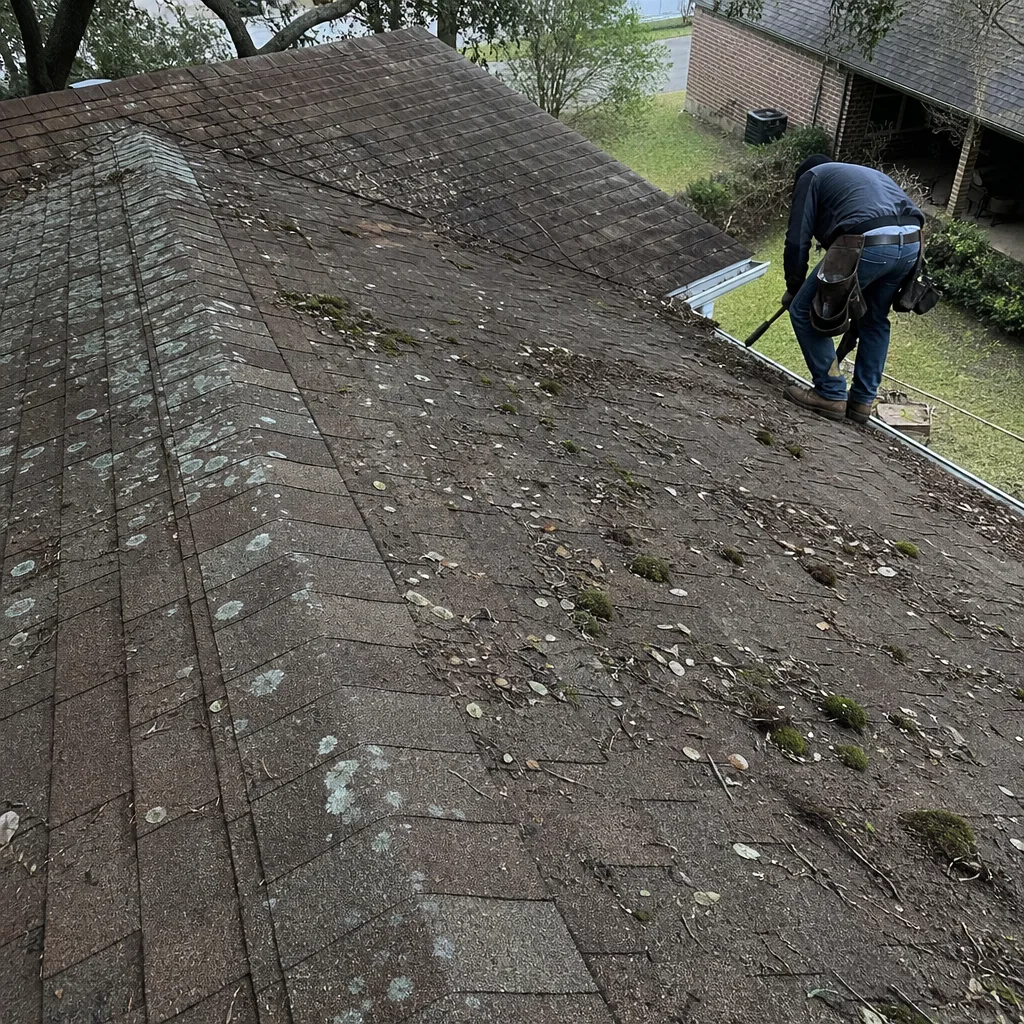
Granules are the ceramic coating on asphalt shingles. They protect the asphalt from UV radiation. When granules shed, the asphalt beneath degrades quickly. Some granule loss is normal. The question is how much and how fast.
Here’s the storm season routine:
June (baseline): Clean your gutters and downspouts. Then check again after the first heavy rain. Note how much granule material washes out. That’s your baseline for a healthy, stable roof.
July (mid-summer check): Walk the perimeter of your home after a rain and look at downspout splash blocks. A thin, even layer of dark grit is normal. Piles of grit that look like coffee grounds in one or two locations are not.
August (peak heat): Check the south and west-facing slopes from the ground with binoculars if you have them. Look for shingles that appear shiny or glossy. That sheen is exposed asphalt, which means granule loss has reached a critical stage on those shingles.
September (post-summer audit): Clean gutters again and compare granule volume against your June baseline. If the September volume is double or triple the June amount, your shingles accelerated their aging over one summer. That’s an early warning sign worth a professional opinion.
What many homeowners don’t know: Austin’s water from thunderstorms is slightly alkaline due to limestone runoff. Over time, repeated wettings and dryings with alkaline water contributes to granule adhesion failure, especially on cheaper three-tab shingles. If your home still has three-tab installed in the early 2000s, expect granule loss to become visible in gutters first. See our Roof Replacement in Austin page for what modern materials offer instead.
Inspecting Flashing Without Voiding Warranties
Flashing is the metal material that seals the joints and seams on a roof. Around chimneys, skylights, vent pipes, and solar panel mounts, flashing keeps water from following a path into your attic. Austin homes commonly feature flashing around ridge vents, chimney caps, and solar arrays, especially in neighborhoods where solar adoption is high like Mueller and East Austin.
Here’s how to inspect flashing without climbing onto the roof or risking damage to your shingles or your warranty:
- Use binoculars from the ground. Walk your property line and look at every roof penetration: chimney, plumbing vents, skylights, solar panel feet, satellite dish mounts, and any roof valley that channels water.
- Look for lifted flashing edges. Flashing should sit flat against shingles or brick. If you see gaps, curls, or metal that looks bent upward, water can enter during wind-driven rain.
- Check for old caulk. Austin sun destroys caulk in two to three years. Look for caulk that’s cracked, peeling, or missing around flashing edges. Failed caulk on a chimney cap flashing is one of the most common sources of small leaks.
- Inspect solar panel mounts specifically. Solar installers use different flashing methods. Some use a rubber boot, others use a metal flashing with a seal. Rubber boots degrade from UV exposure faster than metal. Check the condition of whatever type you have.
- Document everything with photos. If you ever file an insurance claim or a warranty claim, photos with dates are your evidence. Use your phone. Store them in a folder labeled by date.
One warning: do not walk on your roof to inspect flashing. Besides the safety issue, foot traffic on hot asphalt shingles can cause granule loss and hairline cracking. Many shingle warranties exclude damage from “non-standard foot traffic.” A visual inspection from the ground or a ladder is sufficient for maintenance purposes.
Normal Granule Loss vs. Accelerated UV Aging
New asphalt shingles shed some granules immediately after installation. That’s expected. Shingles also lose small amounts throughout their life as weather and UV radiation take their toll. The distinction between normal and accelerated loss comes down to location, quantity, and pattern.
What normal looks like:
- Light, even sprinkling of dark grit in gutters over several months
- Slight color variation on shingle surfaces that’s visible only up close
- Granules appearing in downspout splash blocks after a heavy rain, but not accumulating in piles
- Older shingles (15+ years) showing more granule loss than newer ones, but uniformly across all slopes
What accelerated UV aging looks like:
- Piles or drifts of granules in gutters, especially concentrated under specific slopes
- Shingles that look “bald” in patches, with the dark asphalt substrate visible through the granule coating
- Sigificant difference between south-facing slopes and north-facing slopes on the same roof
- Granule loss concentrated around the edges of shingles, where they’ve become brittle and curled
- Downspouts that discharge dark, gritty water every time it rains, not just after storms
If you’re seeing accelerated granule loss, the shingles are aging faster than their rated lifespan. The cause is almost always UV combined with heat, and Austin delivers both in abundance. A roof with significant UV-related granule loss may still perform for a few seasons, but you’re entering the window where replacement becomes a decision rather than an option. Materials from GAF, CertainTeed, Owens Corning, or IKO may offer better granule adhesion and UV resistance on a replacement system, so ask about those when it’s time.
Wait 90 Days or Call Within 72 Hours
Not every roof issue is an emergency. Some problems can be monitored for weeks or months without causing additional damage. Others need action within days, or you’ll be paying for sheetrock replacement, mold remediation, and insulation removal on top of the roof repair.
Problems that can wait 60 to 90 days:
- Minor granule loss in gutters with no visible bald spots on shingles
- Light surface rust on flashing that hasn’t caused leaks
- Cosmetic scuffs or scratches on shingles from small hail (under 1 inch) with no granule displacement
- Faded shingle color with no curling, cracking, or exposed substrate
- One or two lifted shingle corners after a wind storm, as long as no rain is forecast and the underlayment is intact
Problems that need a professional call within 72 hours:
- Water stains on ceilings or walls, even faint ones. Active leaks get worse with every rain and the timeline from small stain to drywall replacement is often under a week in Austin’s storm season.
- Hail impact marks larger than a quarter with visible granule loss or soft spots on shingle surface
- Shingles lifting away that expose the underlayment to sunlight. UV degrades underlayment quickly once exposed.
- Flashing that has separated from a chimney, skylight, or vent to the point that you can see a gap
- Daylight visible in the attic through any roof penetration or along the roofline
- Granule loss so severe that gutters are filling with grit after every rain. This signals a system nearing the end of functional life.
If you’re not sure, err toward the early side. At Crestview Roofing Co Austin, a quick phone call or photo sent to us can help determine urgency. We’re a Crestview Roofing Co Austin home base for homeowners across Travis and Williamson counties. You don’t have to make the call alone, and you don’t have to guess.
Common Mistakes to Avoid
- Ignoring January gutter clogs. In Austin, cedar pollen isn’t just an allergy problem. It blocks drainage during winter rains and starts fascia rot before spring arrives. A January gutter cleaning prevents damage that accelerates all year.
- Climbing onto a hot roof in August. Walking on shingles when temperatures exceed 90 degrees causes granule loss and can damage the shingle mat. It’s also a safety risk. Use binoculars or call a professional.
- Waiting until a leak appears before ever inspecting the roof. The most expensive roofs are the ones that leaked silently for months before a ceiling stain appeared. By the time you see the stain, the decking and insulation are often already damaged.
- Assuming hail damage is always obvious. Austin hailstorms often produce small hailstones that don’t dent cars but do shatter granule adhesion on aging shingles. The damage looks like a diffuse dullness, not a dent. An inspection after any hailstorm over 3/4 inch is wise.
- Painting over mildew on ceiling instead of addressing the roof leak. Mildew on drywall is often the first visible sign of a roof leak that’s been active for weeks. Painting over it traps moisture and allows mold growth inside the wall cavity. In Central Texas humidity, this becomes a health issue fast.
- Adding spray foam insulation without improving roof ventilation. Spray foam seals the attic, but it also changes how heat and moisture move. Austin’s hot-humid climate demands careful ventilation design with spray foam, or you risk condensation on the underside of roof decking.
- Skipping documentation. No log, no photos, no record. When you file an insurance claim for hail or storm damage, an adjuster asks for evidence of prior condition. A maintenance log with dated photos is the strongest evidence you can offer.
See the difference
 Before
 After
After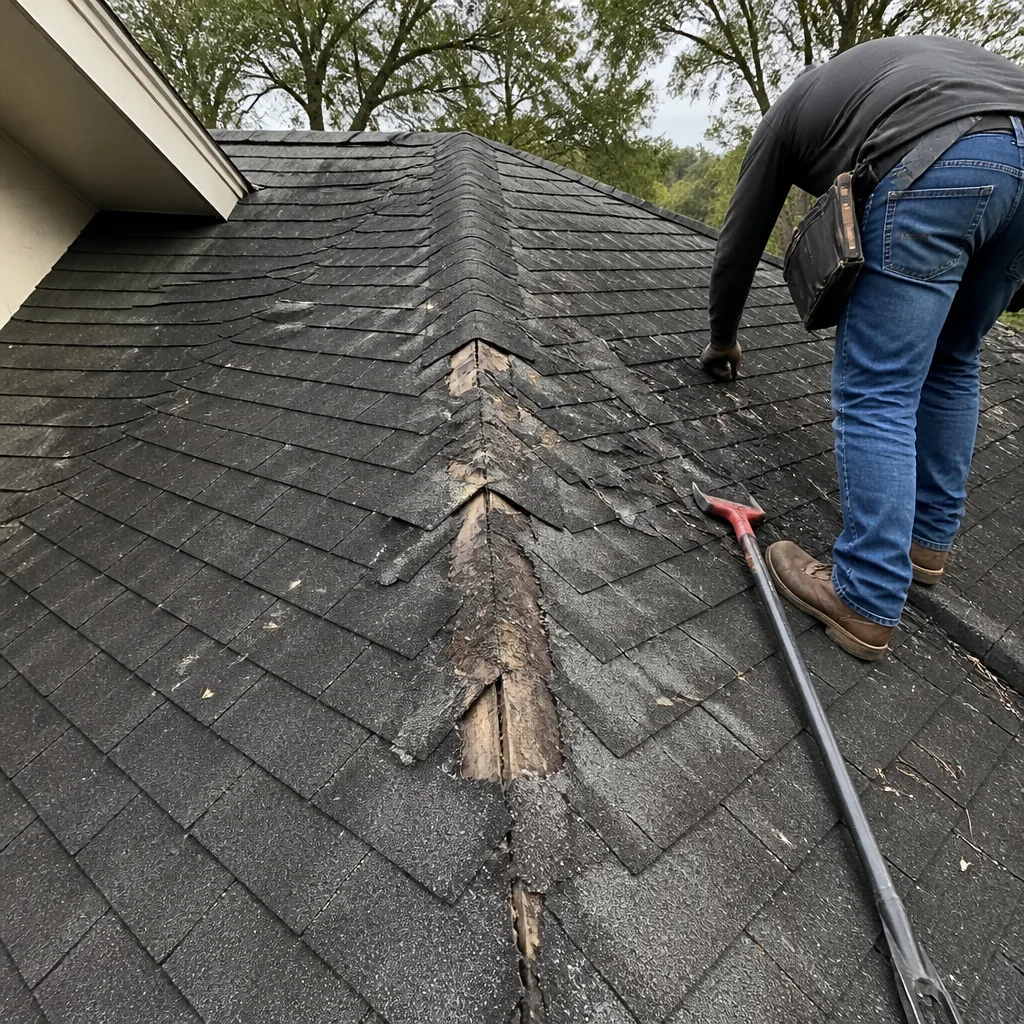 Before
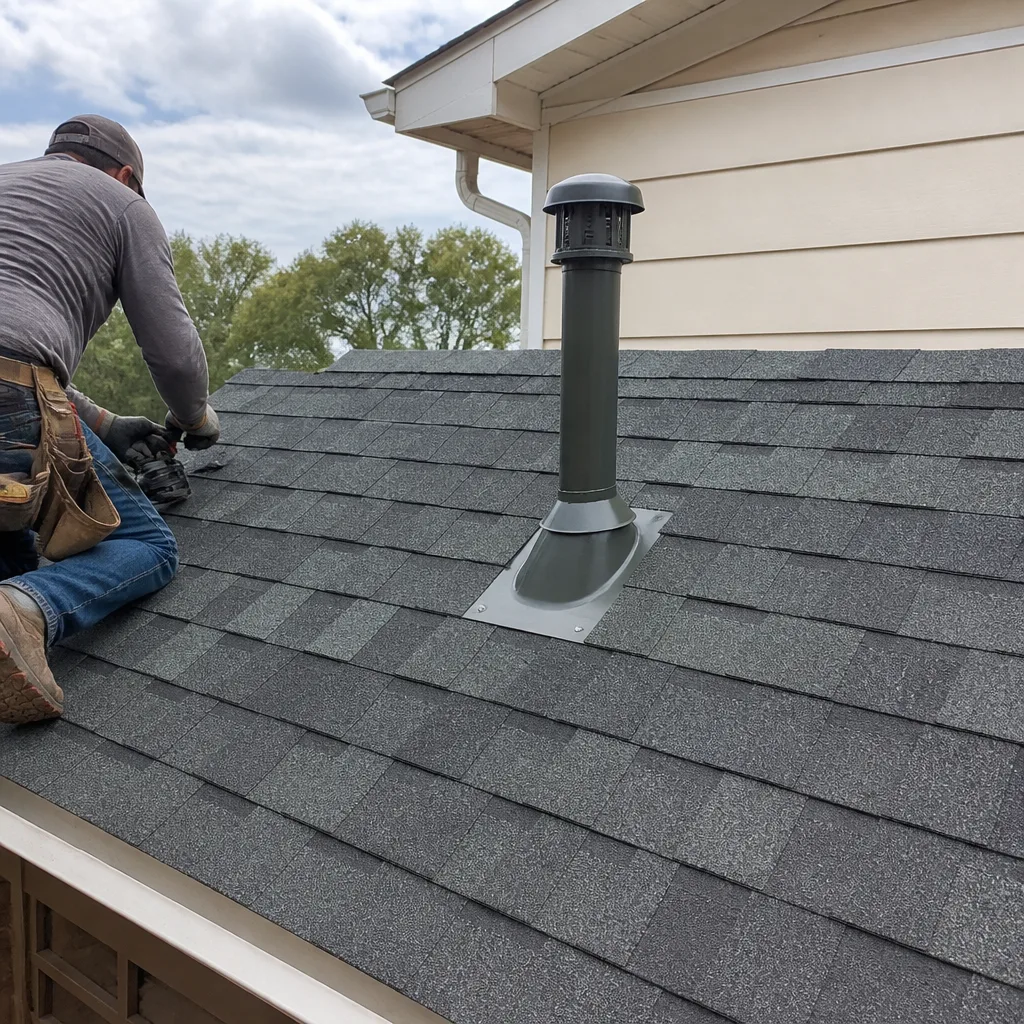 After
After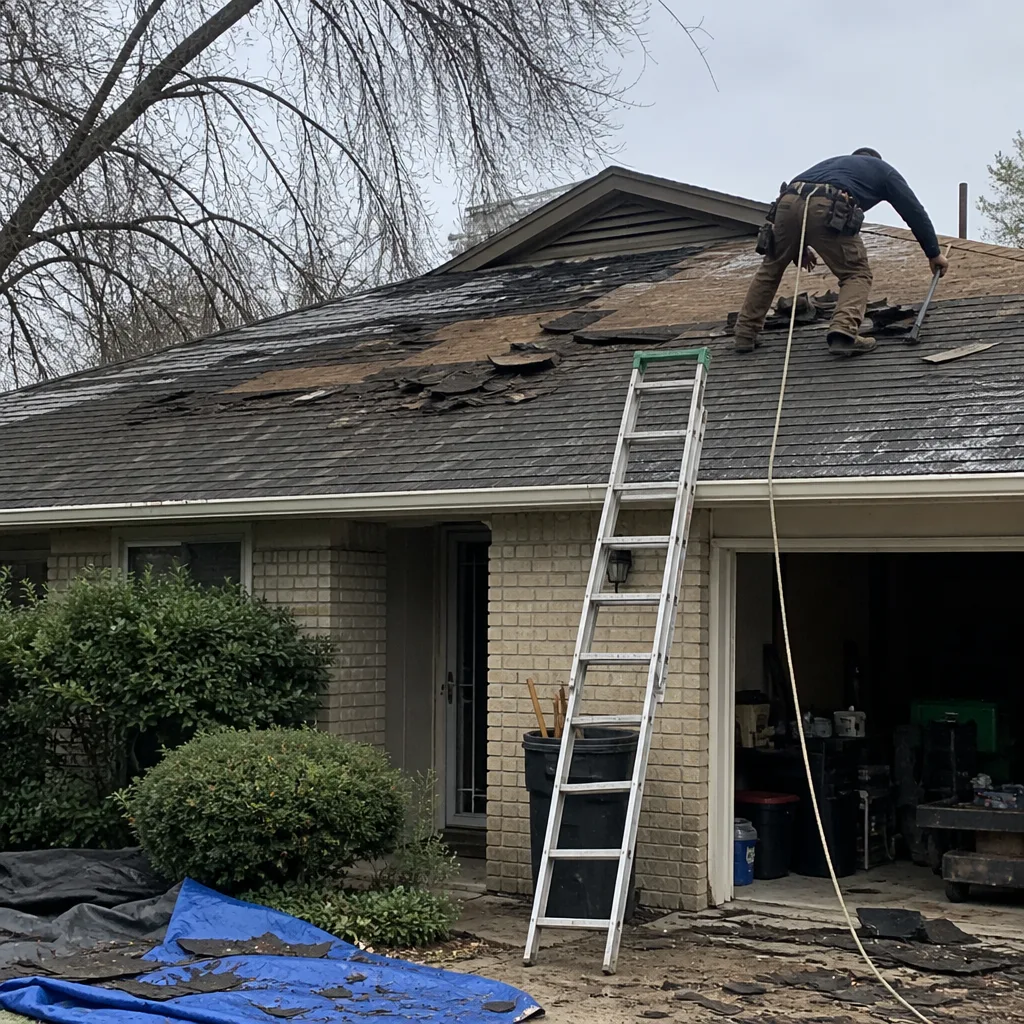 Before
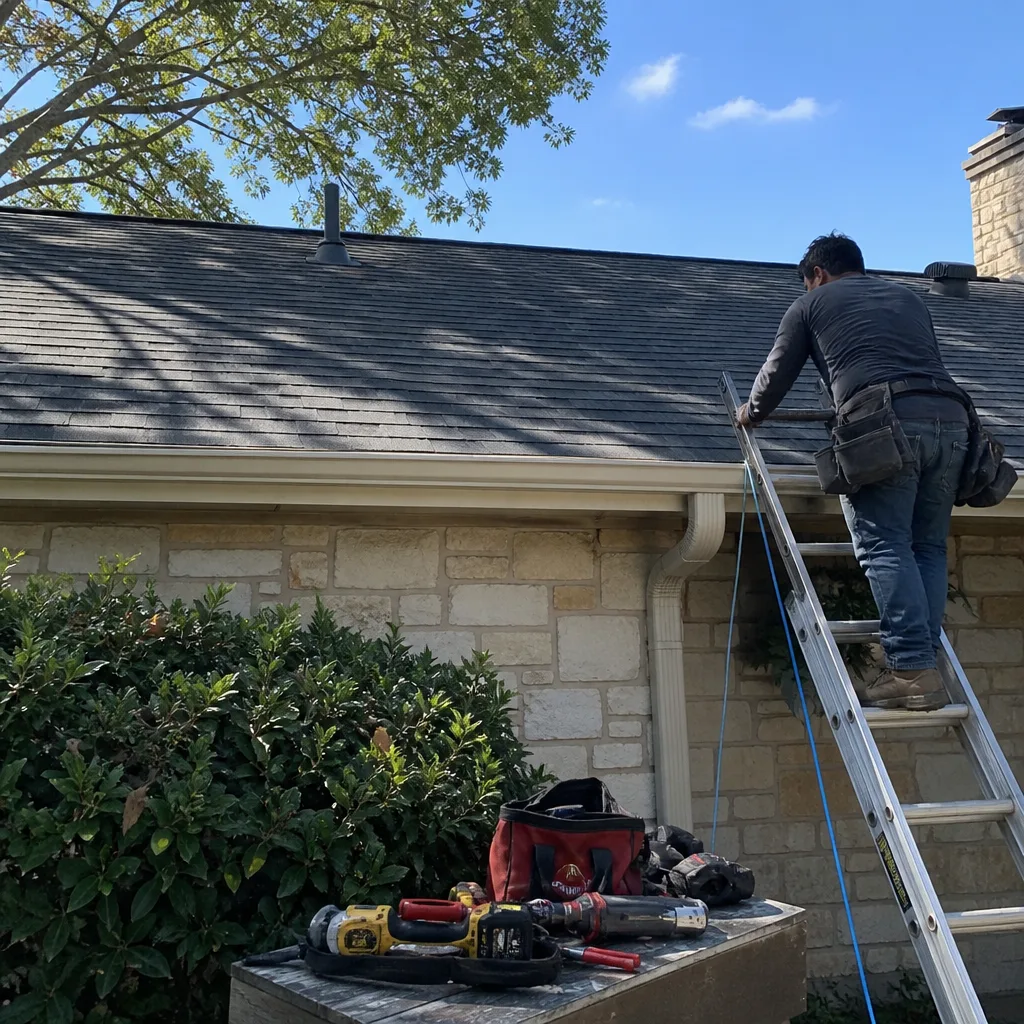 After
AfterWhen to Call a Professional
Call a roofer when you see any of the 72-hour warning signs we covered above: active leaks, lifted shingles exposing underlayment, separated flashing, or severe granule loss. Call before you buy or sell a home, since maintenance history and current roof condition directly affect appraisal and insurance premiums. Call after any hailstorm with stones larger than 3/4 inch, even if nothing looks damaged from the ground. And call when your roof reaches the 15-year age mark in Austin’s climate, even if it looks fine from the street. Crestview Roofing Co Austin offers free estimates throughout Austin, and we put our findings in writing. Call (254) 587-6371 to schedule an inspection or ask about any item on this checklist.
Frequently Asked Questions
At minimum once a year, ideally in October before fall hail season peaks. In Austin’s climate, an annual professional inspection catches sun-related damage, flashing failures, and granule loss before leaks appear. Homes over 15 years old benefit from twice-yearly inspections, one in spring and one in fall. Crestview Roofing Co Austin provides free estimates and written inspection findings for every call.
For a detailed look at what different projects cost, see our Roofing Cost Breakdown: The Austin Homeowner’s Reference for 2026. Most common maintenance tasks like gutter clearing and visual inspections cost $150 to $400 depending on roof size and accessibility. Minor repairs like replacing a pipe boot or resealing flashing typically run $250 to $600. A full professional inspection that includes written documentation is often free if done as part of a repair estimate. For exact pricing on your specific roof, call (254) 587-6371 to schedule an estimate.
Insurance covers sudden, accidental damage from events like hail or windstorms, not routine maintenance. Neglect that causes damage over time is excluded. In Austin, a documented maintenance history strengthens your insurance claim when storm damage does occur, because it shows the roof was in good condition before the storm. File every inspection log and photo.
In Austin’s climate, twenty-year rated three-tab shingles usually last 12 to 15 years, and architectural shingles rated for 30 to 50 years typically reach 20 to 25 years of functional life. The difference comes from UV intensity, heat cycling, and occasional hail. Higher-quality materials from GAF, CertainTeed, Owens Corning, or IKO often hold up better under Central Texas sun than budget shingles.
The most common Austin-specific roof problems are UV-accelerated granule loss, flashing failures from heat-expansion cycles, cedar pollen clogging gutters, hail damage from April and October storms, and ventilation deficiencies that cause shingle curling on south-facing slopes. Most of these issues are preventable or manageable with seasonal maintenance.
You can safely handle gutter clearing, ground-level visual inspections, downspout granule monitoring, and documentation from your phone. You should avoid walking on the roof, especially during summer months when shingles are soft and granule loss risk is highest. Any repair involving flashing, shingle replacement, or leak diagnosis belongs with a professional who can do the work safely and document the repair for warranty purposes.
The Bottom Line
Roof maintenance in Austin isn’t a once-a-year chore. It’s a rhythm that follows the city’s actual seasons: cedar pollen in January, heat stress through summer, hail risk in April and October. The homeowners who get 20+ years from a roof in this climate are the ones who clean gutters when pollen falls, check ventilation before summer, watch for granule loss after storms, and call a roofer within 72 hours of spotting a problem. Document everything. Create a maintenance log with photos and dates. And when something needs a professional eye, call Crestview Roofing Co Austin at (254) 587-6371 for a free estimate. For more guides & resources, visit our blog. A roof that’s maintained on an Austin calendar is a roof that protects the home through every season this city throws at it.
Written by Dylan Pace, Owner at Crestview Roofing Co Austin, serving Austin since 2000.