
Last updated October 17, 2026
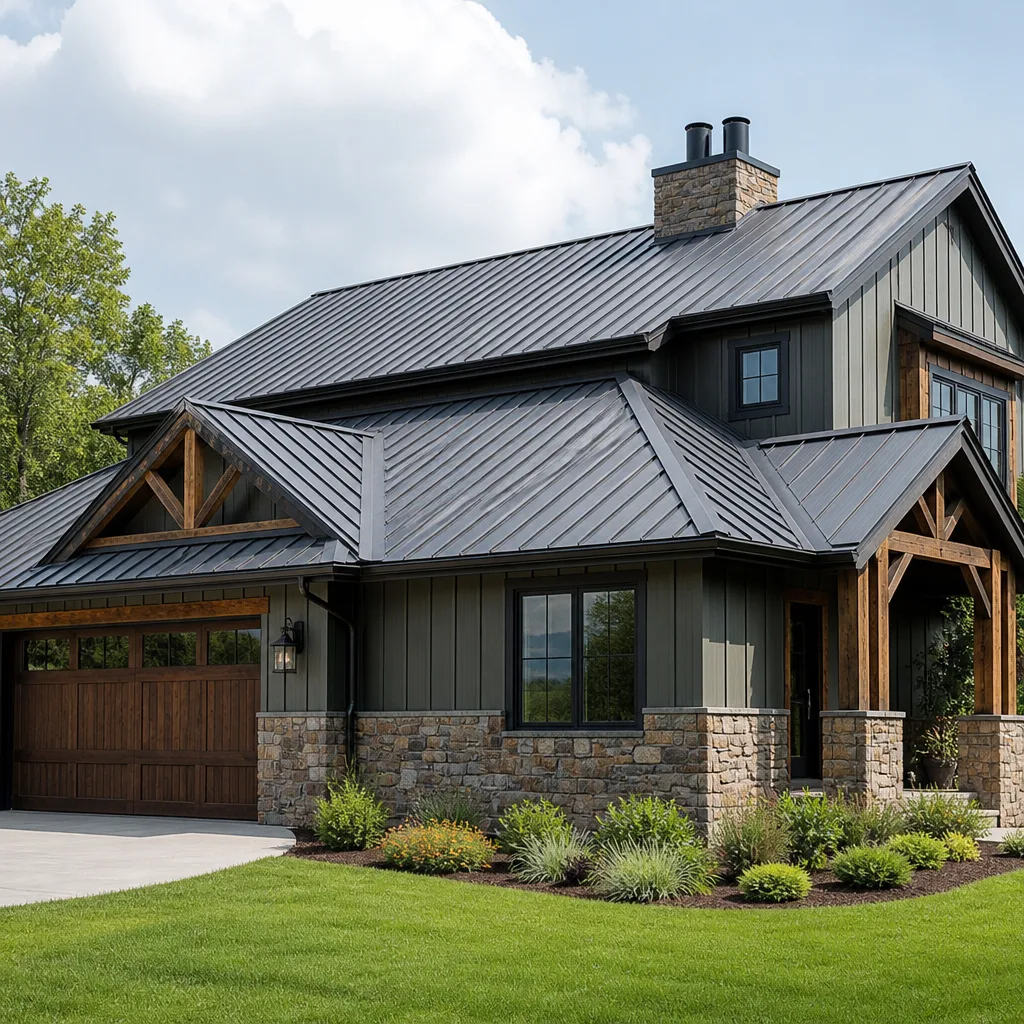 Metal roofing
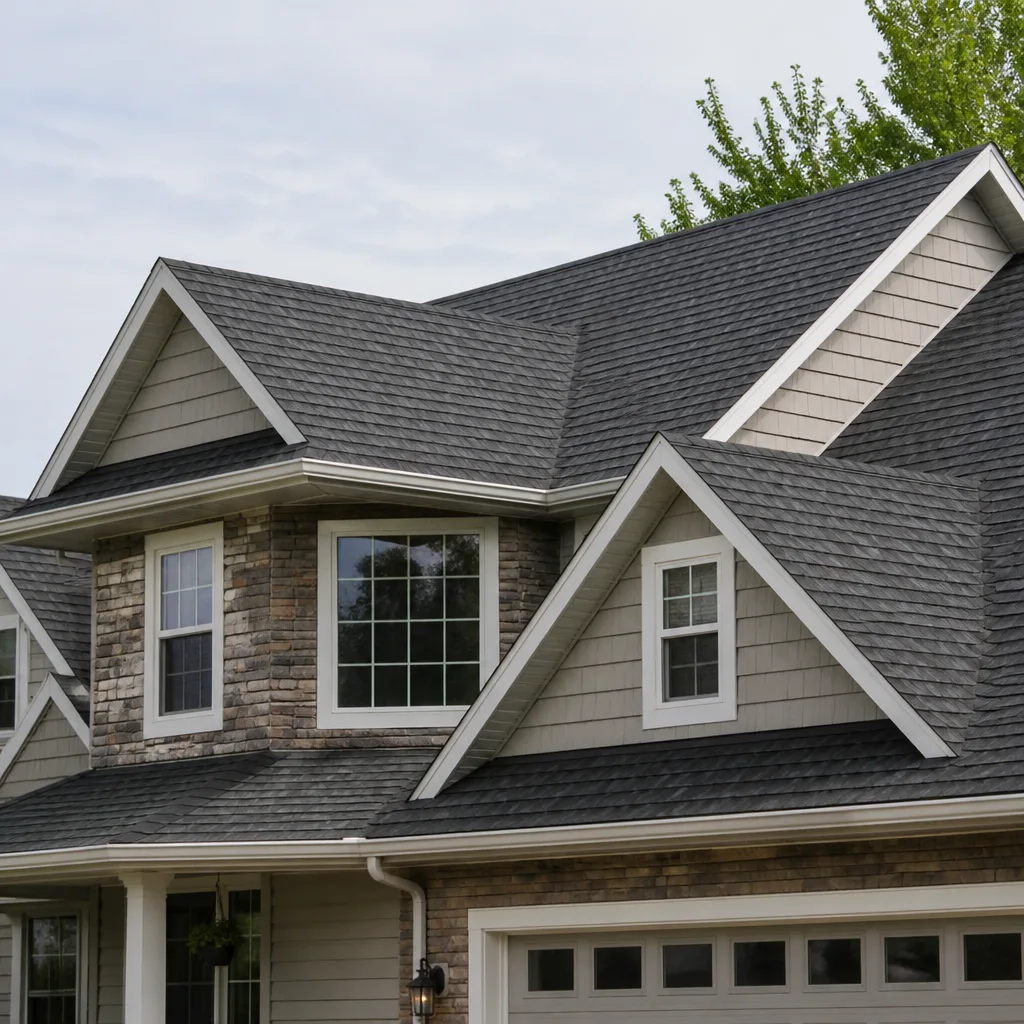 Architectural shingles
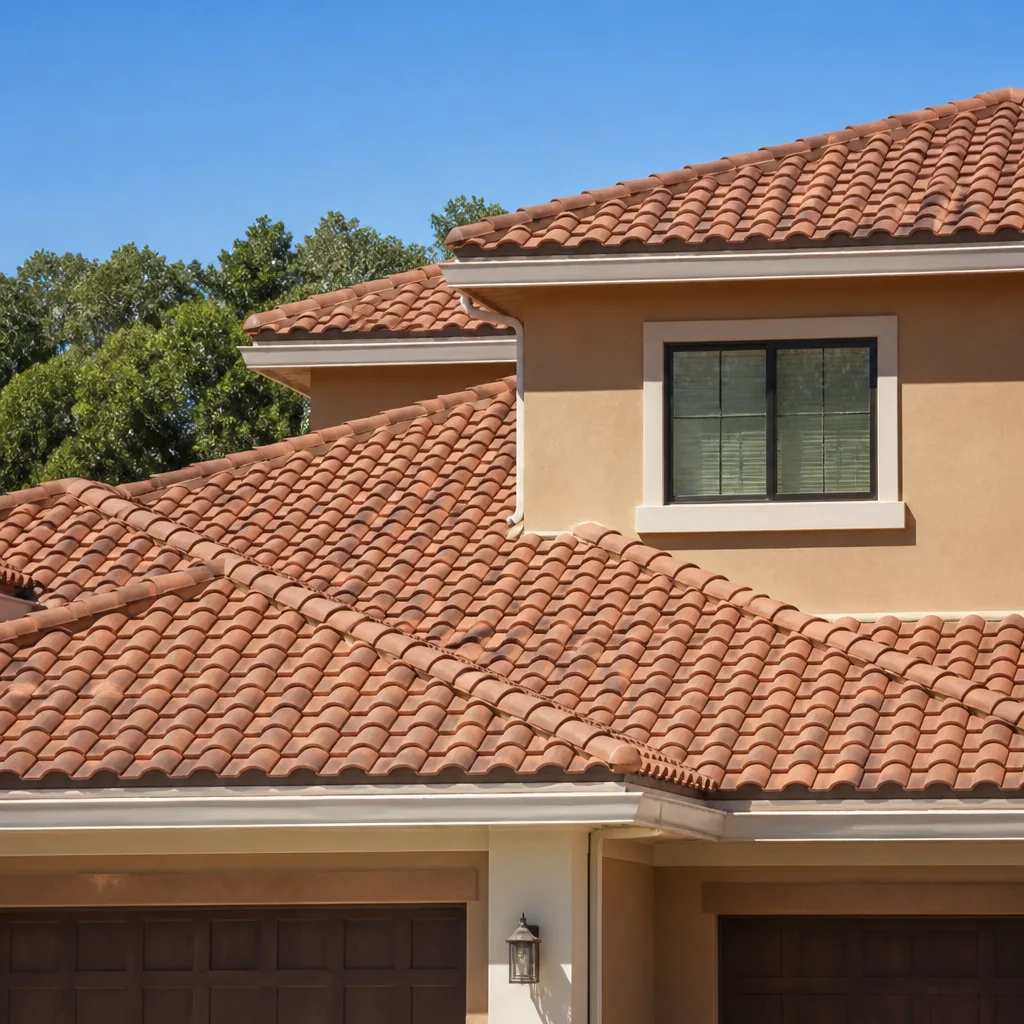 Tile roofing
 GAF
GAF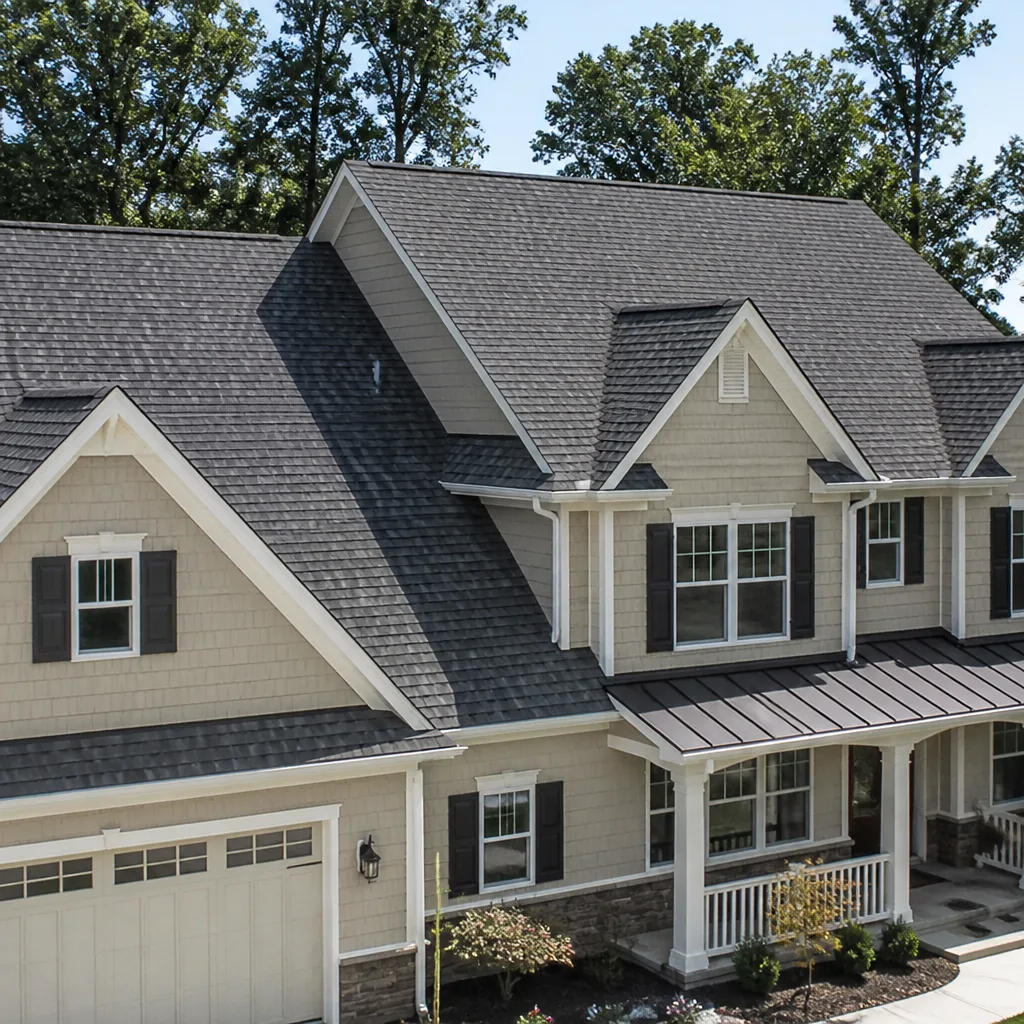 Owens Corning
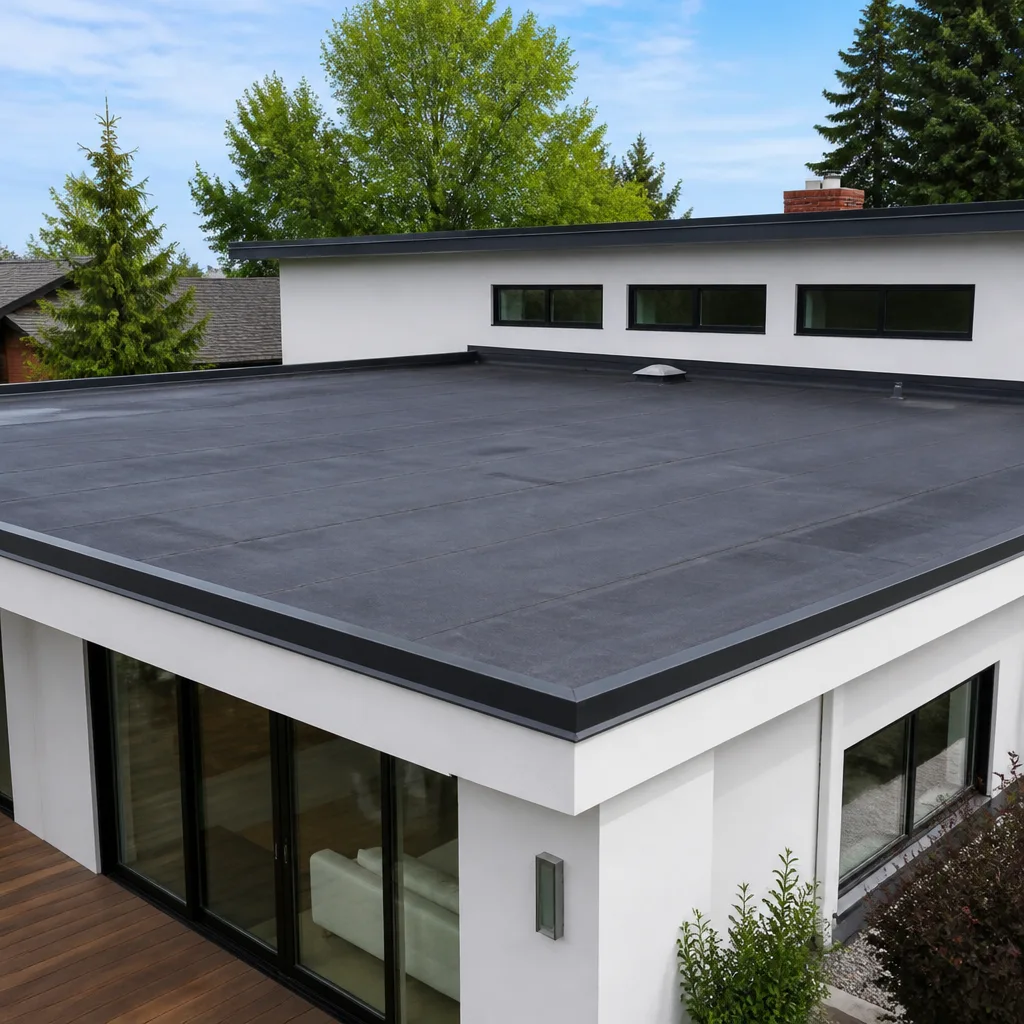 Flat & low-slope
Free roof inspection with deck photos before we talk money - GAF and Owens Corning certified installation
Roofing Permits, Codes & Inspections in TX: What You Need to Know
Here’s something that surprises a lot of Austin homeowners: Texas is one of the easiest states in the country to reroof your own house without any government involvement. The state has no roofing contractor licensing requirement, and many smaller cities don’t ask for a permit on a straightforward shingle replacement. But Austin is not one of those cities. If you live inside Austin city limits and you replace your entire roof without a permit, you could be looking at a stop-work order, a doubled permit fee, and an insurance carrier that refuses to renew your policy. This guide walks through exactly what Austin requires, what inspectors check, what it costs, and how the permit process works whether you hire a contractor or pull the permit yourself. For The Complete Guide to Roofing in Austin and more, see our blog.
Styles & brands we work with
Quick Answer
In the City of Austin, a full roof replacement on a single-family home requires a building permit. Repairs covering less than 100 square feet of roofing surface are generally exempt. The permit must be pulled before any material is removed, and the job requires two inspections: a rough-in inspection after the old roof is off and the decking is visible, and a final inspection after the new roofing system is fully installed.
Table of Contents
- When Austin Requires a Permit
- Roofing Code Basics in Austin
- The Two-Stage Inspection Process
- Austin Energy and Solar Roofing Requirements
- Permits and Your Insurance Claim
- Homeowner Permits vs. Contractor Permits
- What Austin Roofing Permits Cost
- Common Mistakes to Avoid
- When to Call a Professional
- Frequently Asked Questions
- The Bottom Line
When Austin Requires a Permit
The City of Austin requires a building permit for any roofing work that is not explicitly exempted by the city’s code. Here is the practical breakdown for a single-family home.
A permit is required when:
- A roof replacement involves 100 square feet or more of roofing surface. This covers almost every full reroof on a house, townhome, or detached garage.
- You are replacing roof decking, also called sheathing. Even if the shingle area is small, replacing deck boards triggers a permit because the structural layer of the roof is being altered.
- The work includes structural changes, like adding a dormer, installing a skylight, or reframing rafters.
- You are converting part of the attic into living space that requires roof modification.
- The home is located in a historic district or is a designated historic landmark. Austin requires additional review for these properties regardless of scope.
A permit is generally not required when:
- The repair covers less than 100 square feet of shingles or membrane, and no decking is replaced. This is the common “patch” scenario after a wind event or a small leak.
- The work is cosmetic only, like painting roof vents or replacing ridge caps without disturbing the underlayment.
- The roofer is only replacing individual shingles that were blown off, as long as the underlayment is intact.
That 100-square-foot threshold is the line most homeowners miss. A repair that looks like “just a small patch” from the street can easily cross it once a roofer starts pulling up damaged decking. In our experience at Crestview Roofing Co Austin home, we’ve repaired roofs in neighborhoods like Crestview, Allandale, and Mueller where what looked like a simple shingle fix turned into a decking replacement, and the permit was suddenly mandatory. It’s better to check the actual measured scope before work begins than to have an inspector flag it later.
Roofing Code Basics in Austin
Austin adopts the International Residential Code with local amendments, and the roofing provisions follow the IRC’s Chapter 9. The city also enforces specific wind uplift requirements that reflect Central Texas weather patterns: hot summers, occasional freezing winters, and spring storm seasons that produce high winds and hail. Our Seasonal Roofing Care for Austin: Year-Round Homeowner’s Guide breaks down what to watch for each season.
What the code requires in Austin, in plain language:
- Underlayment. Austin requires at least one layer of an approved underlayment beneath the shingles. The specific type depends on the roof slope. Low-slope roofs need heavier material, usually a self-adhered membrane like GAF StormGuard or CertainTeed WinterGuard, because water drains more slowly on shallow pitches.
- Shingle fastening. Nails must be long enough to penetrate through the decking or at least 3/4 inch into solid wood. Six nails per shingle is now the standard in Austin for anything on a roof with a pitch below about 7:12, which covers most Central Texas ranch and two-story homes.
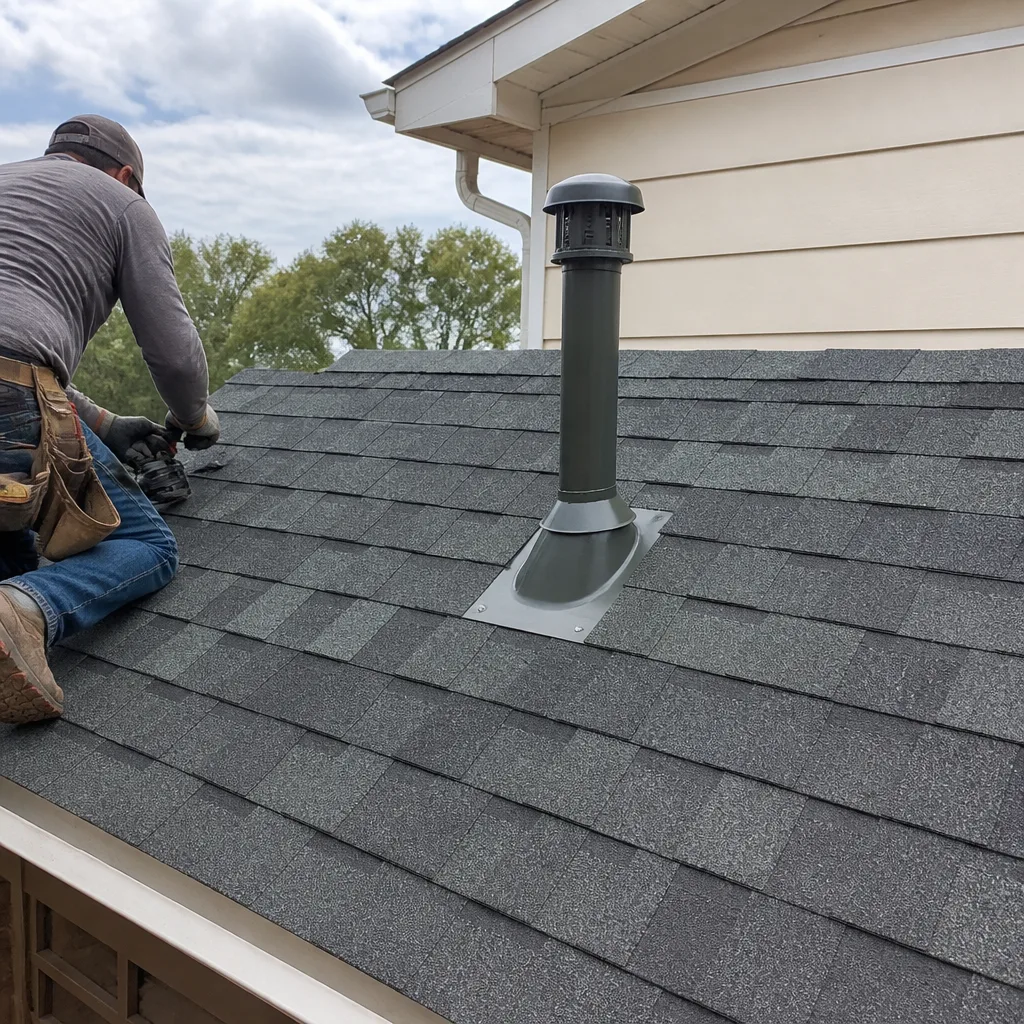
- Flashing. Flashing – the metal strips that seal joints around chimneys, skylights, and vents – must be installed at every roof penetration. The Austin code is specific about the gauge of metal and the overlap distances at sidewalls and valleys.
- Drip edge. Austin requires a metal drip edge along eaves and rakes. This small metal piece directs water away from the fascia board and prevents rot at the roof edge. It is a common inspector catch on replacement work by contractors who skip it to save time.
- Decking condition. If the existing decking is water-damaged, rotted, or not rated for the new roof load, it must be replaced. The code does not allow shingles to be nailed into soft or crumbling wood.
- Ventilation. Attic ventilation must meet the IRC standard of 1 square foot of net free vent area for every 150 square feet of attic floor space, unless the attic is unvented by design using conditioned space approaches. Austin inspectors check this on replacements because new decking and underlayment change the air flow dynamic.
One thing worth knowing: Austin’s code requirements are not the same as San Antonio’s, Houston’s, or Dallas’s. Each Texas city adopts its own amendments. If you read a generic “Texas roofing permit” guide and apply it to a home in Travis Heights or Rosedale, you may be working from rules that apply to a different municipality entirely.
The Two-Stage Inspection Process
Austin’s residential roofing inspection happens in two visits. This is one of the things that sets Austin apart from smaller Central Texas cities that only do a single final inspection, and it’s the step most likely to disrupt a poorly planned roofing schedule.
Stage 1: Rough-In Inspection
The rough-in inspection happens after the old roofing material and underlayment are removed but before the new shingles or metal panels go on. The inspector wants to see the bare decking and the condition of the structural layer.
What the inspector checks during rough-in:
- That the decking is sound, properly fastened to the rafters, and meets the minimum thickness for the new roofing system.
- That any replaced decking is the correct grade and thickness, with approved fasteners at the correct spacing.
- That the drip edge is installed at the eaves before underlayment goes down.
- That the underlayment is installed correctly if it is already in place, with the required overlap.
- That flashing at penetrations is visible and properly seated before shingles cover it.
Here is the practical headache this creates for homeowners: you cannot schedule the rough-in and final inspection on the same day. The city requires the rough-in to pass before the roof is closed in. That means the roofer has to tear off the old roof, call in the inspection, and wait for the inspector to show. If the inspection is scheduled for 2 p.m. and the roof comes off at 10 a.m., there is a window where the house is protected only by the underlayment. If weather moves in during that window, the roofer has to tarp the roof, which adds cost. A roofer who knows Austin’s process schedules the tear-off and the rough-in inspection in tight coordination. A roofer who does not know the process is the one you read about in neighborhood Facebook groups leaving a home exposed through a storm.
Stage 2: Final Inspection
The final inspection happens after the entire roofing system is installed. The inspector is confirming that what was specified in the permit application and observed at rough-in is what actually got built.
What the inspector checks during final:
- That the shingle or metal installation matches the manufacturer’s installation requirements. If the roofer installed GAF shingles, the inspector checks that the fastening pattern, exposure, and alignment match GAF’s published installation specifications.
- That flashing is fully installed and lapped in the correct direction so water sheds away from penetrations.
- That the ridge vent or attic ventilation meets the code minimum and is properly installed.
- That the roof edge, drip edge, and gutters are correctly integrated.
- That all debris is removed from the roof surface and gutters.
Every Austin roofer we talk to has a story about a final inspection that failed over something small: a missing drip edge section, a vent boot installed backward, a nail pattern that didn’t match the manufacturer’s spec on one slope. These are the kinds of issues covered in our Roofing Warning Signs: A Austin Homeowner’s Reference Guide. The fix is usually quick, but it means the roofer has to come back, correct it, and schedule a re-inspection. For a homeowner, the takeaway is that the inspection process is real and it provides a genuine quality backstop, but only if the job was permitted in the first place.
Austin Energy and Solar Roofing Requirements
If your Austin home has rooftop solar, or you’re planning to add solar in the next few years, the roofing permit process has an extra layer.
Austin Energy requires any homeowner with a grid-tied solar system to work with an approved solar contractor when panels are removed and reinstalled for a reroof. The solar system must be disconnected by a licensed electrician before the roof work begins, and Austin Energy must approve the reconnection after the roof is finished. This is not part of the standard building permit. It is a separate process through Austin Energy’s interconnection department.
What happens in practice: a roofer who is not familiar with solar will tell you they can just “work around” the panels. That is not how Austin Energy sees it. The panels sit on racks that are bolted through the roofing material into the rafters. To replace the roof correctly, those racks come off, which means the system is de-energized and re-energized through the utility’s process. If a homeowner skips this step, Austin Energy can flag the system on a future inspection or during a home sale, and the buyer’s lender may balk at an unpermitted modification to a grid-tied system.
For homes planning solar but not yet having it, Austin’s code requires that the roof structure be evaluated for the additional load before solar panels are installed. A roofing permit issued now has no bearing on a future solar installation, but the condition of the decking and rafters does. If you’re planning solar in the next few years, it is worth letting your roofer know before Roof Replacement in Austin starts. The roofer can document the decking condition and rafter spacing so that the future solar contractor knows exactly what they’re working with.
Permits and Your Insurance Claim
This is the section that costs Houston and San Antonio roofers business when Austin homeowners discover it after the fact.
If you file a homeowners insurance claim for a roof replacement and the adjuster discovers that a previous roof was replaced without a permit, the insurer has grounds to deny the claim or reduce the payout. Here is how that plays out in practice: a homeowner in Brentwood buys a house with a 10-year-old roof. A hailstorm hits, the homeowner files a claim, and the adjuster pulls the permit history for the property. The previous roof replacement was done without a permit. The insurer’s position is that the roof’s condition cannot be verified against code, and therefore the claimed storm damage cannot be distinguished from pre-existing unpermitted work. The claim gets denied or reduced, and the homeowner is left negotiating with the previous owner’s contractor or paying out of pocket.
Permit history follows the house, not the owner. If you buy a home in Austin, the city’s permit database shows every permit ever pulled for that address, including roofing permits. A missing permit on a 2015 roof replacement is a negotiation point in a 2026 real estate transaction, and listing agents in Austin are increasingly checking permit history as part of their pre-listing due diligence because buyers are asking.
The insurance angle also applies to the current claim. If you’re reroofing after storm damage and the insurance company is writing the check, the adjuster will almost always require a copy of the permit and the final inspection before releasing the depreciation holdback. No permit means no final inspection, and no final inspection means the insurance company keeps the holdback, which is typically 20 to 30 percent of the claim value.
Homeowner Permits vs. Contractor Permits
Austin allows homeowners to pull their own building permits for their primary residence. Here is what that means and what it does not mean.
When a Homeowner Pulls the Permit
- The homeowner applies through the City of Austin’s AB+C (Austin Build + Connect) online portal, pays the permit fee, and is listed as the permit holder.
- The homeowner is legally responsible for scheduling both inspections and ensuring the work meets code.
- If the work fails an inspection, the homeowner is the one who receives the correction notice.
- If an unlicensed person performs the work and something goes wrong, the homeowner’s only recourse is the contract, not the city’s complaint process, because there is no contractor of record.
When the Contractor Pulls the Permit
- The contractor’s name and license information appear on the permit application, and the contractor becomes the party of record with the city.
- The contractor is responsible for scheduling and passing both inspections.
- If the work fails a final inspection, the contractor cannot close out the job until the corrections are made and the inspection passes.
- If the roof leaks a year later and the permit history shows the contractor pulled the permit, the homeowner has clear documentation of who did the work, which strengthens a warranty claim.
The liability difference is the point most homeowners miss. When you pull the permit, you assume the legal responsibility for code compliance. That is a meaningful burden for a roofing system you are not installing yourself. When a contractor pulls the permit, the accountability for inspections and code compliance sits with the company whose name is on the permit. At Crestview, we always pull the permit for any Roof Installation in Austin job where one is required. It is not a negotiation point. The permit protects the homeowner, and it protects the roofer, and it creates a paper trail that matters for insurance and future resale.
What Austin Roofing Permits Cost
Austin’s permit fees are based on the valuation of the work. For a typical single-family roof replacement, here is what homeowners in Austin can expect, based on the city’s current fee schedule and the jobs we price weekly.
- Permit application and base fee: $150 to $400 for a standard single-family reroof, depending on the declared valuation.
- Plan review fee (if triggered): $50 to $150. Most straightforward reroofs skip plan review, but historic district homes and homes with structural changes pay this.
- Reinspection fee (if a second visit is needed): $75 to $150 per re-inspection. If the rough-in fails once and the final fails once, you’re looking at $150 to $300 in extra fees.
- Double permit fee: If the city discovers work started without a permit, the fee doubles. A $300 permit becomes $600, plus a possible stop-work order that halts the job until the permit is issued.
For a standard shingle replacement on a 2,000-square-foot Austin home, the total permit cost is typically $250 to $500. That is less than one percent of the total Roof Repair in Austin or replacement cost, and it buys a documented, inspected, code-compliant roof. The math is not hard. The people who skip permits in Austin are not saving money. They are trading a few hundred dollars now for a five-figure insurance or resale problem later.
Common Mistakes to Avoid
- Assuming “Texas” rules apply everywhere. Texas gives cities broad authority to amend building codes. San Antonio, Houston, Dallas, and Austin all have different requirements. If you read a statewide guide and apply it to a home in Austin’s 78704 ZIP code, you’re working from incomplete information.
- Skipping the permit because the roofer says it’s “not needed.” This is the most common one we hear. A roofer who says a full roof replacement in Austin does not need a permit is either wrong or is trying to avoid the inspection process. Either way, the homeowner bears the risk.
- Not verifying the permit number. Some contractors say they’ll “take care of the permit” and never pull it. Ask for the permit number, then verify it in the city’s Austin Build + Connect portal before any material is delivered.
- Letting the roof get closed in before the rough-in inspection. If the shingles go on before the inspector sees the decking, the inspector can require a partial tear-off to expose the underlayment. That is an expensive delay caused by poor scheduling.
- Ignoring the solar disconnect. Reroofing under or around solar panels without going through Austin Energy’s process can leave the system out of compliance and complicate a future home sale.
- Buying a house without checking the roof permit history. Austin’s permit database is public. Before you close on a house, pull the permit history for the roof. If a new roof was advertised and no permit exists, negotiate the price accordingly.
When to Call a Professional
Austin’s permit and inspection process is not complicated on paper, but it is unforgiving when mistakes happen. If your roof needs more than a small shingle patch, if you’re replacing decking, if you have solar panels, or if you’re in a historic district, the process is easier to navigate with a roofer who does it every week. You do not need to know the IRC’s fastening table to get a code-compliant roof. You need a company that does, and that puts the process in writing before the job starts. Crestview Roofing Co Austin offers free estimates in Austin. Call (254) 587-6371 and we’ll walk your roof, confirm the permit requirements for your specific property, and give you a written price before any work begins. Visit our more guides & resources page for additional homeowner help.
Frequently Asked Questions
Yes, if the replacement covers 100 square feet or more of roofing surface or involves replacing decking, you need a building permit from the City of Austin. Repairs under 100 square feet with no decking replacement are generally exempt. Call (254) 587-6371 if you’re not sure which category your job falls into.
For a straightforward reroof, the permit is typically issued within 1 to 3 business days of application, and the two inspections are scheduled within 1 to 2 business days of the request. In practice, a full Austin roof replacement with permit and both inspections usually runs 3 to 7 business days from start to final sign-off, weather permitting.
The city can issue a stop-work order, which halts the job immediately, and double the permit fee. You’ll also need to expose any work that was covered before the city can inspect it. Once the inspection record shows unpermitted work, your insurance carrier and future buyers will both see it in the property’s permit history.
Yes, Austin allows homeowners to pull roofing permits for their primary residence. You assume the responsibility for scheduling inspections and ensuring code compliance. If you hire a contractor, letting them pull the permit keeps the legal accountability with the company on record.
Most single-family roof replacement permits in Austin cost between $250 and $500, depending on the declared valuation of the work. Additional fees apply for plan review, historic district review, or reinspection after a failed visit.
Yes, in most cases. Austin-area insurance carriers routinely require a copy of the permit and final inspection before releasing the depreciation holdback on a roof claim. If the work was done without a permit, the carrier may deny the claim or reduce the payout. Call (254) 587-6371 for a free estimate and we’ll handle the permit as part of the job.
The Bottom Line
Austin is not a city where you skip the roofing permit and hope no one notices. The two-stage inspection process, the public permit database, the insurance carrier requirements, and the Austin Energy solar rules all point the same direction: get the permit, pass the inspections, and keep the paperwork. The permit costs less than a single sheet of decking, and the absence of one can cost you a denied claim or a stalled home sale. If you’re planning a roof replacement, a Crestview Roofing Co Austin home roofer can tell you exactly what your property requires and what it will cost before any work starts. That’s the way it should work, and in Austin, it’s the only way that does.
Written by Dylan Pace, Owner at Crestview Roofing Co Austin, serving Austin since 2000.
See the difference
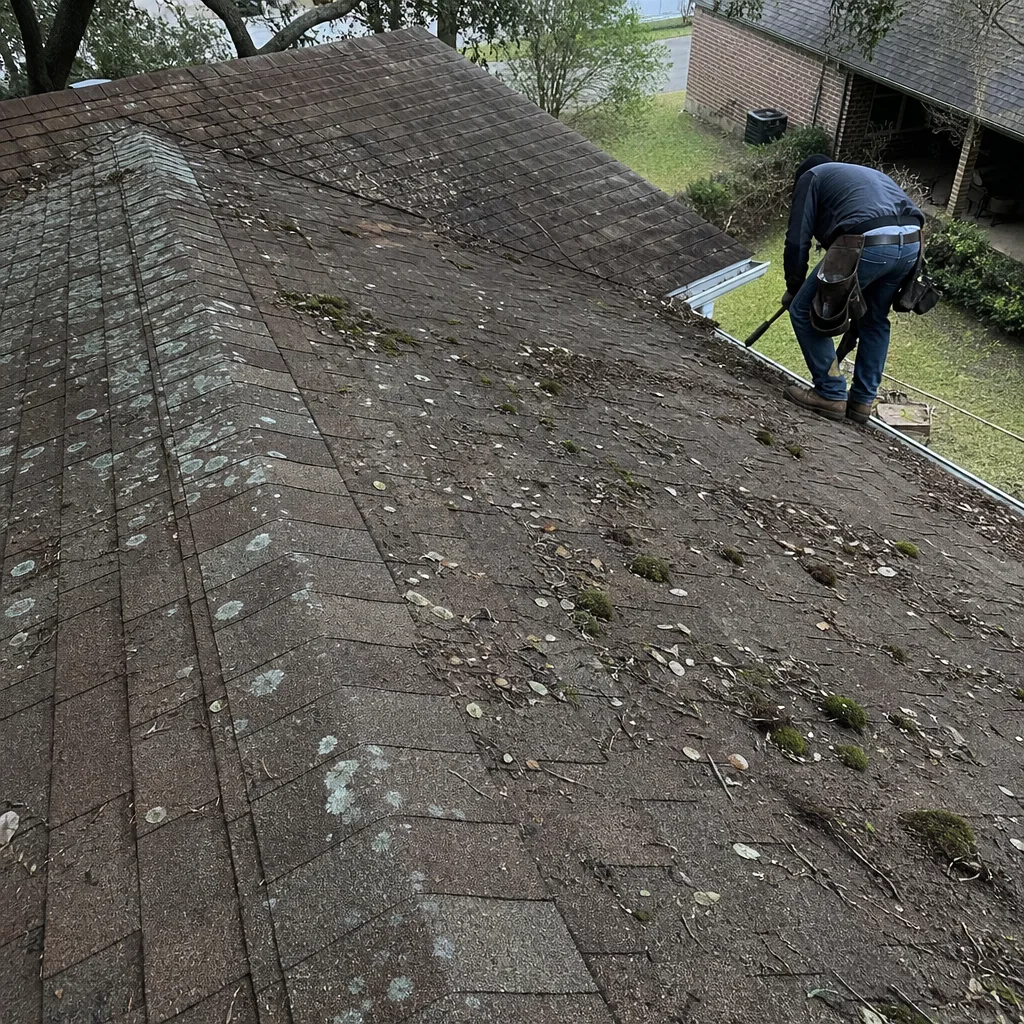 Before
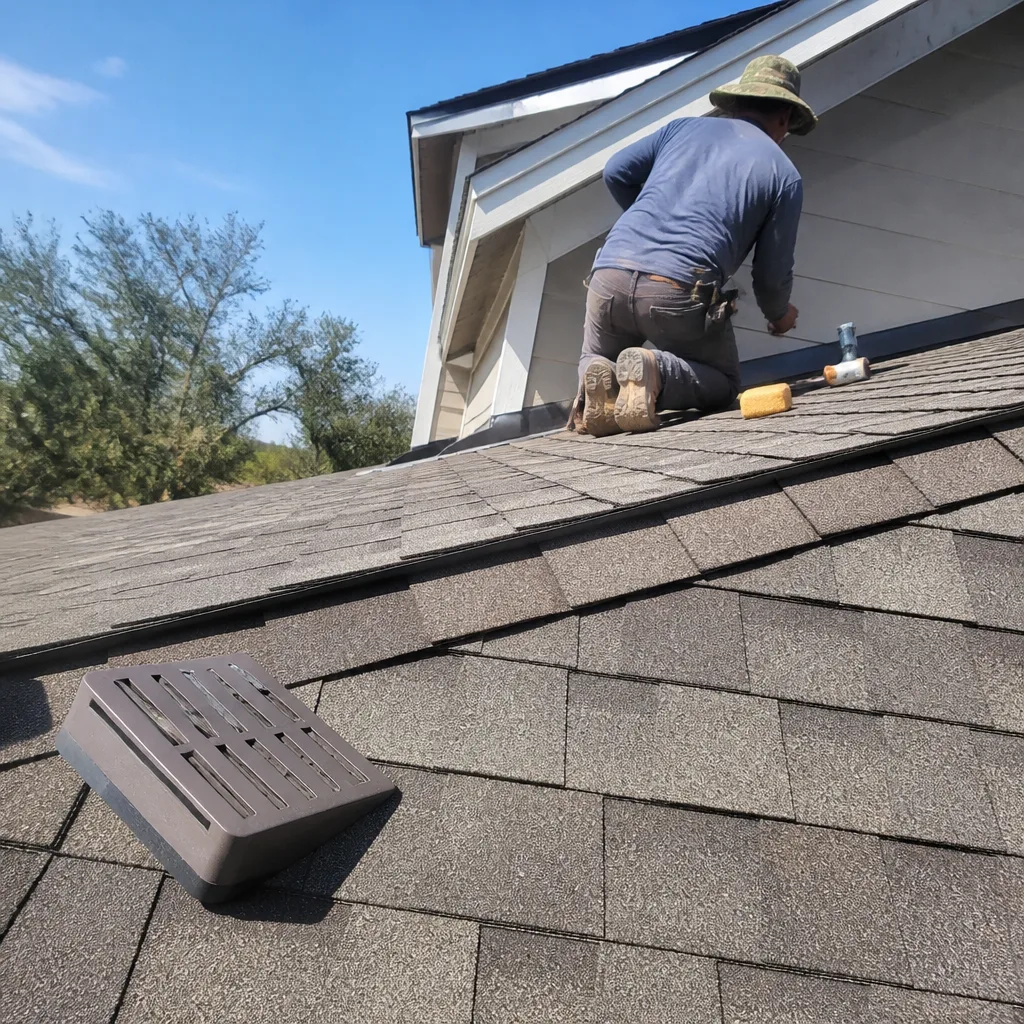 After
After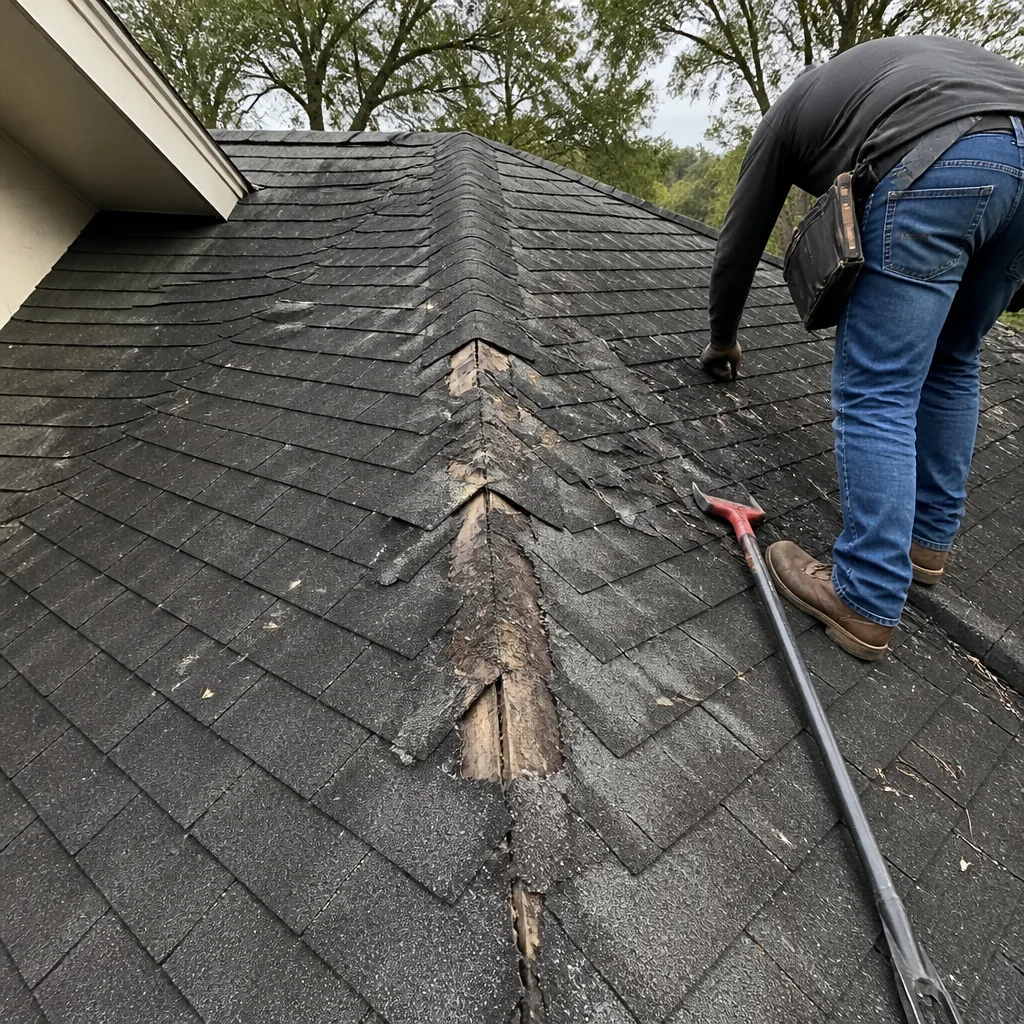 Before
 After
After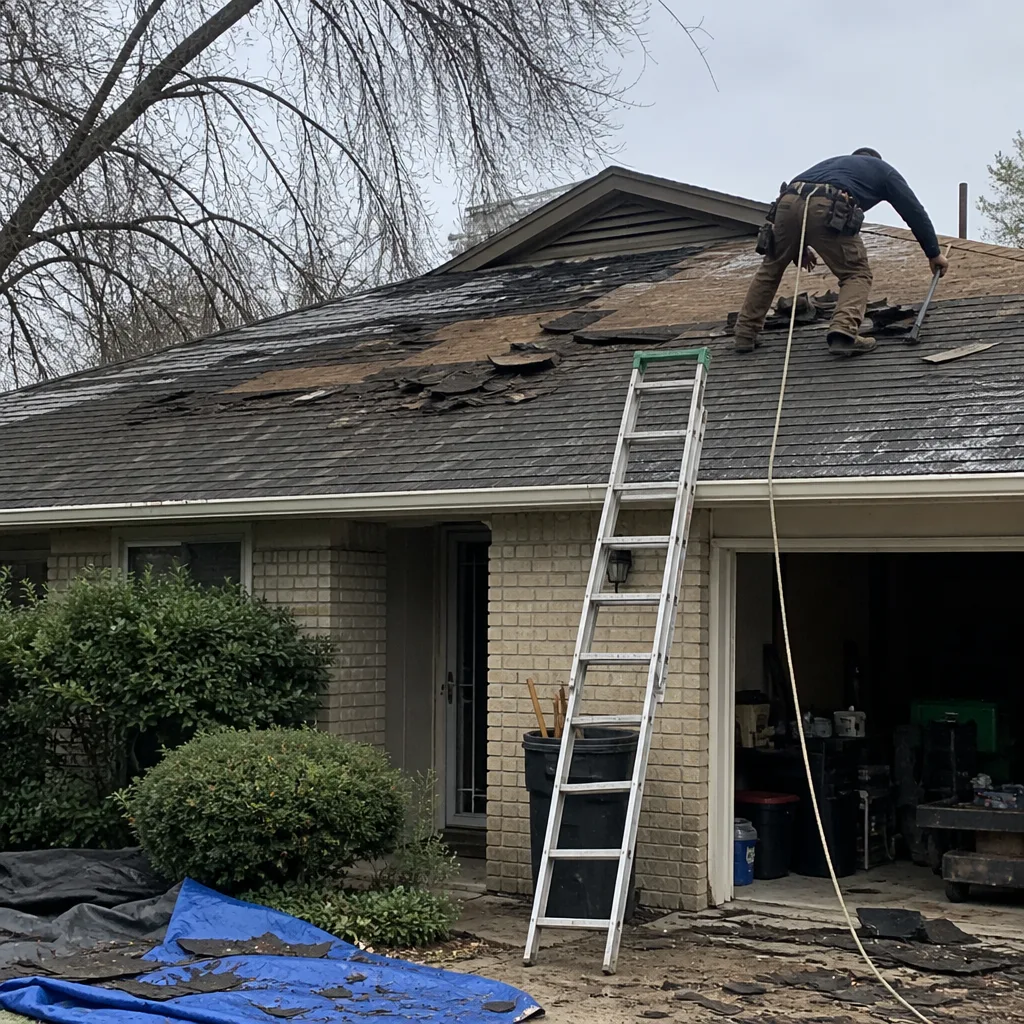 Before
 After
After