
Last updated October 17, 2026
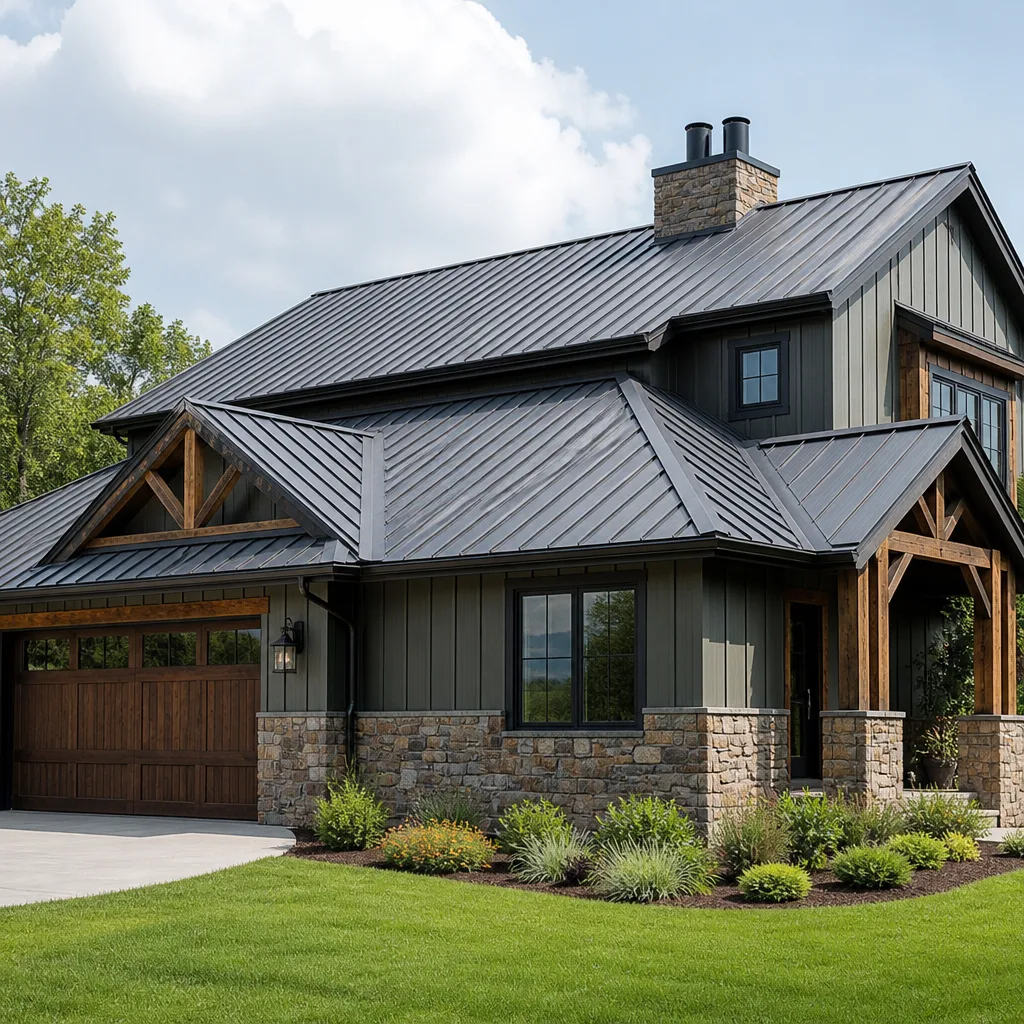 Metal roofing
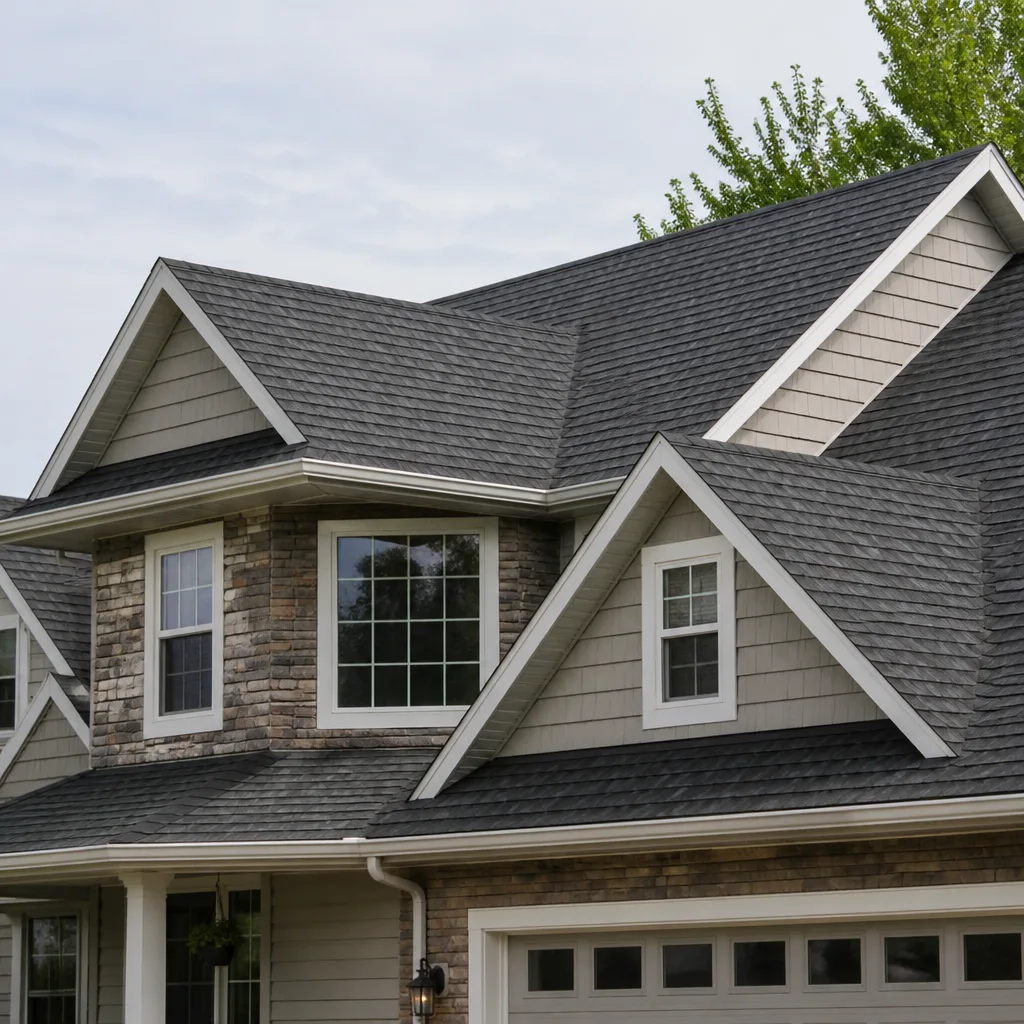 Architectural shingles
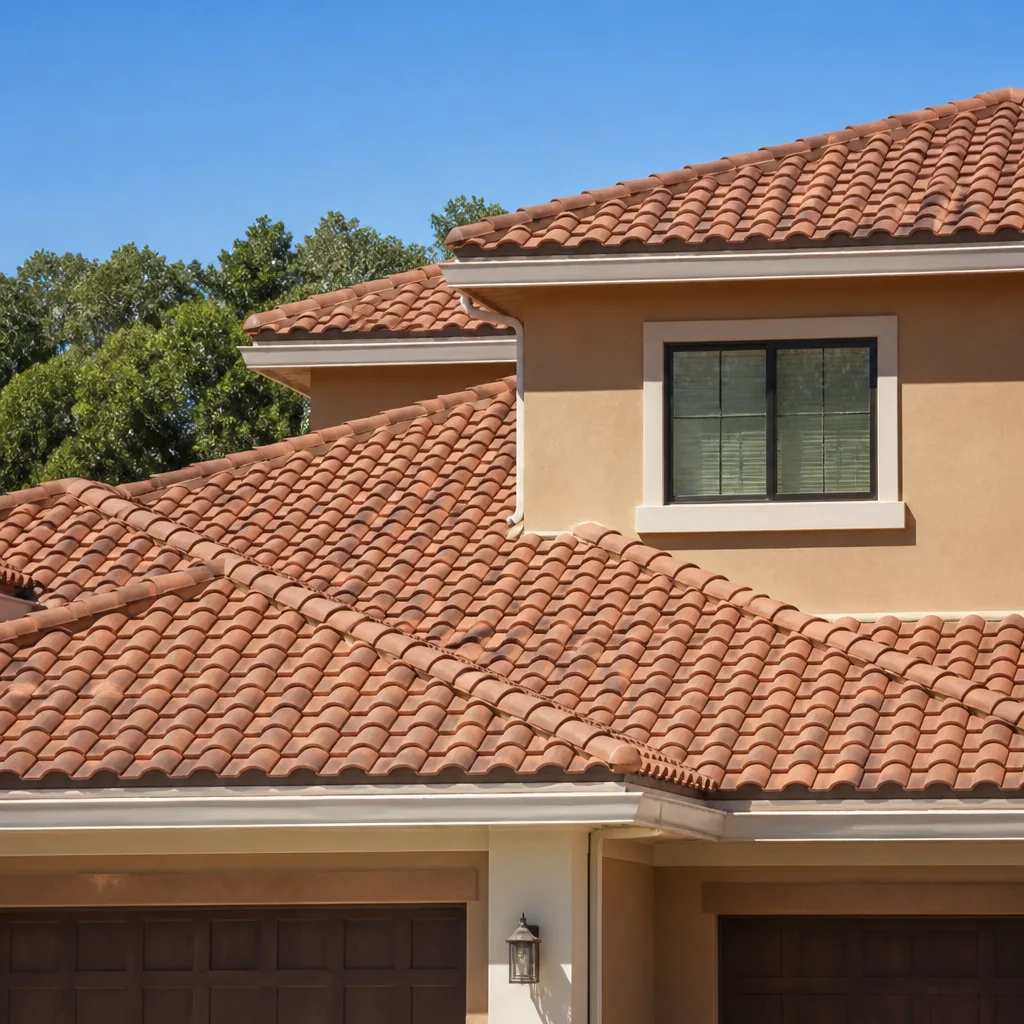 Tile roofing
 GAF
GAF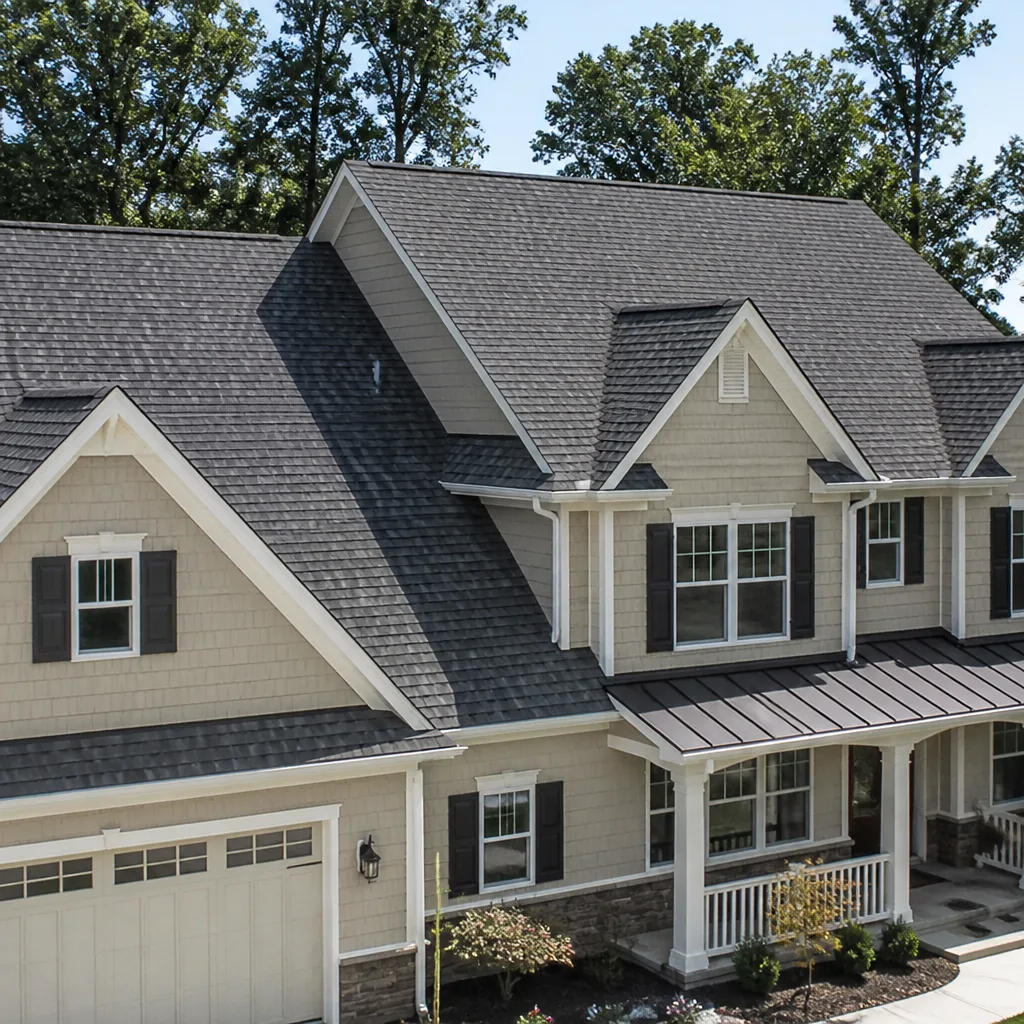 Owens Corning
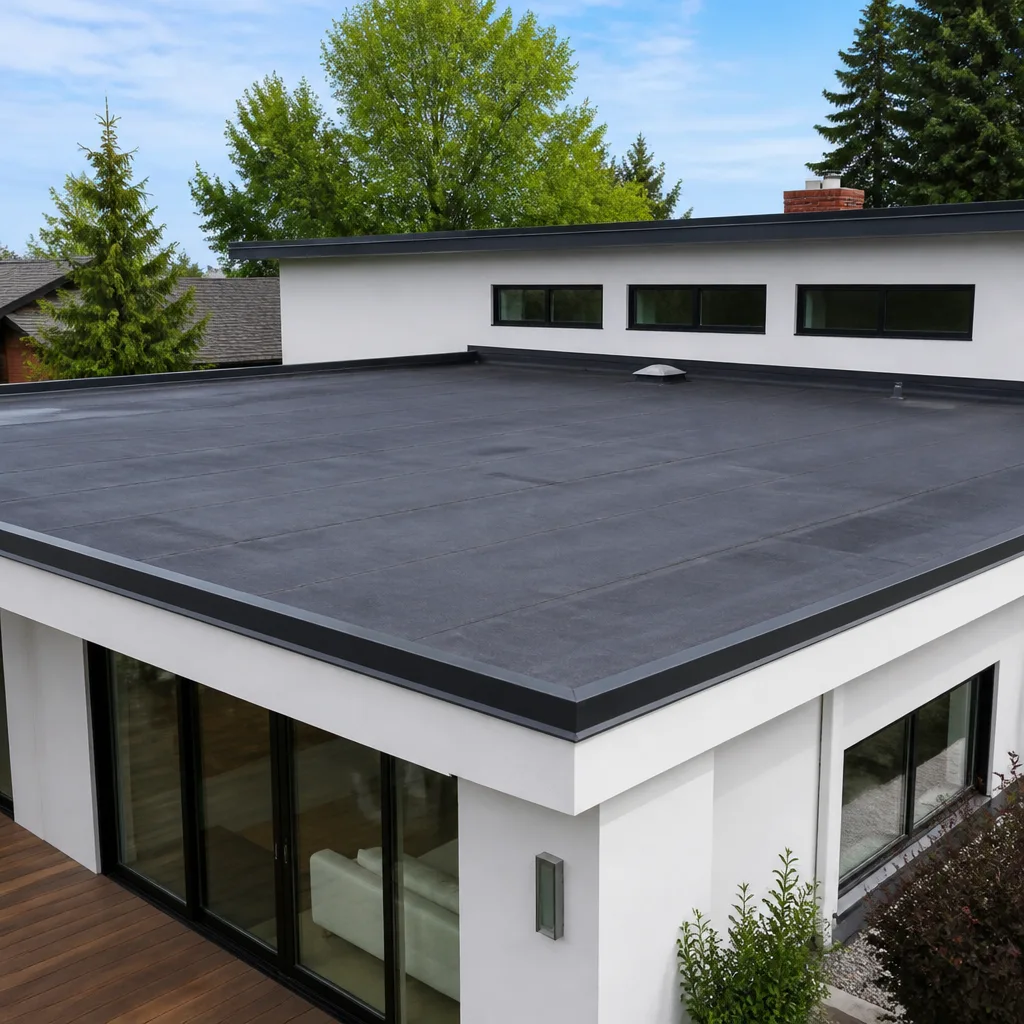 Flat & low-slope
Free roof inspection with deck photos before we talk money - GAF and Owens Corning certified installation
Roofing Cost Breakdown: The Austin Homeowner’s Reference for 2026
The average Austin homeowner collects three roofing quotes that land $4,000 to $8,000 apart and has no real way to judge which one is honest, because each bid arrives as a single total number with no line-item detail. That gap is not just annoying; it’s the single biggest reason people overpay in this market. This guide walks through exactly what a roof costs in Austin in 2026, line by line, so you can evaluate a quote the way a contractor does. For more guides & resources, visit our blog. We cover material prices per square, labor rates specific to Central Texas, permit fees, insurance supplements, and the repair-versus-replace math for the damage patterns we actually see across Austin roofs.
Styles & brands we work with
Quick Answer
In 2026, a full roof replacement in Austin runs $5.50 to $8.00 per square foot for architectural shingles, which translates to $16,500 to $24,000 for a typical 3,000-square-foot roof. Labor accounts for roughly 60% of a standard replacement, and permit fees add an additional $300 to $600. A focused repair on a 10-square section with hail damage usually costs $2,800 to $5,500, which is why the repair-versus-replace decision comes down to age, coverage, and how many squares are affected.
Table of Contents
- Why Austin Roofing Prices Changed Between 2022 and 2025
- 2026 Material Cost Breakdown by Roofing Type
- Austin Labor Rates: What You’re Actually Paying For
- The Legitimate Line Items on Every Austin Roofing Quote
- Line Items That Signal Padding
- The Insurance Supplement Process: Closing the Gap
- Repair vs. Replace: Cost Comparison for Common Austin Scenarios
- Permit Fees and Austin Building Code Requirements
- Common Mistakes to Avoid
- When to Call a Professional
- Frequently Asked Questions
- The Bottom Line
Why Austin Roofing Prices Changed Between 2022 and 2025
If you got a roofing quote in 2021 and put the project off, the number you remember is no longer relevant. Three things converged to push Austin roofing costs up faster than the national average between 2022 and 2025, and all three are still in play in 2026.
First, material costs swung hard. Asphalt shingle prices nationwide jumped 30% to 45% during the post-pandemic supply chain crunch, and while they steadied by 2024, they never returned to pre-2022 levels. For a 30-square roof, that alone added $2,000 to $3,000 to a standard architectural shingle job. We saw this play out in real time at Crestview Roofing Co Austin home quotes: the same GAF or CertainTeed architectural shingle that cost $105 per square installed in early 2022 hit $145 to $160 per square by mid-2024.
Second, Austin’s population growth kept construction demand high. The metro added over 60,000 new residents in 2023 alone, and every new home, apartment complex, and commercial building competes for the same roofing labor pool. When framers, electricians, and roofers are all bidding on the same crews, hourly rates climb. Austin roofing labor now runs 15% to 20% above the national average, which shows up directly in every quote you receive.
Third, hail. The March 2023 hail storm that swept across parts of Hays County and South Austin, followed by the May 2024 storm through Round Rock and Pflugerville, created back-to-back demand surges. When thousands of roofs need attention in the same 90-day window, crews are at a premium and scheduling windows stretch. Insurance claim volume peaked in 2024 and has only now, in early 2026, returned to a workable baseline. The pricing effect of those storm cycles still shows up in current labor rates because crews that stayed busy through two consecutive chaotic years raised their minimums.
What this means for you in 2026: the bids you collect today are higher than five years ago for structural, market-driven reasons, not because contractors got greedier. The way to protect yourself is not to hunt for the cheapest total; it’s to understand the line items, which is what the next sections cover.
2026 Material Cost Breakdown by Roofing Type
Roofing prices are quoted per square, and one square equals 100 square feet of roof surface. A 3,000-square-foot house in Avery Ranch or Circle C typically has a roof surface of 28 to 34 squares depending on pitch and complexity. Here is what each material type actually costs in the Austin market in 2026, with materials and labor separated so you can see where your money goes.
| Material Type | Material Cost (per square) | Labor + Install (per square) | Total (per square) | Typical 30-Square Job |
|---|---|---|---|---|
| 3-Tab Asphalt | $115 – $145 | $110 – $140 | $225 – $285 | $6,750 – $8,550 |
| Architectural Asphalt | $150 – $195 | $130 – $165 | $280 – $360 | $8,400 – $10,800 |
| Impact-Resistant Asphalt | $230 – $290 | $150 – $190 | $380 – $480 | $11,400 – $14,400 |
| Standing Seam Metal | $550 – $700 | $250 – $350 | $800 – $1,050 | $24,000 – $31,500 |
These are the numbers we work with daily on Roof Installation in Austin projects. A few notes on what they mean in practice. Three-tab shingles are the cheapest option and are perfectly functional, but they carry a shorter lifespan, roughly 15 to 18 years in Central Texas sun. Architectural shingles (also called dimensional or laminate) are the default choice for most Austin homes; they last 25 to 30 years and carry better wind ratings, which matters when a spring storm rolls through. Impact-resistant shingles, rated Class 4, are increasingly requested by homeowners in hail-prone north Austin neighborhoods like Wells Branch and Anderson Mill. Many insurers offer premium discounts for Class 4 roofs, sometimes 10% to 20% off the annual premium, which partially offsets the higher upfront cost.
Metal, specifically standing seam, is the premium option. It runs two to three times the cost of architectural asphalt but carries a 40-plus-year lifespan and reflects heat better, which reduces attic temperatures in Austin summers by a measurable margin. If you plan to stay in the home for 20 or more years, the math can work.
One material-related item that surprises many homeowners: the cost difference between a 3-tab and architectural shingle is only about $55 to $75 per square, but the value difference in wind resistance, appearance, and longevity is significant. For a 30-square roof, you’re looking at roughly $1,650 to $2,250 more for architectural shingles. Most Austin homes are better served by paying that difference, and we tell that to every homeowner who asks.
Austin Labor Rates: What You’re Actually Paying For
Labor is the largest single component of any Austin roofing quote, typically 55% to 65% of the total for asphalt shingle work. In 2026, experienced roofing crews in Austin charge $55 to $85 per labor-hour per worker, which breaks down to $130 to $190 per square for a standard architectural tear-off and re-roof on a walkable pitch.
Why the range? Three factors move the labor number. Roof pitch is the biggest one. A 4/12 or 5/12 roof is comfortable to walk and fast to work; a 9/12 or steeper roof requires harnesses, roof jacks, and slower progress, adding $40 to $70 per square. Second, tear-off complexity. A single layer of shingles comes off quickly; two layers, or a roof with old cedar shake underneath, adds $50 to $100 per square because it’s double the debris and double the dump fees. Third, access. If your home is tight to the property line, or if the driveway can’t fit a dump trailer, crews spend more time carrying material by hand.
Austin’s labor market deserves a specific mention here. The city’s construction industry has been running at capacity for years, driven by the metro’s population growth, and that means roofing crews can be selective about the jobs they take. A straightforward 30-square architectural re-roof on a single-story home gets competitive bids. A complex steep-pitch job on a three-story Tarrytown house gets quoted at the high end because it takes skilled crews longer and those crews have no shortage of work.
The practical takeaway: when you compare two quotes for the same job and one is $2,000 less, the difference usually lives in labor. That’s not automatically a red flag, but it should prompt one question: is the cheaper crew staffed, trained, and paid enough to do the job carefully? The answer is sometimes yes, sometimes no, and the line items in the quote are where you find out.
The Legitimate Line Items on Every Austin Roofing Quote
A complete Austin roofing quote should look less like a single number and more like a short itemized bill. Here are the legitimate line items that belong on every reputable bid, with what each one covers in plain English.
- Tear-off and disposal: Removal of the existing shingles, underlayment, and any damaged flashing, plus dump fees. In Austin, a single-layer tear-off runs $40 to $70 per square. Two layers or shake underlayment push that to $80 to $120 per square.
- Decking replacement allowance: The plywood or OSB under your shingles. Most Austin homes need some decking replaced, usually around penetrations, valleys, or anywhere water has sat. A good quote includes a per-sheet allowance, typically $75 to $95 per 4-by-8 sheet for the first 5 to 10 sheets, adjusted at final invoice based on what was actually replaced.
- Drip edge: The metal strip along the roof’s perimeter that keeps water from running behind the gutter. Drip edge costs $2.50 to $4.50 per linear foot installed. It’s required by code in most Austin jurisdictions, and it is not optional.
- Synthetic underlayment: The water-resistant layer beneath the shingles. Synthetic underlayment has largely replaced felt because it’s stronger and easier to install, and it runs $10 to $18 per square. Some crews still quote felt, which is slightly cheaper but less durable. The difference is small enough that synthetic is the better call in a climate like Austin’s, where wind-driven rain during storms is common.
- Flashing: The metal strips that seal joints around chimneys, vents, skylights, and wall intersections. Expect $15 to $40 per penetration for standard flashing work, or more if the existing flashing is rusted or the chimney needs a custom saddle.
- Permit fees: Austin roof permits run $300 to $600 depending on the job scope and jurisdiction. A reputable contractor pulls the permit; a contractor who tells you to skip the permit is saving himself money and creating a liability for you.
When you receive a quote that includes all six line items broken out, you’re dealing with a contractor who is being straight with you about what the job involves. When you receive a quote with only a single total and the words “includes everything” written next to it, you have no way to know what “everything” actually covers.
Line Items That Signal Padding
Just as there are legitimate line items, there are also line items that show up on Austin roofing quotes and do not need to be there. Here are the ones we tell homeowners to question, and what to ask instead.
- “Fuel surcharge” or “equipment delivery fee” as separate charges: Transportation costs are already baked into any legitimate bid. We deliver materials and equipment as part of the job, not as a line item. The only exception is a jobsite with extreme access constraints, like a remote Hill Country property with a quarter-mile driveway, and even then you should be told up front.
- “Administrative fee” or “office support fee”: This is the cost of doing business, not a line item. When you see it, the contractor is charging you for the privilege of being their customer.
- Vague “contingency” charges above 5%: A small contingency for unexpected decking or existing damage is reasonable. A 15% or 20% “contingency” on top of a fully quoted job is asking you to pre-approve overruns without knowing what they’re for.
- “Cash discount” that disappears if you finance: This is a way to advertise a lower number than the actual job cost. If the “cash price” is the real price, the financed price is just the real price plus a markup.
- Material brand listed without a product line: “CertainTeed shingles” tells you almost nothing. CertainTeed makes everything from basic three-tabs to premium designer shingles with a $200-per-square price gap between them. A quote should specify the exact product line, so ask for it. Otherwise, you may get the cheapest product in the brand family while paying for the most expensive.
Our approach at Roof Replacement in Austin is simple: the written price we deliver before work starts is the number on the invoice. No fuel surcharges, no admin fees, no change orders unless you personally approve added scope after we show you why it’s needed.
The Insurance Supplement Process: Closing the Gap
If a hailstorm or wind event damaged your roof, your homeowners insurance will likely pay for part of the job. But here is the part most Austin homeowners don’t learn until they’re already in the middle of it: the insurance adjuster’s initial estimate is frequently $3,000 to $8,000 below what the actual job costs, and closing that gap requires a formal process called a supplement.
Here’s how the supplement process works in practice.
- Your insurer issues an initial estimate. The adjuster examines the roof and writes a scope of work using standardized pricing software. In Austin, that software often undercounts local labor rates and may omit line items like drip edge, ice and water shield, or code-required upgrades.
- Your roofer documents the gap. A contractor who knows the supplement process photographs every missing line item and writes a formal supplement request showing exactly what the adjuster omitted and what it costs in the Austin market. This is where experience matters: a roofer who has handled 200 Austin claims knows which items adjusters routinely undercount and how to justify the real numbers.
- The insurer reviews and responds. The supplement goes back to the adjuster, who either approves it, partially approves it, or denies it. Most supplements are approved at least partially when the documentation is clear and code-justified.
- You pay your deductible, and the insurer pays the rest. Once the supplement is approved, the insurer issues a revised payment. Your total out-of-pocket is your deductible plus any upgrades you chose that went beyond the original policy scope.
The key number to know: a supplement typically recovers $2,000 to $6,000 on a standard Austin claim. That’s the difference between getting the roof you’re entitled to under your policy and quietly paying out of pocket for shortcuts. The homeowner is not responsible for closing the gap between the adjuster’s estimate and the real cost, provided the contractor documents the actual scope properly. What you are responsible for is your deductible, and any contractor who tells you they can “waive the deductible” is asking you to participate in insurance fraud. Walk away.
Repair vs. Replace: Cost Comparison for Common Austin Scenarios
The question we hear most often is whether to repair or replace. The answer depends on three variables: the age of the roof, the extent of the damage, and whether the roof has already been through multiple repair cycles. If you’re unsure what to look for, our Roofing Warning Signs: A Austin Homeowner’s Reference Guide can help. Here are three realistic Austin scenarios with the numbers laid out so you can do the break-even math yourself.
Scenario 1: A 10-square section with hail damage on a 12-year-old roof
Hail damage on one section of a roof is common after the kind of scattered storms Austin sees in April and May. A 10-square repair means removing damaged shingles, replacing underlayment on the affected area, installing new matching shingles, and re-sealing the section. That repair runs $2,800 to $5,500 depending on the shingle type and pitch. If the roof is 12 years old with architectural shingles rated for 25 to 30, a repair makes financial sense: you’re spending $4,000 to buy another 13 to 18 years of roof life. Break-even favors repair.
Scenario 2: A failing ridge on a 20-year-old roof
The ridge is the horizontal peak where two roof planes meet, and it’s one of the first places an aging roof fails because ridge shingles take the most direct sun and wind exposure in Austin. A ridge re-cap runs $800 to $1,800. But here’s the problem: if the ridge is failing at year 20, the field shingles are not far behind, and you’re likely to spend more money on spot repairs over the next two to three years. Spending $1,300 on a ridge only to replace the whole roof in 2028 means you paid for work that gets torn off anyway. At 20 years old, break-even favors replacement.
Scenario 3: A leaking valley on a 6-year-old roof
A valley is where two roof planes meet at an internal angle, and valley flashing failures are a common source of leaks in Austin’s heavy spring downpours. On a 6-year-old roof, a valley repair runs $900 to $2,200, and it almost always makes sense: the remaining roof life is measured in decades, not years, and the repair addresses a localized failure, not systemic age. Break-even favors repair, strongly.
The general rule: if the roof has 60% or more of its life left and the damage is confined to one area, repair. If the roof is past 70% of its life and any significant section is failing, replace. And if the damage is from a storm and your insurance deductible is $2,500, a full replacement through a claim often costs less out of pocket than a large repair would.
Permit Fees and Austin Building Code Requirements
Austin requires a permit for roof replacements and for most large repairs, and the permit fee ranges from $300 to $600 depending on project valuation and jurisdiction. If you live inside Austin city limits, the city operates under the 2021 International Residential Code with local amendments. For a deeper look at requirements, see our guide to Roofing Permits, Codes & Inspections in TX: What You Need to Know. If you’re in a surrounding jurisdiction like Cedar Park, Round Rock, or Pflugerville, the specific code version and permit fee vary slightly, but the requirement is the same for roof replacement.
Code matters in ways that affect cost. Austin code requires ice and water shield in specific locations, including eaves in areas where ice dams are possible, and it mandates drip edge on all new and replacement roofs. Re-nailing requirements, underlayment standards, and attic ventilation enforcement have all tightened in recent years. A contractor who pulls the permit and schedules the required inspections is doing the job legally; a contractor who skips the permit is saving $400 and leaving you with a roof that technically does not exist on the public record.
The practical advice: verify your contractor pulls the permit before work starts, and confirm the permit number. You can check permit status on the Austin Build + Connect portal. If a contractor says “we don’t need a permit for this,” find another contractor.
Common Mistakes to Avoid
- Choosing the lowest bid without reading line items. The cheapest quote in Austin is usually cheap because it omits drip edge, underlayment upgrades, or permit fees. You’ll pay for those omissions later, either on the invoice or in roof failure.
- Not asking for the exact shingle product line. “Architectural shingles” spans a $100-per-square price range between manufacturers and product tiers. Get the exact model name written on the quote before signing.
- Accepting a quote with no decking allowance. Almost every Austin roof of a certain age has some decking damage. If the quote does not mention decking replacement, the contractor will either skip necessary repairs or add a large change order mid-job.
- Waiting until a leak appears to act. A failing roof rarely announces itself politely. By the time water is running down an interior wall, you’re often paying for decking repair, drywall repair, and insulation replacement on top of the roofing work. A proactive annual inspection is cheaper than the average leak repair.
- Paying in full before the job is complete. A reasonable deposit is normal. Full payment before final walkthrough is not. The final check should clear only after the work is done and the permit inspection has passed.
- Skipping the permit. A contractor who avoids permits is not doing you a favor. He’s avoiding oversight, and you lose any ability to hold the work to code if something goes wrong.
- Not documenting the job yourself. Before-and-after photos, a written contract, and a paper trail of every payment protect you. Any contractor who resists written documentation should not be on your roof.
When to Call a Professional
Roof work carries genuine risk: high-tension spring assemblies on other home systems are not the issue here, but steep-pitch roofs, height work, and the weight of materials create real hazards. If you see loose shingles after a storm, a roof is not a safe place to be walking around without training, fall protection, and the right ladder setup. The same is true for chimney flashing inspection, ridge damage assessment, and any work involving the roof’s edge, where a single misstep means a serious fall. If your roof is leaking, the best thing you can do is contain the water inside, move valuables, and call someone who spends their working life on roofs. A visual inspection from the ground is free and safe; a visual inspection from the roofline is neither.
Crestview Roofing Co Austin offers free estimates in Austin. If you suspect damage or just want a second opinion on a quote you’ve received, call (254) 587-6371 and we’ll walk you through what you’re looking at.
Frequently Asked Questions
A standard architectural shingle roof replacement in Austin runs $16,500 to $24,000 for a typical 3,000-square-foot home, which works out to $280 to $360 per square installed. The exact number depends on roof pitch, tear-off complexity, decking replacement, and the shingle product line you choose. Call (254) 587-6371 for an exact quote on your roof, and we’ll give you a written line-item price before any work starts.
Most standard Austin roof repairs run $450 to $2,200 depending on the problem: a simple shingle replacement or small patch is at the low end, while valley or flashing work is at the high end. Larger sections with storm damage run $2,800 to $5,500 for a 10-square repair. Every repair from Crestview includes the 365-Day Done Right Promise in writing, at no extra cost.
Not with a written quote that includes a decking replacement allowance and a clearly defined scope. The number on our written price is the number on the invoice, unless you personally approve added work after we show you exactly what we found and why it’s needed. A verbal quote is not a quote; insist on everything in writing.
Yes. We pull permits for every roof replacement and every repair where the City of Austin or your jurisdiction requires one, and we schedule the required inspections. Permit fees are included as a line item on your quote. If another contractor tells you a permit is unnecessary, call the city and ask them directly.
A standard single-story architectural shingle replacement on an Austin home takes two to four working days from tear-off to final inspection, assuming normal weather and no major decking surprises. Two-story homes and steeper pitches add a day or two. We send before-and-after photo documentation and a digital arrival time so you always know where the project stands.
Look for six line items: tear-off and disposal, decking replacement allowance, drip edge, underlayment, flashing, and permit fees. If all six are present and the product line is specified, you’re comparing real numbers. If you’re comparing two totals with no breakdown, you’re comparing marketing, not roofing. A written price delivered before work starts is the baseline we hold ourselves to on every job in Austin.
The Bottom Line
Austin roofing costs in 2026 are higher than they were in 2021, driven by material price shifts, a tight labor market, and two consecutive heavy hail seasons. The way to protect yourself is not to chase the lowest number. It’s to understand what a legitimate line-item quote looks like, to know that labor is 60% of the cost and decking is almost always partially replaced, and to insist on a written price before anyone climbs a ladder. Whether you’re repairing a hail-damaged section or replacing a 20-year-old roof, the math gets easier when the numbers are in front of you. For maintenance tips that can extend your roof’s life, see our Seasonal Roofing Care for Austin: Year-Round Homeowner’s Guide. If you want a written, line-item price on your Austin roof, call (254) 587-6371 and we’ll stop by, take a look, and send you a quote you can actually evaluate.
Written by Dylan Pace, Owner at Crestview Roofing Co Austin, serving Austin since 2000.
See the difference
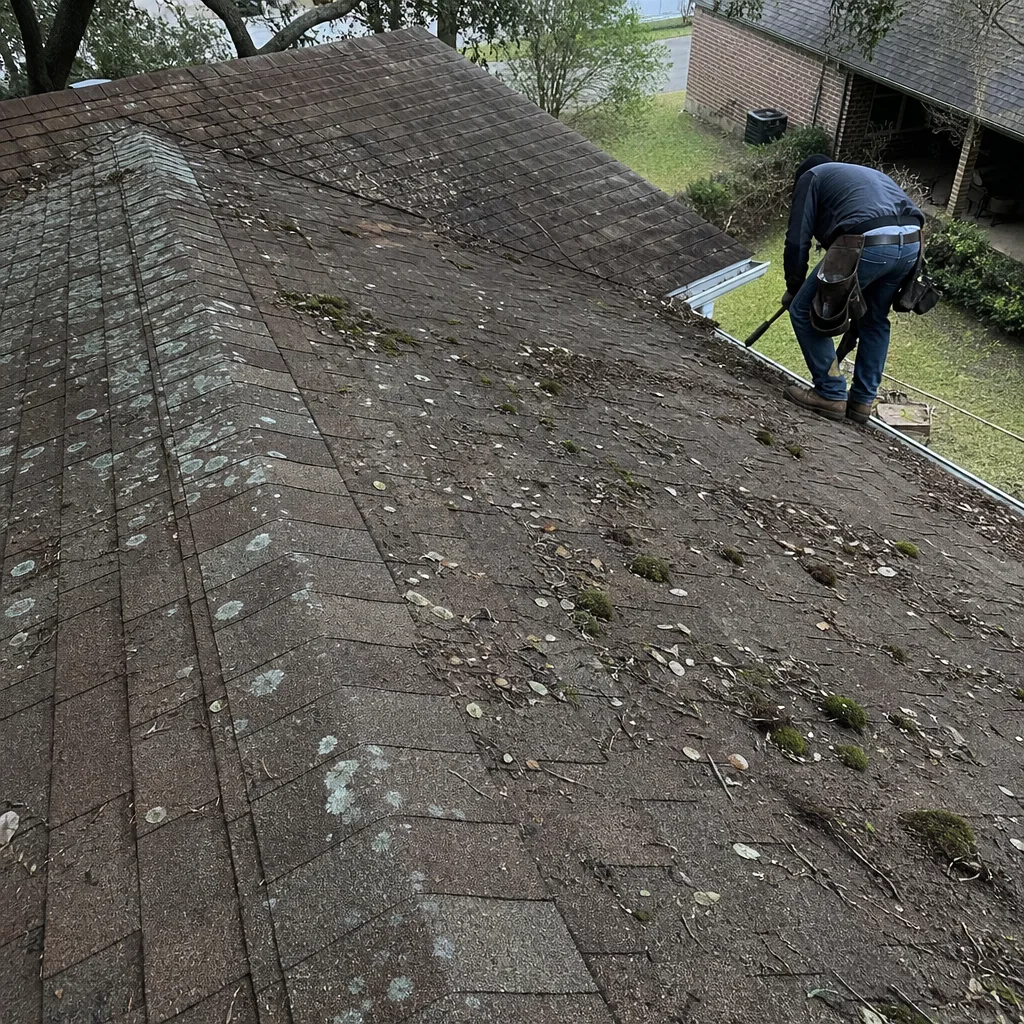 Before
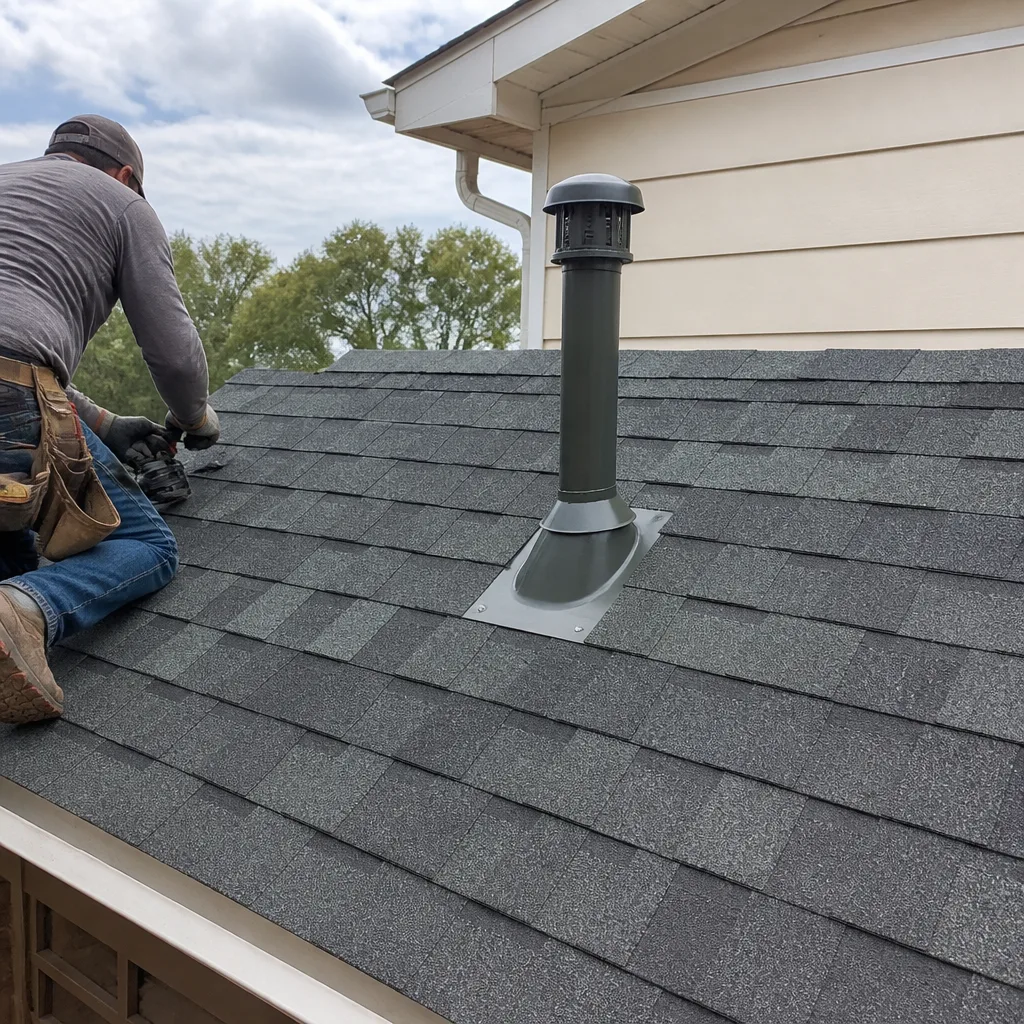
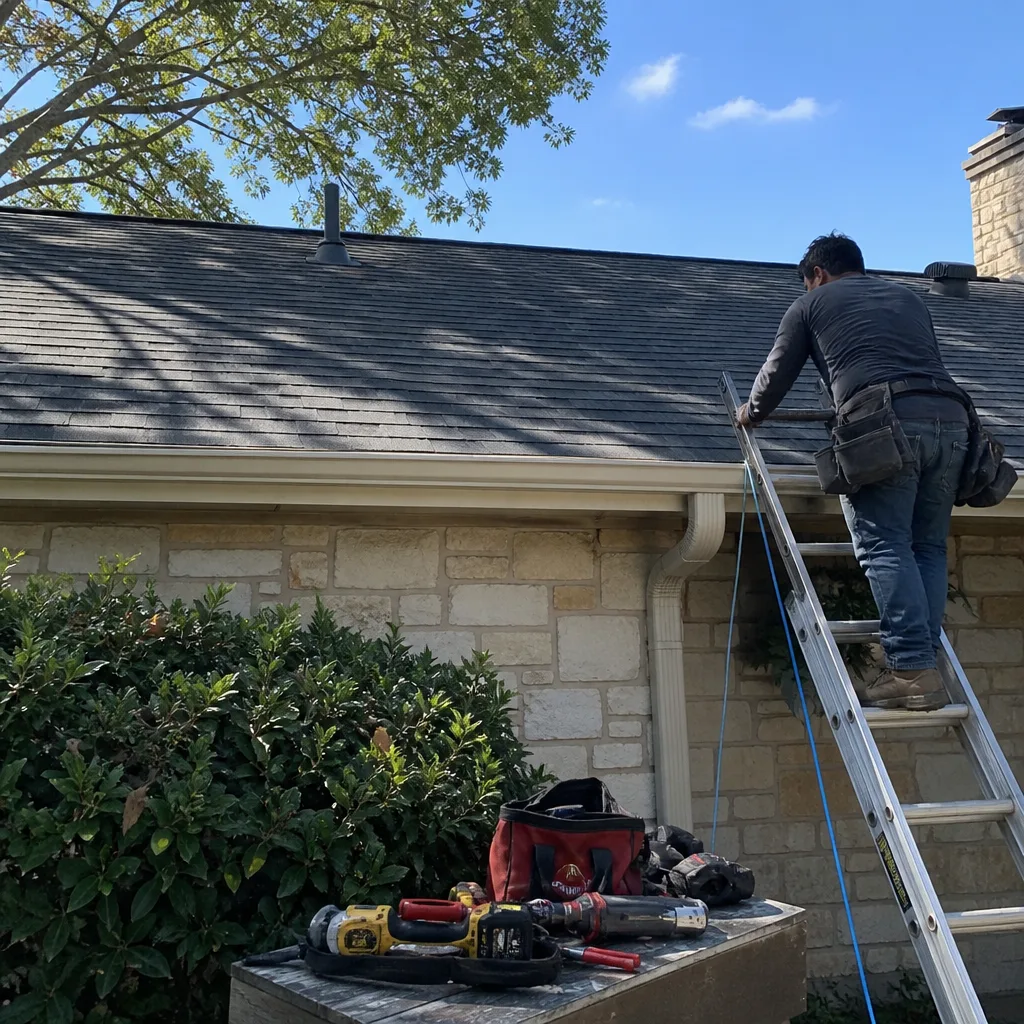
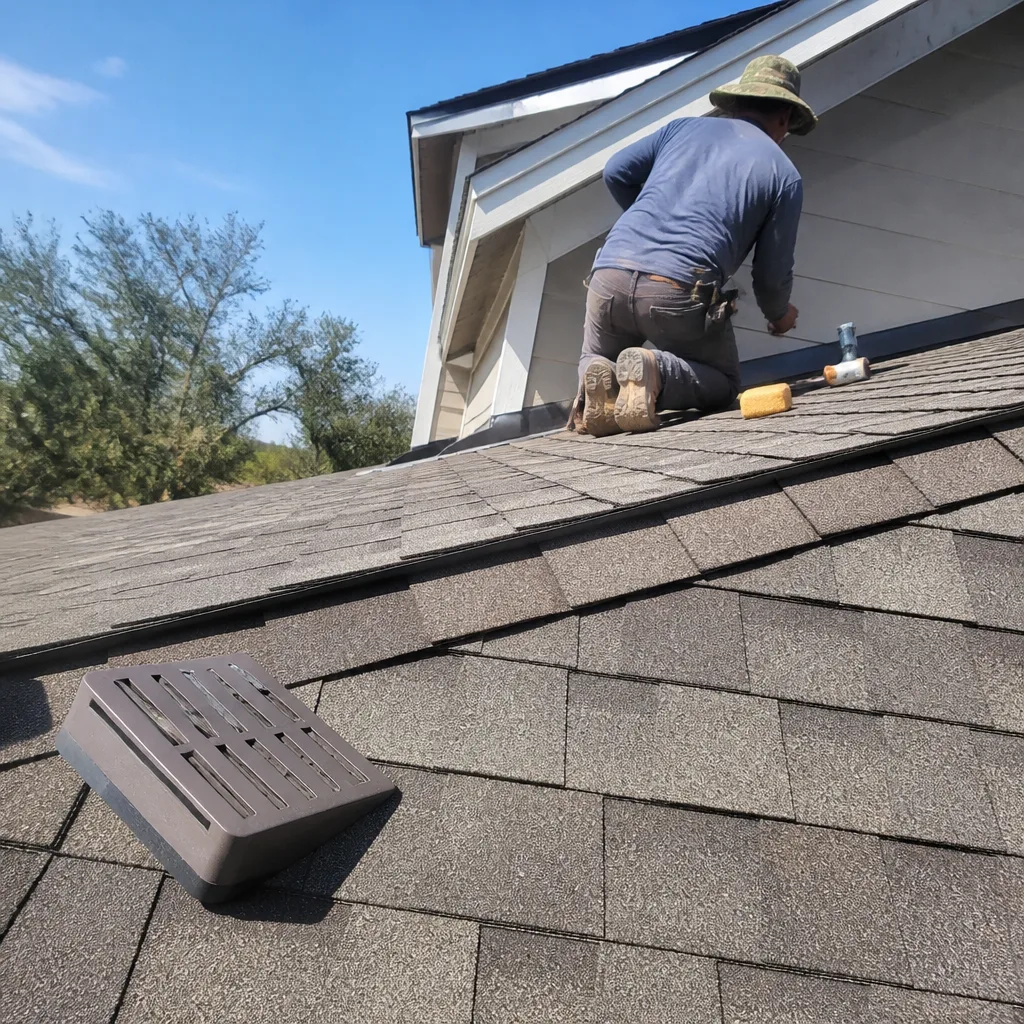 After
After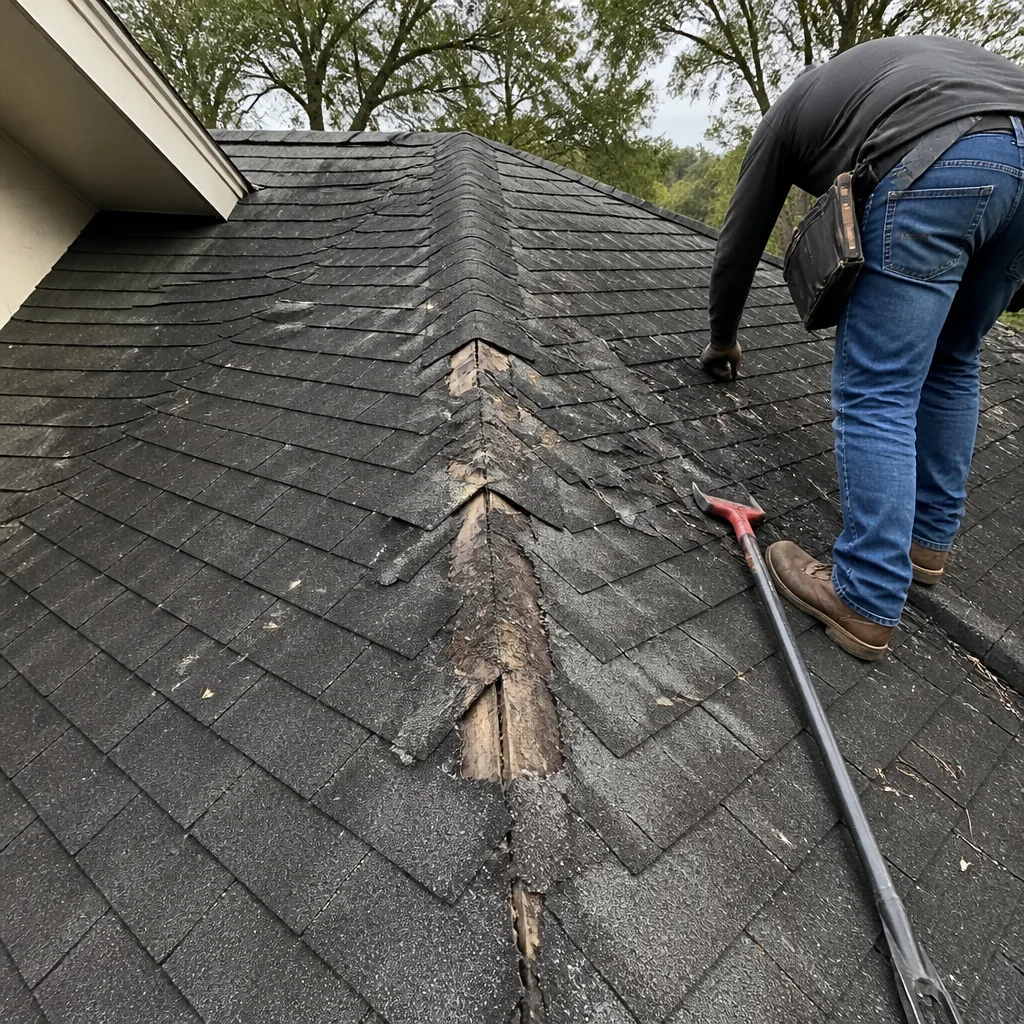 Before
 After
After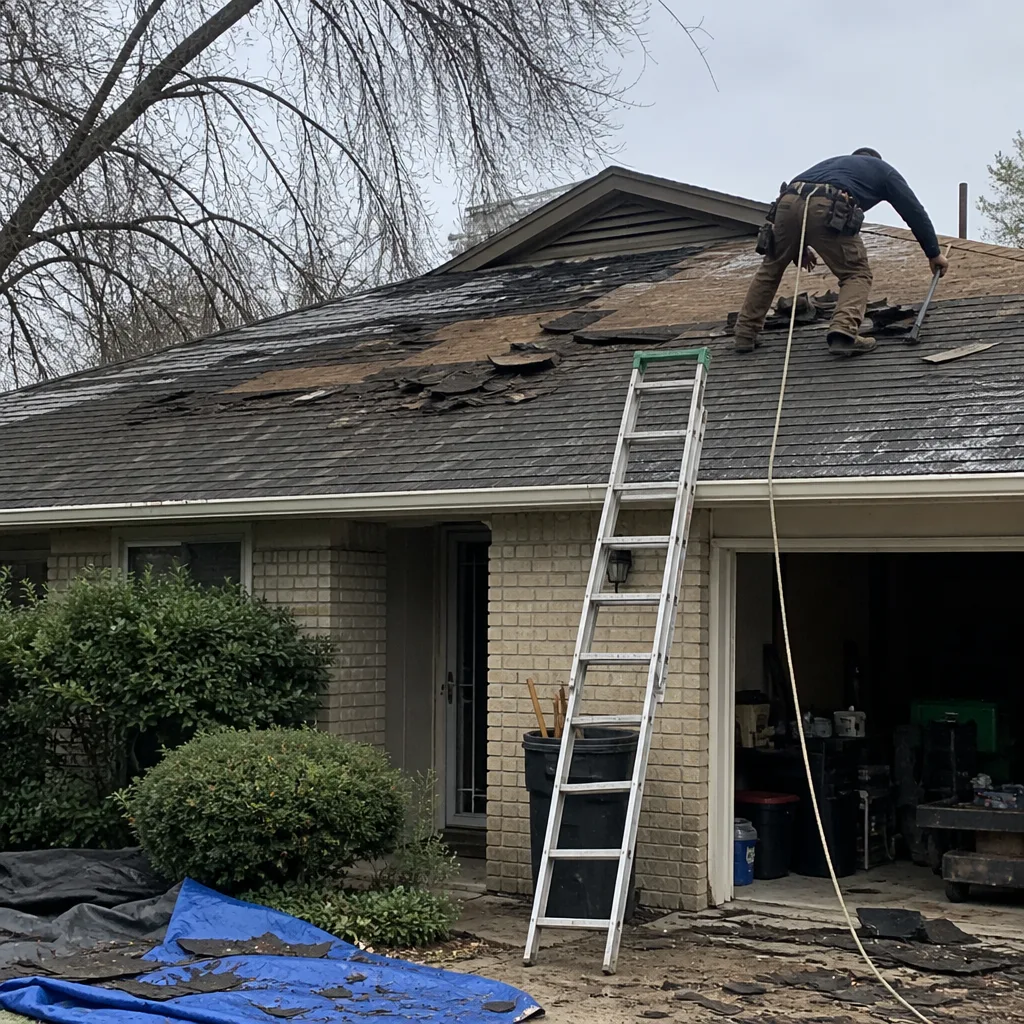 Before
 After
After