
Last updated October 17, 2026
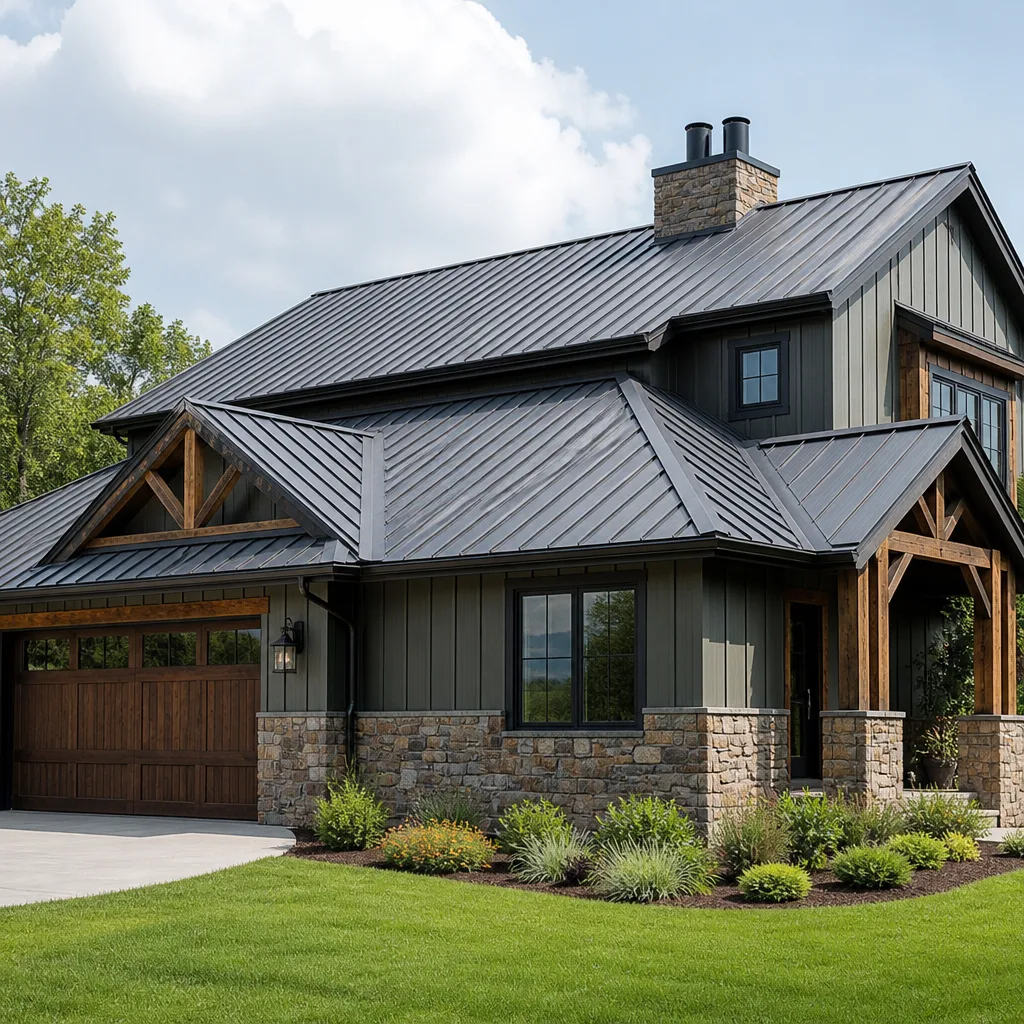 Metal roofing
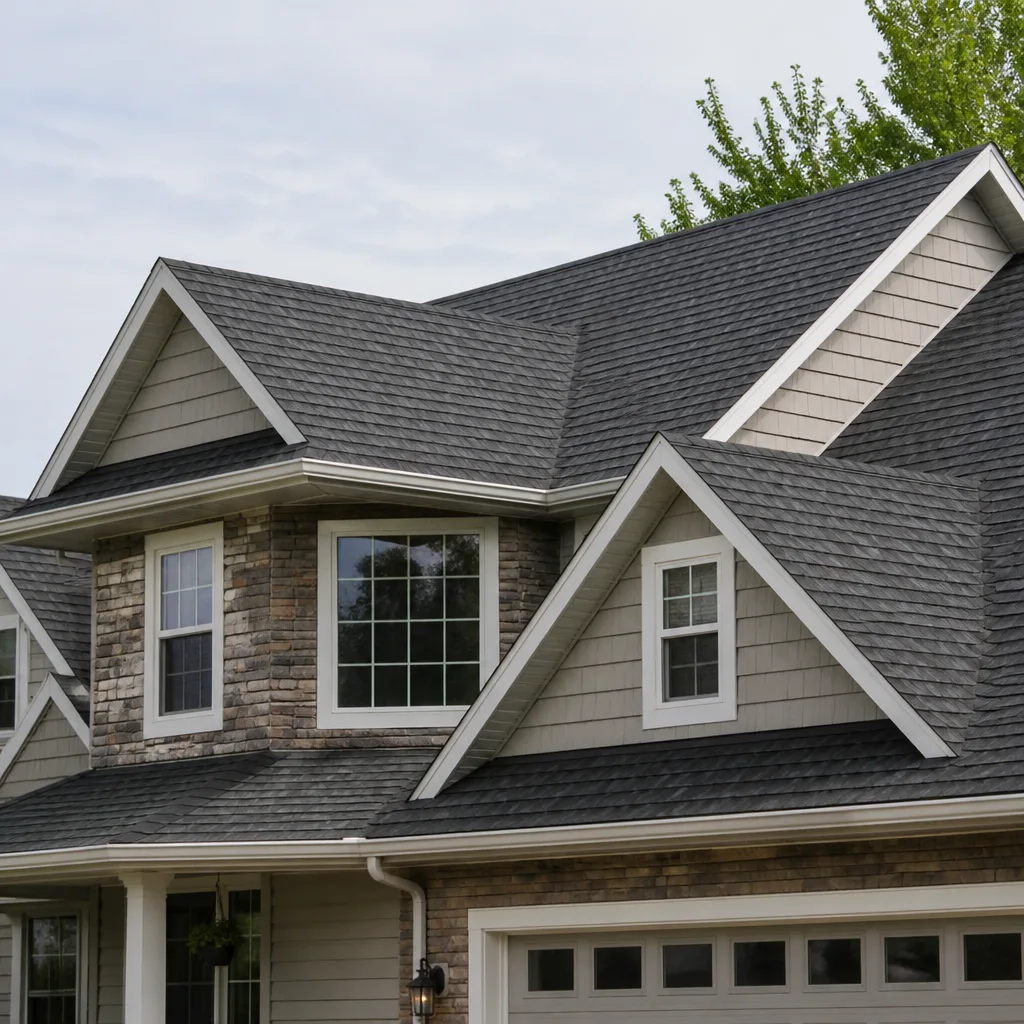 Architectural shingles
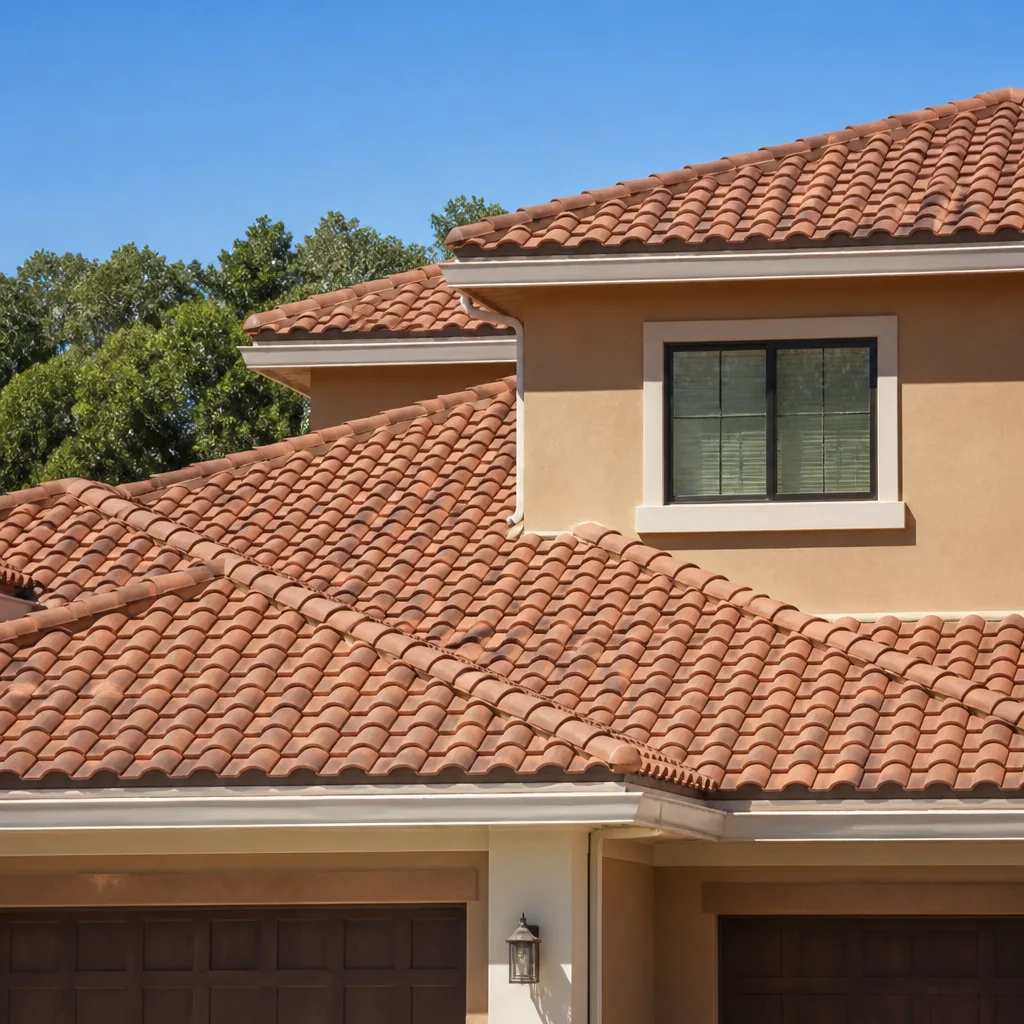 Tile roofing
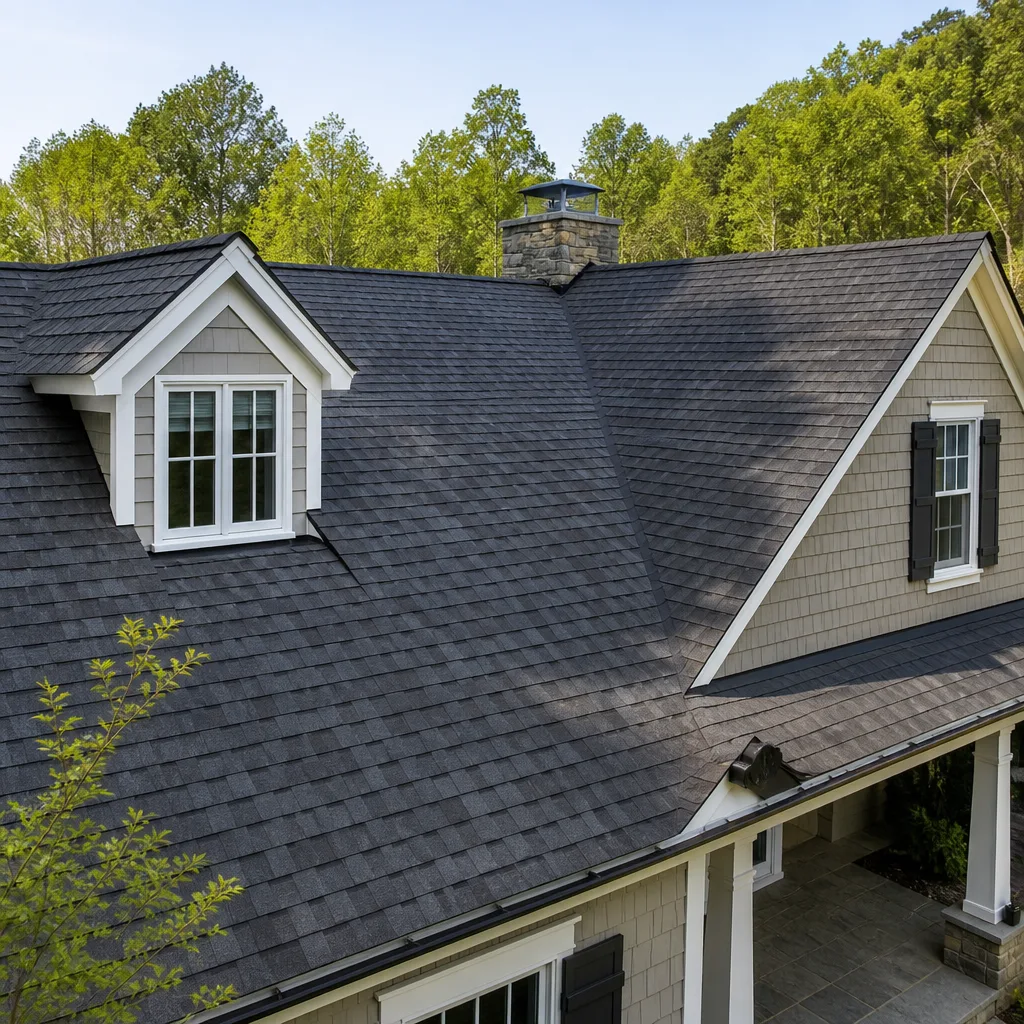 GAF
GAF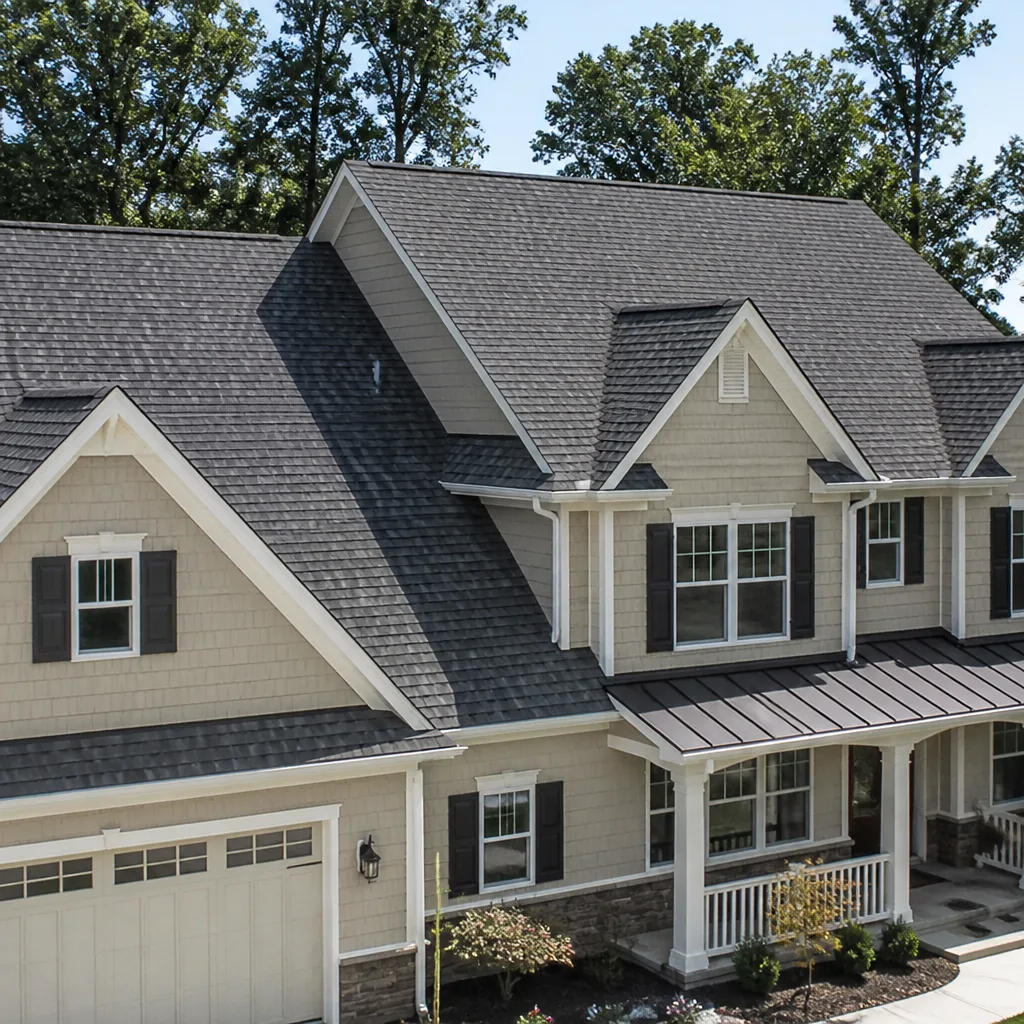 Owens Corning
 Flat & low-slope
Free roof inspection with deck photos before we talk money - GAF and Owens Corning certified installation
The Complete Guide to Roofing in Austin
Austin averages 228 sunny days a year, which puts more ultraviolet radiation on your roof than most cities in Florida get. Yet nearly every “roofing guide” written for Texas homeowners was copied from a national template that treats hail as the only variable worth thinking about. In this guide, we’ll walk through what actually determines roof lifespan in Austin: the UV load, the hail corridors, the clay soil movement, the tree canopy rules, and the drainage slopes that separate a 12-year roof from a 25-year roof. For ongoing upkeep, see our Roof Repair Maintenance Checklist for Austin Homeowners.
Quick Answer
Roofing in Austin means choosing materials and installation methods built for a dual threat: intense year-round UV exposure plus periodic severe hail. Homeowners who match their shingle choice, ventilation, and drainage design to Austin’s specific climate conditions typically get 15 to 25 years from an architectural shingle roof, while those who install based on generic national advice often replace at the 10- to 12-year mark.
Styles & brands we work with
Table of Contents
- Why Austin’s Climate Breaks National Roofing Rules
- Material Comparison for Austin Heat Cycles
- How Central Texas Soil Movement Affects Your Roof
- The Tree Canopy Ordinance and Your Inspection Schedule
- The Drainage Slope Question That Exposes Rookie Roofers
- What Roof Replacement Costs in Austin
- Repair or Replace: How to Decide
- Common Mistakes to Avoid
- When to Call a Professional
- Frequently Asked Questions
Why Austin’s Climate Breaks National Roofing Rules
Most roofing guides assume weather is something that happens occasionally. In Austin, weather is something that happens to your roof every single day, and it happens in two distinct ways that national advice never accounts for together.
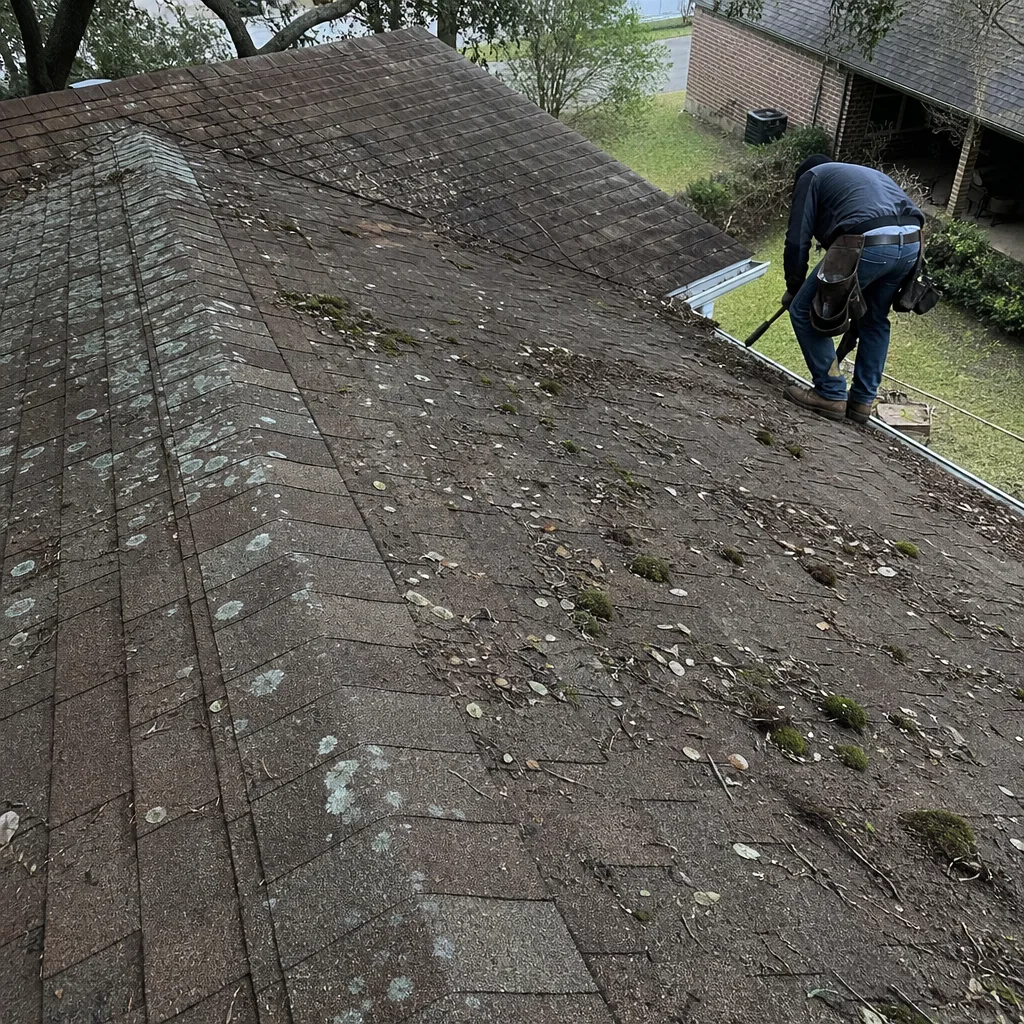
First, the UV load. Austin sits at roughly 30 degrees north latitude, which means the sun hits roof surfaces at a steeper angle than in northern states for more months of the year. The average daily UV index in Austin peaks at 10 or 11 from May through August, and even in January it hovers around 4. Asphalt shingles are rated by manufacturers using accelerated weathering chambers, but those simulations assume a typical national UV exposure curve. What we see on rooftops in neighborhoods like Allandale, Brentwood, and Mueller is accelerated granule loss: the ceramic granules that protect the asphalt layer from direct sunlight get baked and start sloughing off. Once granules go, the asphalt underneath oxidizes, becomes brittle, and cracks. That’s why a roof in Austin that’s 14 years old often looks like a roof in Ohio that’s 22 years old.
Second, the hail. Austin sits on the eastern edge of what meteorologists call Hail Alley, a corridor stretching from the Texas Panhandle down through the Hill Country and into the I-35 corridor. Hailstorms in Travis County are typically smaller than the baseball-sized monsters that hit Lubbock or Amarillo, but they come more frequently and with less warning. The National Weather Service recorded 27 hail events in Travis County between 2018 and 2023 alone, most of them in the 1- to 1.75-inch range. That’s the size range that causes what insurance adjusters call “latent damage”: bruises to the shingle mat that don’t show up visually for 12 to 24 months but compromise the waterproofing layer immediately.
The dual-threat reality means Austin homeowners cannot rely on manufacturer lifespan estimates. A shingle warrantied for 30 years under national averages will not get to 30 years in Austin’s UV-plus-hail environment unless the ventilation, installation, and material grade are all optimized for our specific conditions. We’ll cover what that optimization looks like in the sections below.
Material Comparison for Austin Heat Cycles
Materials behave differently in Austin than they do anywhere else, because Austin’s heat doesn’t just come from the sun. It comes from the ground radiating stored heat back up after sunset, creating thermal cycling that national guides never model.
3-Tab Shingles
The basic “three tab” shingle, flat and uniform, is the cheapest option on the market and the worst fit for Austin. These shingles have the thinnest asphalt mat and the least granule coverage per square foot. In Austin’s UV environment, we routinely see 3-tab roofs showing significant granule loss by year 8 and failure by year 12 to 14. A 3-tab roof also has no dimensional depth, meaning it absorbs heat more directly and transfer more of that heat into the attic. The only scenario where 3-tab makes sense in Austin is a rental property or a home you’re selling within five years.
Architectural Shingles
This is the default recommendation for most Austin homes. Architectural shingles use a laminated double layer of asphalt that provides more granule depth and more impact resistance than 3-tab. The dimensional profile also creates small air gaps that help break up heat transfer. For Austin specifically, name-brand architectural shingles from GAF, CertainTeed, or Owens Corning typically deliver 18 to 25 years of actual service life when installed with proper ventilation. Atlas also has a line called StormMaster with a reinforced mat that performs well in hail-heavy areas of eastern Travis County.
Impact-Resistant (Class 4) Shingles
Class 4 shingles are rated for impact resistance under a UL 2218 test that drops steel balls onto the shingle from increasing heights. These shingles use polymer-modified asphalt that stays more flexible in both heat and cold, which matters in Austin because the thermal cycling between 100-degree days and 70-degree nights stresses brittle materials. Homes in hail-prone areas like Pflugerville, Round Rock, and the 78745 corridor south of Ben White often get measurable insurance premium discounts for Class 4 roofs. The upfront cost runs $1,200 to $2,800 more than standard architectural shingles on a typical 2,000-square-foot roof, but the lifespan bump in Austin’s conditions is typically 5 to 10 years.
Metal Roofing
Standing-seam metal roofing deserves a mention because it’s growing in Austin, especially in the central neighborhoods like Hyde Park and Travis Heights where roof lines are steep and visible. Metal reflects heat rather than absorbing it, which is a major advantage in Austin’s summer. However, metal also expands and contracts more than asphalt with temperature swings, which means the fastening and flashing details have to be specified for Central Texas conditions. A properly installed standing-seam roof in Austin can last 40 to 50 years. A cheaply installed corrugated metal roof over open purlins can fail at the fastener points in under 15 years.
How Central Texas Soil Movement Affects Your Roof
This is the section most roofing guides skip entirely, because most roofing guides were written by people who have never worked in Central Texas. Yet the connection between your foundation soil and your roofline is direct, measurable, and responsible for a significant share of the “mysterious” leak and fascia failures we see across Austin.
The issue is expansive clay. Much of Austin sits on the Taylor Marl and Houston Black series soils, which are classified as highly expansive. These soils absorb water and expand significantly during wet periods, then contract and crack during drought. From 2022 through 2024, Austin experienced one of the most dramatic swing cycles in decades: a record drought followed by record rainfall. The ground under many homes moved enough to shift foundation slabs by a quarter-inch or more.
Here’s what that does to a roof. When a slab shifts, the walls shift with it. When walls shift, the roof decking attached to those walls pulls slightly out of plane. The first visible evidence is usually cracked fascia boards at the corners of the home, or soffit panels that separate from the roofline. The second is stress on the flashing around chimneys, vents, and skylights. The third is the slow loosening of the connection between the roof deck and the trusses or rafters.
For Austin homeowners, this means two things. First, fascia and soffit integrity should be part of every annual roof inspection. Most national checklists tell you to look at shingles; almost none tell you to check whether the fascia board at the southwest corner has developed a hairline crack from slab movement. Second, homes on expansive clay in East Austin or the Mueller area should have their roof-to-wall connections checked after any multi-year drought cycle followed by heavy rain. If the flashing around your plumbing vents has pulled away from the shingle line, that’s a soil movement signature, and it needs correction before it becomes a leak.
The Tree Canopy Ordinance and Your Inspection Schedule
Austin takes its trees seriously, and that’s a good thing for the city, but it has a direct impact on roofing that national guides never mention. The City of Austin’s tree ordinance protects heritage trees and significant trees, and many homeowners in neighborhoods like Tarrytown, Rosedale, and Crestview have large oaks, pecans, and elms within striking distance of the roofline.
Branch overhang means debris load, and debris load in Austin is not seasonal like it is in New England. It’s year-round. Live oaks drop leaves in the spring when new growth pushes the old leaves off. Pecans drop branches in the summer. Cedar elms drop twigs in the fall. All of it ends up on your roof, and much of it gets trapped in valleys, behind chimneys, and at the base of skylights.
The compounding factor is Austin’s heavy rain events. When thunderstorms drop an inch of rain in 30 minutes, debris that has accumulated on your roof becomes a dam. Water backs up behind leaf piles, overflows the flashing, and finds its way into the underlayment. The worst damage from tree debris is rarely the debris itself; it’s the water that got backed up by it.
What this means for your inspection schedule
- If you have live oaks within 20 feet of your roofline, inspect gutters and roof valleys every 60 to 90 days, not once a year.
- After any storm with winds over 25 mph, check the roof for fallen branches, especially branches between 1 and 3 inches in diameter that can crack shingles without sliding off.
- Trim back any branch that touches your roofline, regardless of how small it is. Constant contact wears through granule surfaces over time.
- Be aware that any tree pruning within the City of Austin requires a permit if the tree is a protected size or heritage specimen. Do not ask your roofer to cut protected branches; it’s a city code violation with significant fines.
The canopy ordinance doesn’t just affect what falls on the roof. It also affects how you can modify your roofline if you’re doing an addition or dormer that would require removing a protected tree. If your project involves roof work that would require tree removal, you need to factor the city’s tree review process into your timeline.
The Drainage Slope Question That Exposes Rookie Roofers
If you want to know within one minute whether the roofer standing in your driveway actually understands Austin roofing, ask them this question: “What slope do you use for the cricket behind my chimney, and how do you handle the valley at the bottom of my roofline in a heavy Austin downpour?”
Here’s what the answer reveals. Austin is flash-flood country. When a storm cell parks over Travis County, it can drop 3 inches of rain in an hour, and that water has to go somewhere. On a roof, water wants to go downhill, but every chimney, vent, and dormer creates a spot where water can pool if the drainage path isn’t deliberately engineered. A cricket (also called a saddle) is the small peaked roof structure built behind a chimney to divert water around it. The proper cricket slope in Austin’s rain environment is a minimum of 3:12 pitch. Too many roofers cut the cricket too shallow, especially on chimneys that are wider than 30 inches. The water backs up behind the chimney in a heavy rain, the flashing fails, and the homeowner gets a leak that the original roofer assures them “shouldn’t be happening.”
Valleys are the other tell. In a light-rain climate, a roofer can get away with a woven valley or an open valley with minimal metal. In Austin, an open metal valley with a proper W-profile and a minimum 24-inch metal width is the standard that holds up. Cramped valleys, or valleys where the metal is too narrow for the slope, will overflow in a 3-inch-per-hour storm. The overflow doesn’t leak immediately; instead, it saturates the underlayment, and the roof fails from the underside over the next 18 to 24 months.
If the roofer can’t answer the cricket and valley question with specifics about Austin’s rainfall rates, they haven’t built for Austin conditions. You don’t need to know the technical answer yourself; you just need to know whether they do. For help vetting candidates, see our How to Hire a Roofing Contractor in Austin: A Step-by-Step Guide.
What Roof Replacement Costs in Austin
Every homeowner wants a number, so here are the numbers for the Austin market as of 2025, based on the job mix we see across the city.
| Roof Type | Typical Cost Range (2,000 sq ft roof) | Cost Per Square (100 sq ft) | Expected Austin Lifespan |
|---|---|---|---|
| 3-Tab Asphalt | $7,500 – $10,500 | $375 – $525 | 10-14 years |
| Architectural Asphalt | $11,000 – $16,000 | $550 – $800 | 18-25 years |
| Class 4 Impact-Resistant | $13,500 – $19,500 | $675 – $975 | 22-30 years |
| Standing-Seam Metal | $28,000 – $42,000 | $1,400 – $2,100 | 40-50 years |
These ranges assume standard roof geometry: a straightforward gable or hip roof with no more than two valleys, no steep pitch over 8:12, and no significant decking replacement. Prices move upward with roof complexity, decking damage, and access difficulty. Steep roofs in the Eanes school district hills or older homes in central Austin with two-story drops and limited staging areas will push toward the high end.
The single biggest variable in Austin is what’s under the shingles. Homes built before 2000 often have 3/8-inch plywood decking that has sagged or delaminated under years of attic heat exposure. If your decking needs replacement, that’s an additional $2,500 to $5,500 for a 2,000-square-foot roof, and it’s not optional: shingles installed over compromised decking will fail at the nail line, and the roof will fail from wind uplift before any shingle warranty expires.
Before you sign any roof replacement contract, get a written line-item price that breaks out materials, labor, decking replacement, flashing, and disposal. That single document is your protection against the quote that balloons at the door. Crestview Roofing Co Austin provides a written price before any work begins, and that number on the page is the number on the invoice. The Roof Replacement in Austin page has more detail on what’s included in a full replacement scope.
Repair or Replace: How to Decide
The repair-or-replace decision in Austin is different from the decision in most other markets because of the interplay between age and exposure. A 12-year-old roof in Austin that’s been through a decade of UV loading and a couple of hail events may be closer to the end of its functional life than a 20-year-old roof in a milder climate.
Here’s the decision framework we use:
- If the roof is under 10 years old and the damage is localized (a single leak, a few hail-bruised shingles, wind damage from one storm), repair is almost always the right call. Roof Repair in Austin on a newer roof preserves the remaining lifespan at a fraction of replacement cost.
- If the roof is 10 to 18 years old and you have damage across multiple slopes or multiple leak locations, get a full inspection including an attic-side look at the decking before deciding. In many Austin homes in this age range, repair costs start to approach the point where replacement makes economic sense.
- If the roof is over 18 years old in Austin and has significant granule loss, curling shingles, or soft spots in the decking, replacement is typically the better financial decision. Installing new shingles over a failing substrate is spending replacement money on a repair outcome.
- If you’ve had multiple leaks in different locations within a 12-month period, the underlayment is failing, not just the shingles. Repair at that point is playing whack-a-mole.
One specific Austin consideration: if your home has been through a documented hailstorm and your insurance company has paid out a partial roof claim, read the policy language carefully about what happens to future claims. Some policies now exclude “subsequent damage” to the unrepaired portions of a partially paid claim. If you’ve got an older roof with a partial claim, replacement of the whole roof surface may be the only way to preserve insurability.
Common Mistakes to Avoid
- Choosing materials based on a national warranty number. A 30-year warranty computed for a national average climate means something very different under Austin’s UV index. Ask what the realistic Austin lifespan is for that material, not what the warranty says.
- Ignoring the attic. The most important component of your roof’s lifespan in Austin is the ventilation system in your attic. A roof with insufficient intake and exhaust ventilation will cook from the underside, and that heat will delaminate decking and warp shingles even if the installation was perfect. Austin’s summer attic temperatures routinely reach 140 to 160 degrees without proper ventilation.
- Skipping the decking inspection. A roofer who gives you a quote over the phone without looking at the decking is guessing. Austin’s heat cycles break down decking fasteners and create spongy sections that must be addressed before new shingles go down.
- Accepting the cheapest quote without a scope of work. In the Austin market, the spread between the lowest and highest bid for the same roof can be $8,000 to $12,000. The difference is almost always in what’s included: decking, flashing, underlayment grade, disposal, and permit fees. A low number with no scope is not a lower price; it’s a blank check that will be filled in later.
- Not asking about the crew. Your roof is only as good as the people who actually install it. Ask who is arriving at your house, whether they’re background-checked, and whether they’re employees or subcontractors. A roofer who can’t tell you who’s coming is a roofer who won’t be reachable when something goes wrong.
- Ignoring the permit. The City of Austin requires a permit for roof replacement, and the roofing contractor is the one who should pull it. A roofer who suggests skipping the permit to save time or money is asking you to bear the liability for non-compliant work.
When to Call a Professional
Some roof problems are obvious: a visible leak, a wind-torn section, shingles in the yard. Others are quieter but more dangerous. Call a professional roofer if you see granule accumulation in your gutters when you clean them, if you notice ceiling stains that appear after heavy rain but not always, if your energy bills have been climbing without a clear cause (heat intrusion through a failing roof surface), or if you see daylight through your attic boards. Also call if you’ve had a hailstorm and your neighbors are getting roof claims approved; latent hail damage has a limited window for insurance documentation.
Crestview Roofing Co Austin offers free estimates in Austin and the surrounding area. Call (254) 587-6371 to schedule yours, and see the Crestview Roofing Co Austin home page for a full overview of how our estimates, documentation, and guarantees work.
Frequently Asked Questions
A standard architectural shingle roof replacement on a 2,000-square-foot home in Austin typically costs $11,000 to $16,000 as of 2025, before any decking replacement. Class 4 impact-resistant shingles add $2,500 to $3,500, and standing-seam metal runs $28,000 to $42,000. Call (254) 587-6371 for a written line-item quote specific to your roof.
In Austin’s actual climate conditions, an architectural shingle roof from a reputable manufacturer typically lasts 18 to 25 years, not the 30 years printed on the national warranty. The UV load and hail frequency in Travis County accelerate aging compared to most of the country, which is why ventilation and installation quality matter more here than almost anywhere else.
Class 4 impact-resistant shingles from manufacturers like Atlas, GAF, or Owens Corning provide the best hail protection for Austin homes, and they often qualify for insurance premium discounts. These shingles use polymer-modified asphalt that resists the bruising damage caused by the 1- to 1.75-inch hail that’s common along the I-35 corridor.
Austin’s heat attacks roofs from above and below. Direct UV exposure breaks down shingle granules, while attic temperatures that reach 140 to 160 degrees in summer bake the decking and shorten shingle life from underneath. Proper attic ventilation is the single most important factor in maximizing roof lifespan in the Austin market.
Yes. The City of Austin requires a permit for roof replacement, and the roofing contractor should obtain it on your behalf. A contractor who suggests skipping the permit is asking you to assume liability for work that hasn’t been reviewed for building code compliance.
The ordinance protects significant and heritage trees in Austin, which affects your roof in two ways: it means more debris lands on your roof if you have protected trees nearby, and it means any roof project that requires removing or trimming a protected tree will need city review before work begins.
The Bottom Line
Roofing in Austin is won or lost before the first shingle goes down. The homes that get 25 years from a roof are the ones where the homeowner chose materials for Austin’s UV and hail conditions, insisted on proper ventilation, checked the decking, and hired a roofer who could answer the drainage question correctly. Explore more guides & resources to protect your investment. The homes that fail at 12 years are the ones where someone copied a national checklist and hoped Austin’s climate would cooperate.
Whether you’re replacing now or just planning, start with the Roof Installation in Austin page to understand what a properly executed Austin installation includes. And if you want a written price before any work starts, call (254) 587-6371. The estimate is free, and the number you see is the number you’ll pay.
Written by Dylan Pace, Owner at Crestview Roofing Co Austin, serving Austin since 2000.
See the difference
 Before
 After
After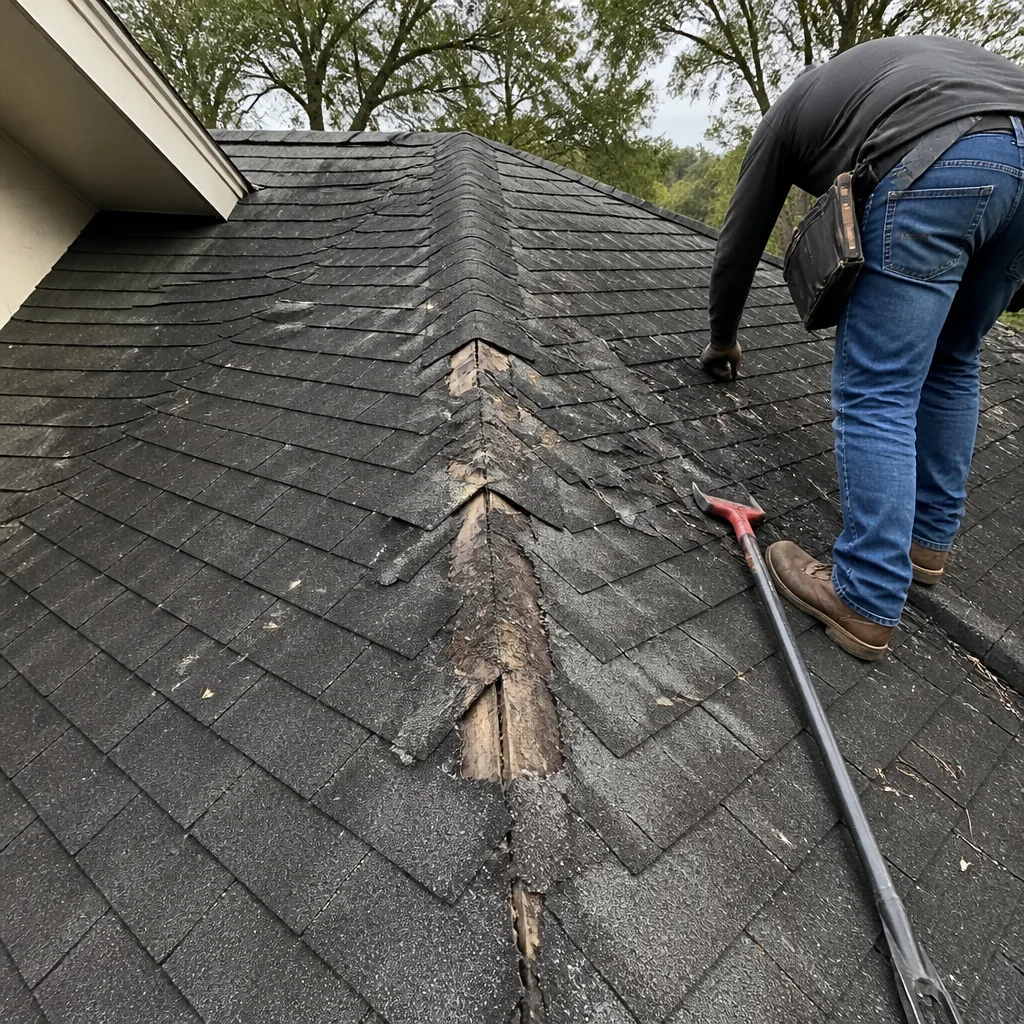 Before
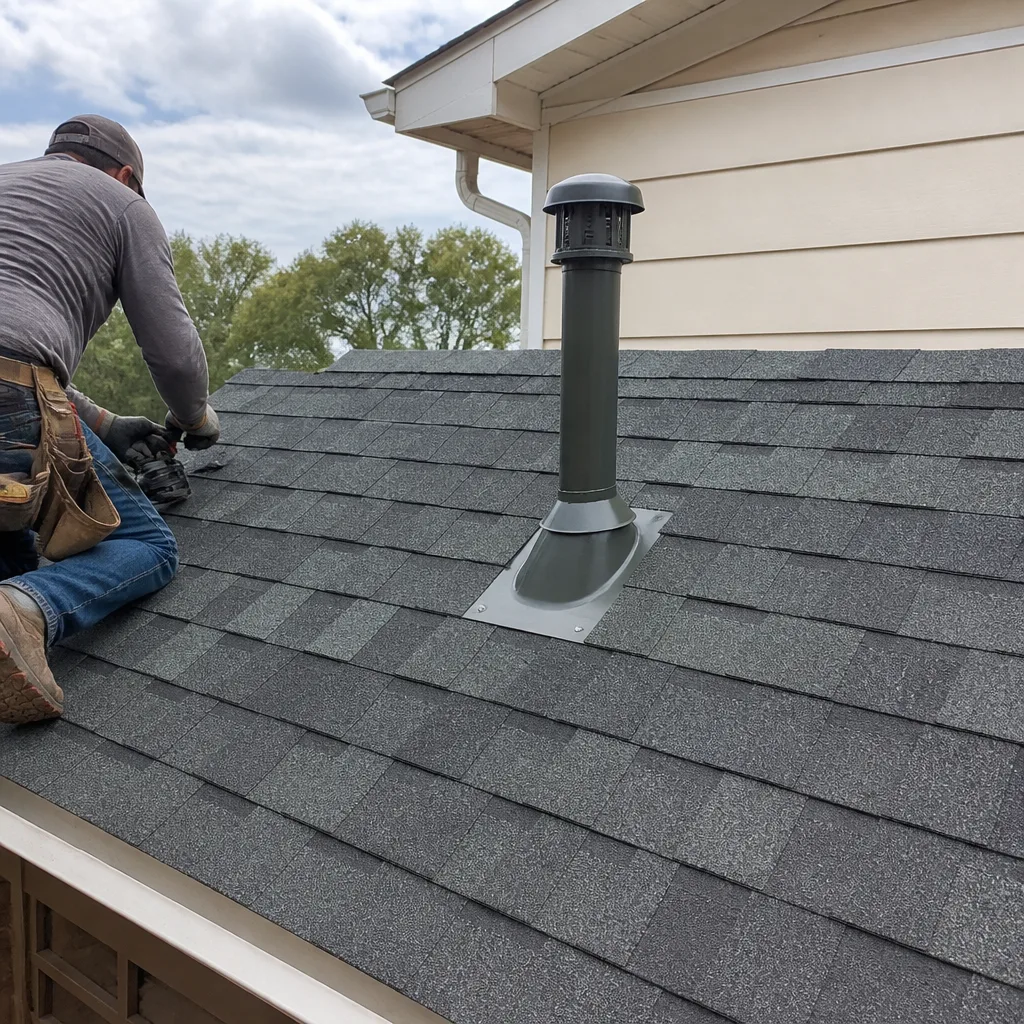 After
After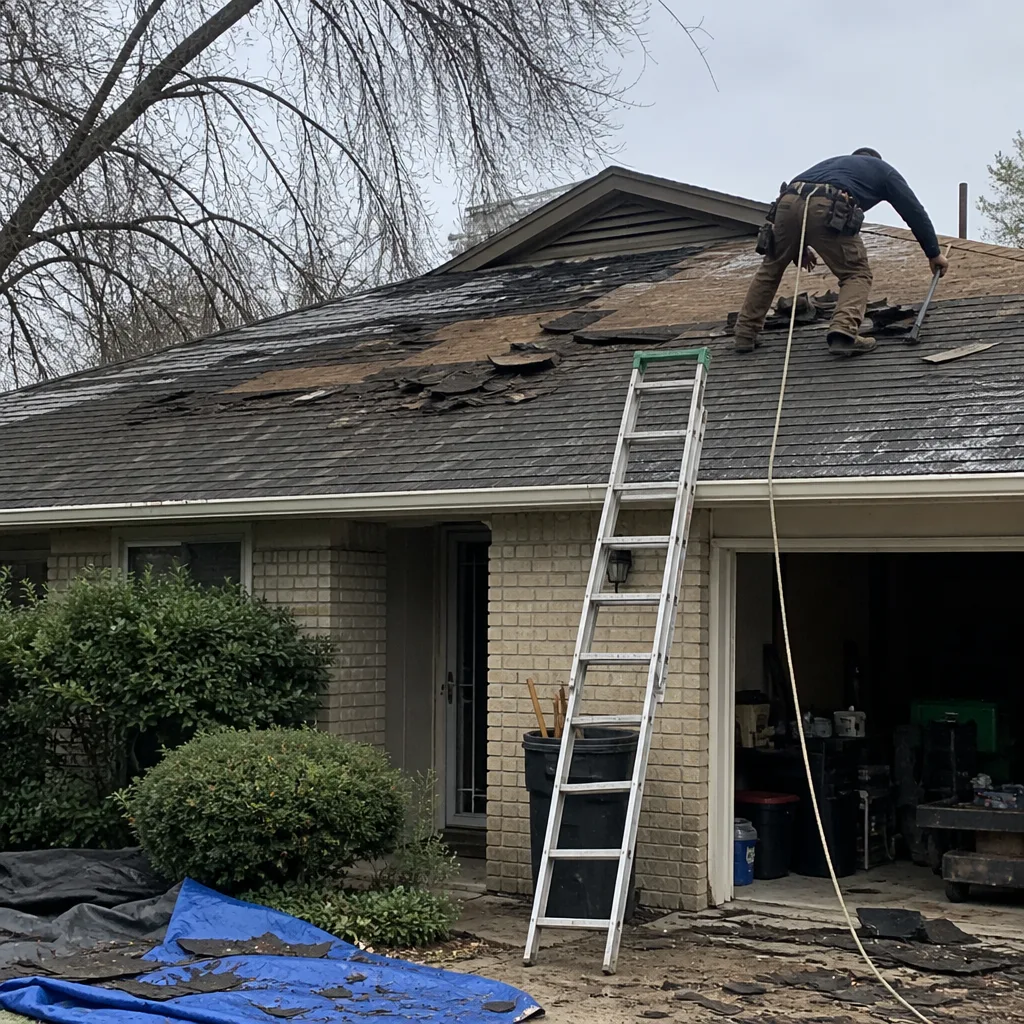 Before
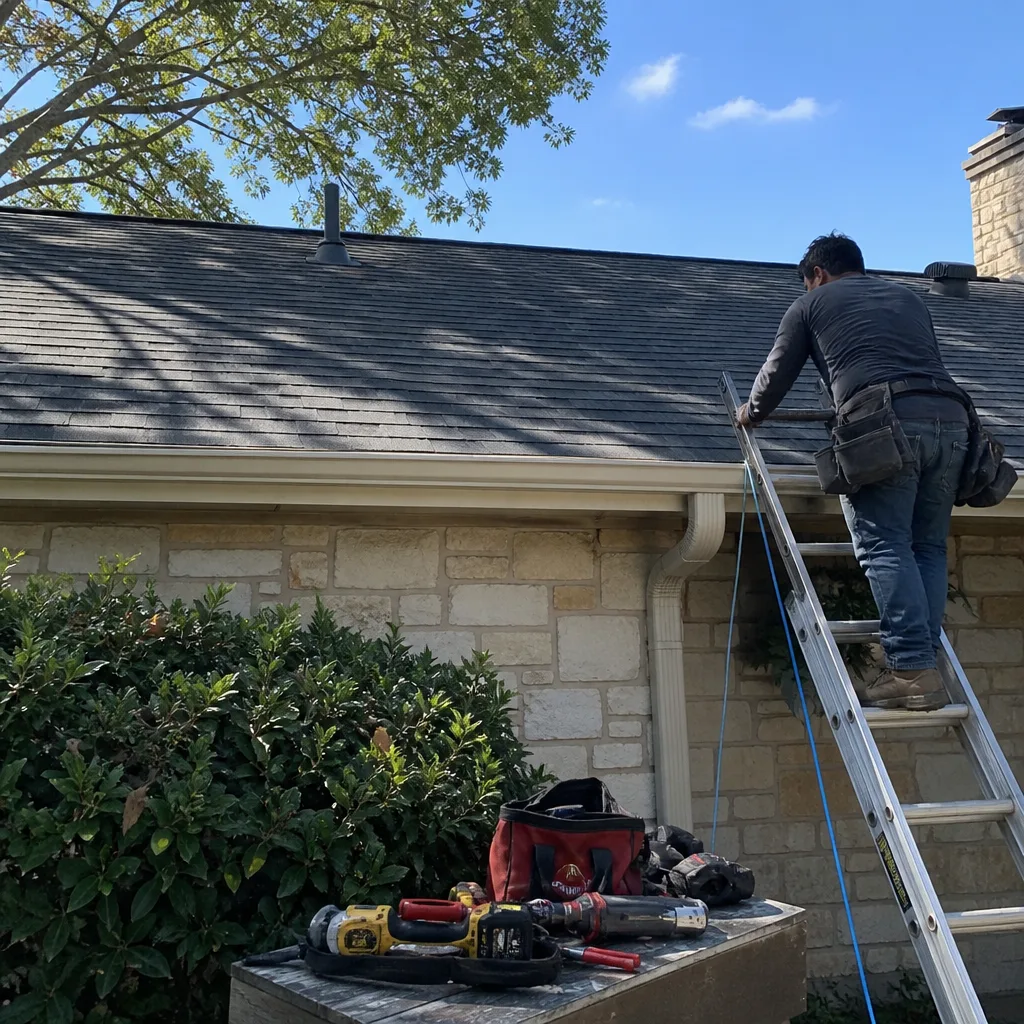 After
After