
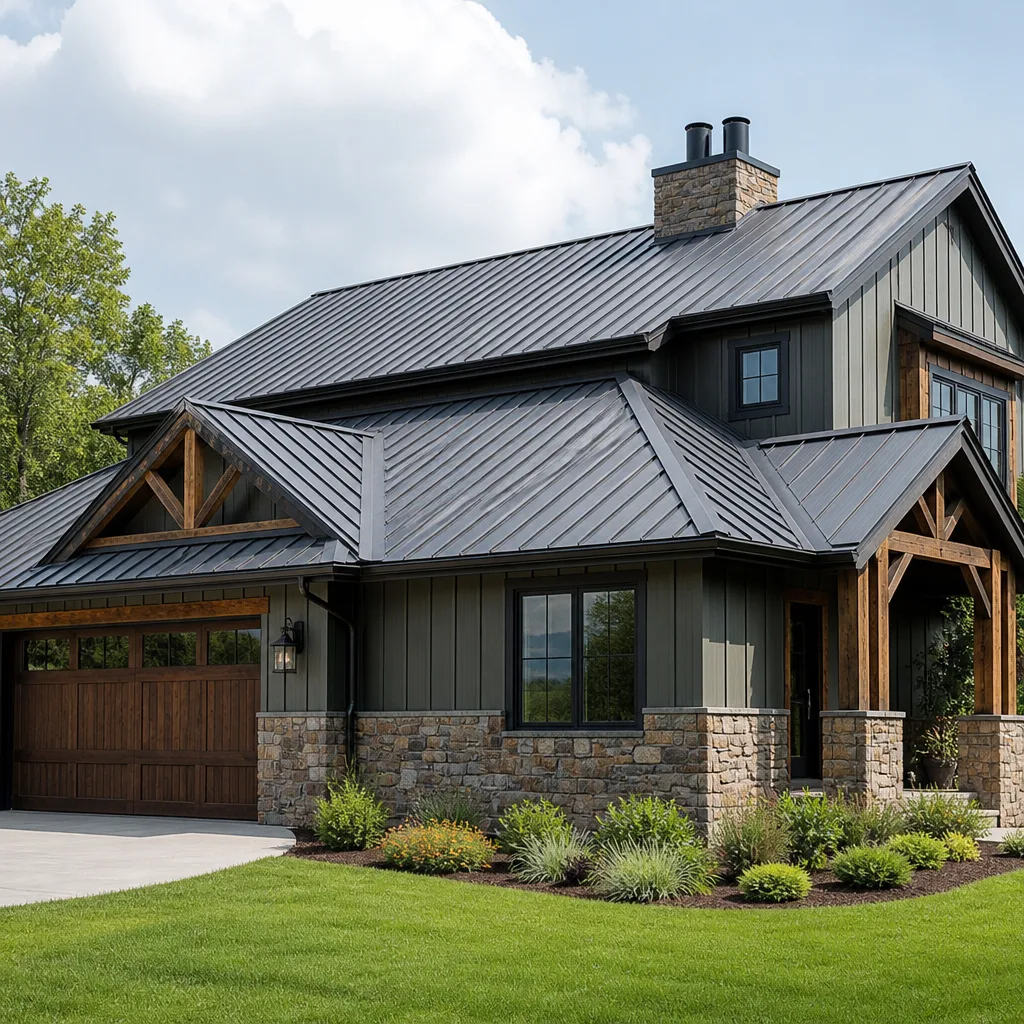
 Metal roofing
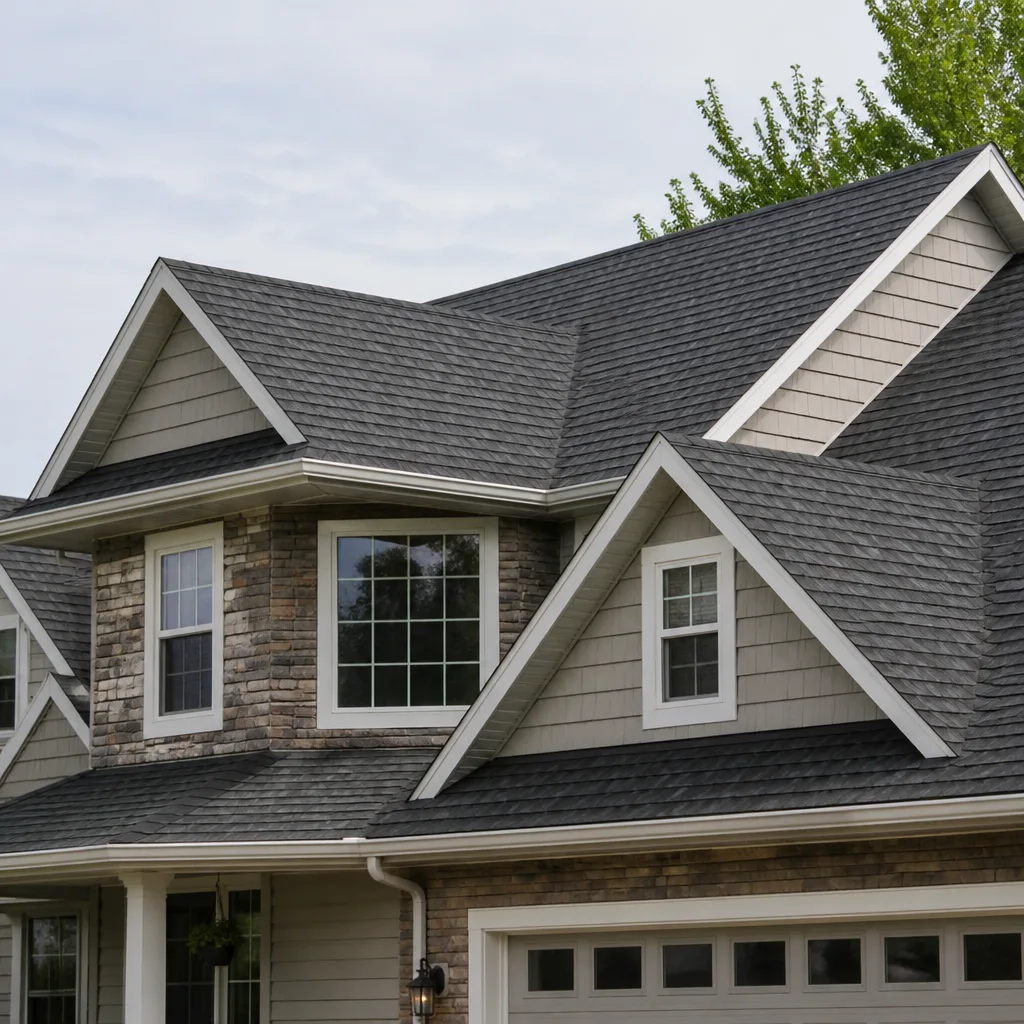 Architectural shingles
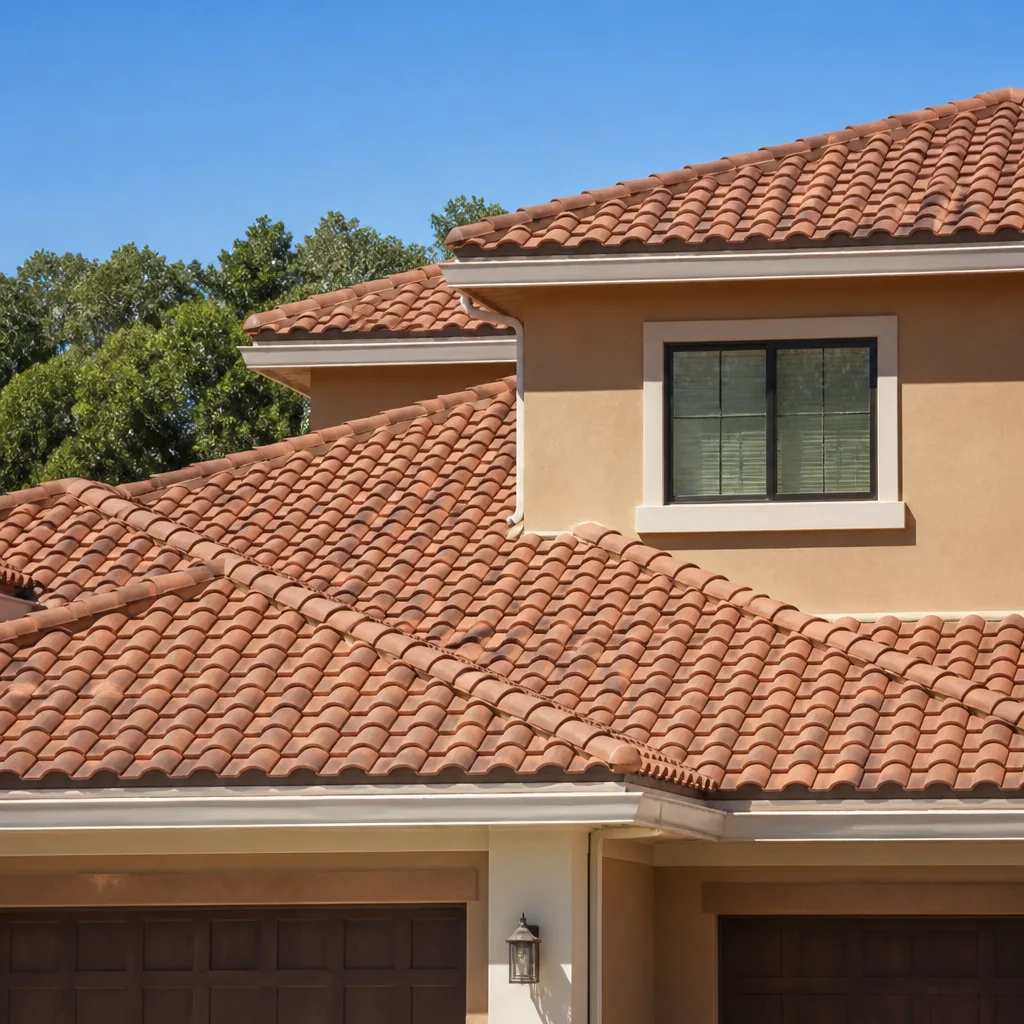 Tile roofing
 GAF
GAF Owens Corning
 Flat & low-slope
Free roof inspection with deck photos before we talk money - GAF and Owens Corning certified installation
Atlas Flashing Replacement: The Austin Owner’s Guide
Atlas flashing replacement in Austin typically runs $350 – $850 installed for most standard roof penetrations like chimneys, vents, and sidewall joints, and we usually complete the swap the same day we’re out. Flashing is the metal strip system that seals the joints where your roof meets a vertical surface, and when it fails on an Atlas-shingled roof, you’ll spot it as a brown water stain creeping across your ceiling or a damp patch in the attic after a hard Hill Country downpour. The most common way Austin homeowners discover failed flashing is the slow leak that shows up months after a storm, not the dramatic drip you’d expect.
Here’s the thing most people don’t realize until they’re living with it: Atlas shingles themselves almost never leak. The shingles do their job. It’s the flashing that gives out first, because it’s the thinnest metal on the roof, it expands and contracts through every 100-degree summer afternoon and every 30-degree January night in Austin, and its sealant eventually cracks away. That’s true whether the shingles above it are Atlas Pinnacle, Atlas StormMaster, or any other line. The flashing fails long before the Atlas shingles do.
Which Atlas Models This Applies To
Atlas flashing replacement works the same across every Atlas asphalt shingle line we see in Austin: Pinnacle, StormMaster, GlassMaster, and Castlebrook. The compatibility question isn’t about the shingle model, it’s about the flashing profile and the penetration type. Atlas roofs in the Austin area are typically installed with standard residential flashing dimensions, 26-gauge galvanized or aluminum for most applications, and the most common replacement sizes we stock are 4-inch step flashing, 5×7-inch chimney base flashing, and vent-pipe collars matched to the pipe diameter.
Here’s the compatibility gotcha worth knowing: Atlas StormMaster shingles have a slightly thicker profile than standard three-tab lines. If a previous contractor used undersized step flashing against StormMaster shingles, the flashing won’t have enough vertical coverage to shed water properly. When we do an Atlas flashing replacement on a StormMaster roof, we check the step flashing rise against the shingle exposure. It needs a minimum 2-inch vertical rise behind the siding or stucco. Get that wrong and you’ll be chasing the same leak every spring.
We use OEM-spec flashing that matches or exceeds what Atlas-compatible roof systems call for. For step flashing, we use 26-gauge galvanized steel as standard, with aluminum flashing available where staining is a concern. For valley flashing, we prefer 24-gauge. There are cheap aftermarket flashing panels on the shelf at Austin big-box stores that are 28-gauge or thinner, and they don’t survive the thermal cycling we get here. The metal fatigues, cracks at the bends, and you’re back to square one in three years.
Styles & brands we work with
Signs Your Atlas Flashing Replacement Is Failing
- Water stains on the ceiling near a chimney, skylight, or exterior wall – this is the classic symptom and it usually appears weeks or even months after the rain event that caused it. Water travels along rafters before it drops, so the stain often shows up 5 to 8 feet away from the actual flashing failure.
- Damp insulation or dark streaks in the attic – when you crawl up there after a storm, look at the decking where the roof meets any vertical surface. Failed flashing leaves a wet or water-stained pattern that follows the roofline from the penetration downhill.
- Visible gaps or lifted flashing edges along a chimney or sidewall – from the ground, you may see flashing that has pulled away from brick or siding. This happens when the sealant degrades and thermal movement works the metal loose. On an Austin afternoon with the sun at the right angle, you can often see it with a pair of binoculars.
- Granule loss concentrated in one area below a penetration – when flashing leaks, water runs under the shingles and accelerates granule loss as it drains downslope. A streak of bare shingle patches below a chimney or vent often points to flashing, not shingle failure.
- Rust at flashing seams and nail heads – galvanized flashing eventually sacrifices its zinc coating, especially at fastener points. Once you see rust, the metal is thinning and pinhole leaks come next. This is most common on south- and west-facing roof planes in Austin, where UV and heat exposure are hardest.
See the difference
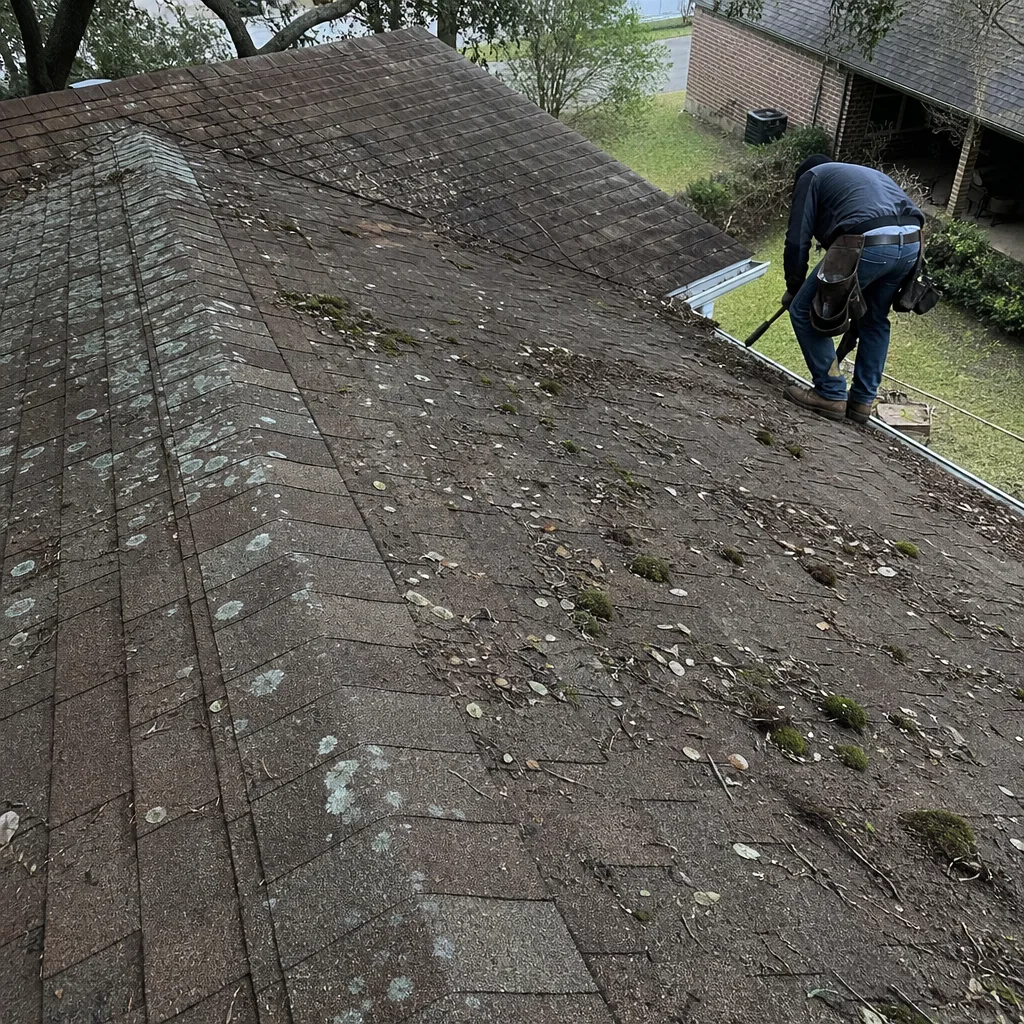 Before
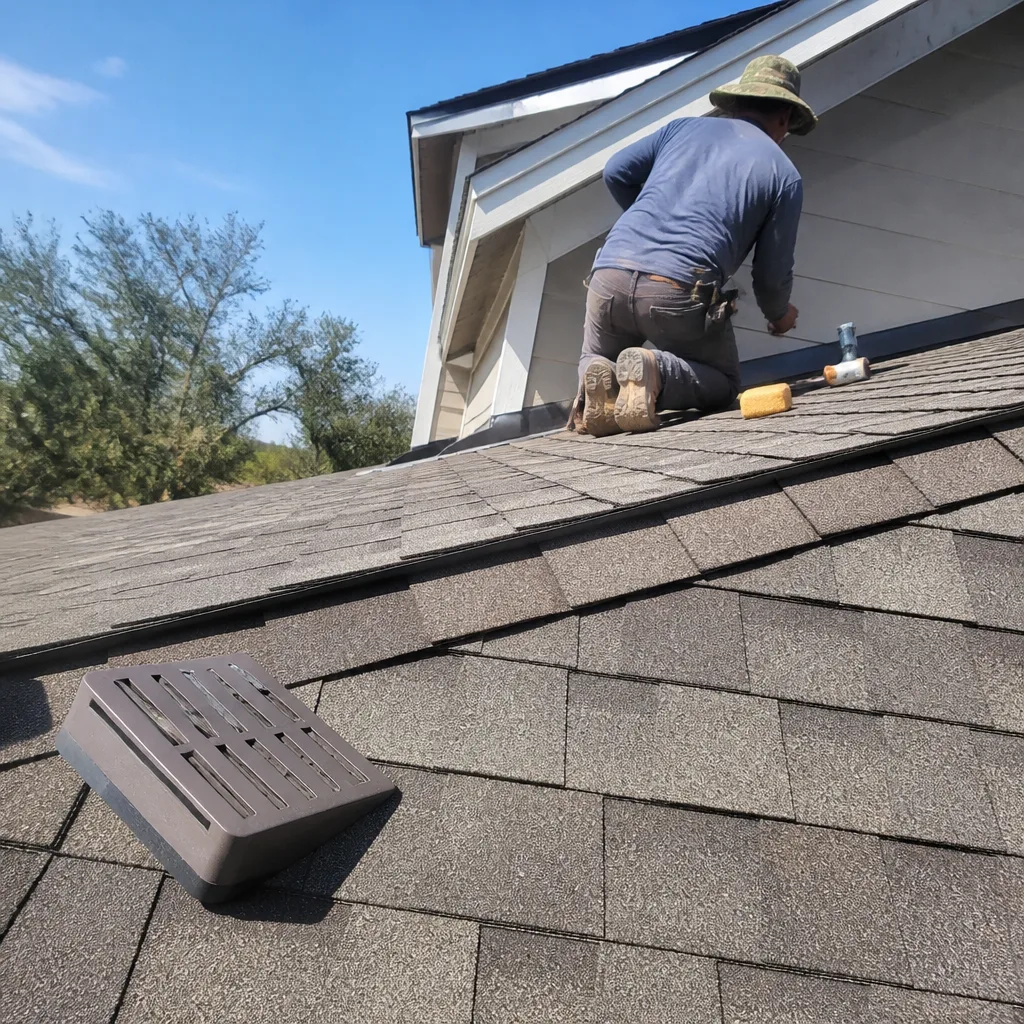 After
After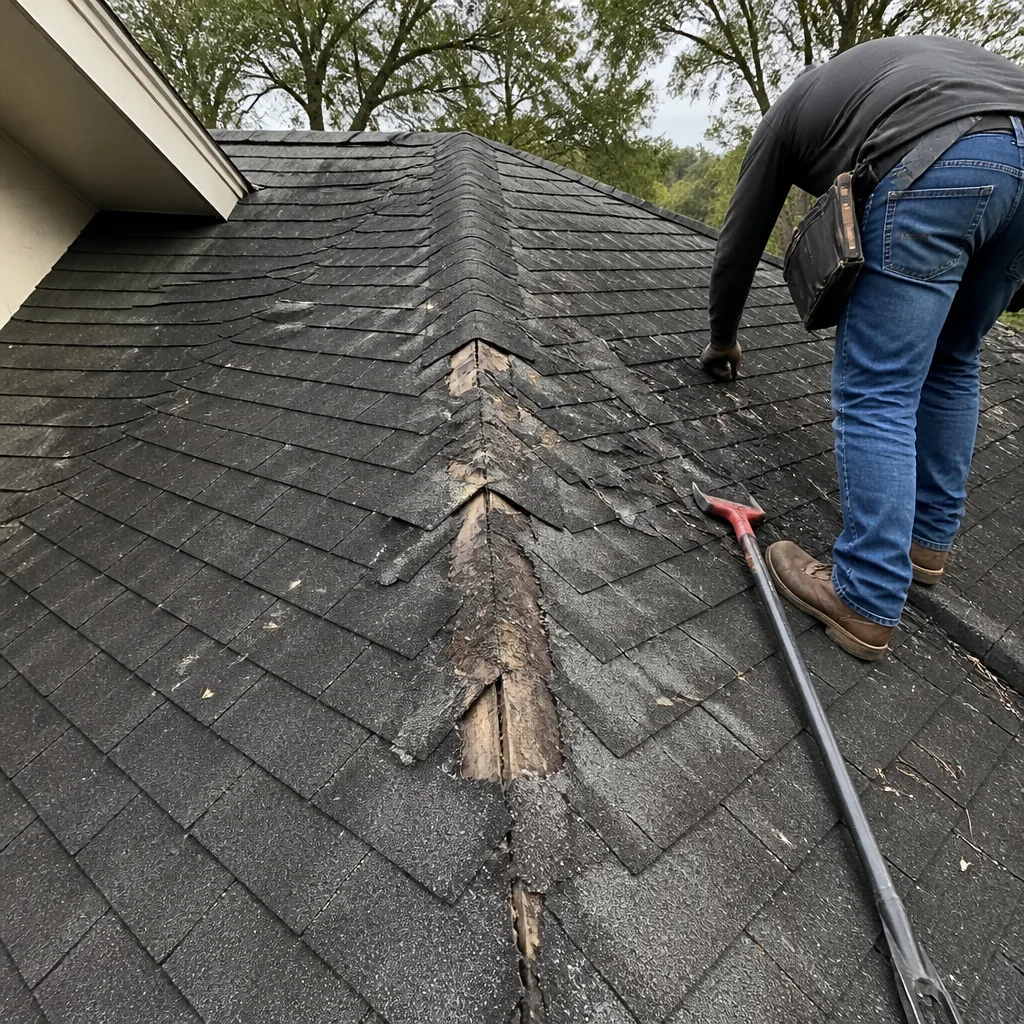 Before
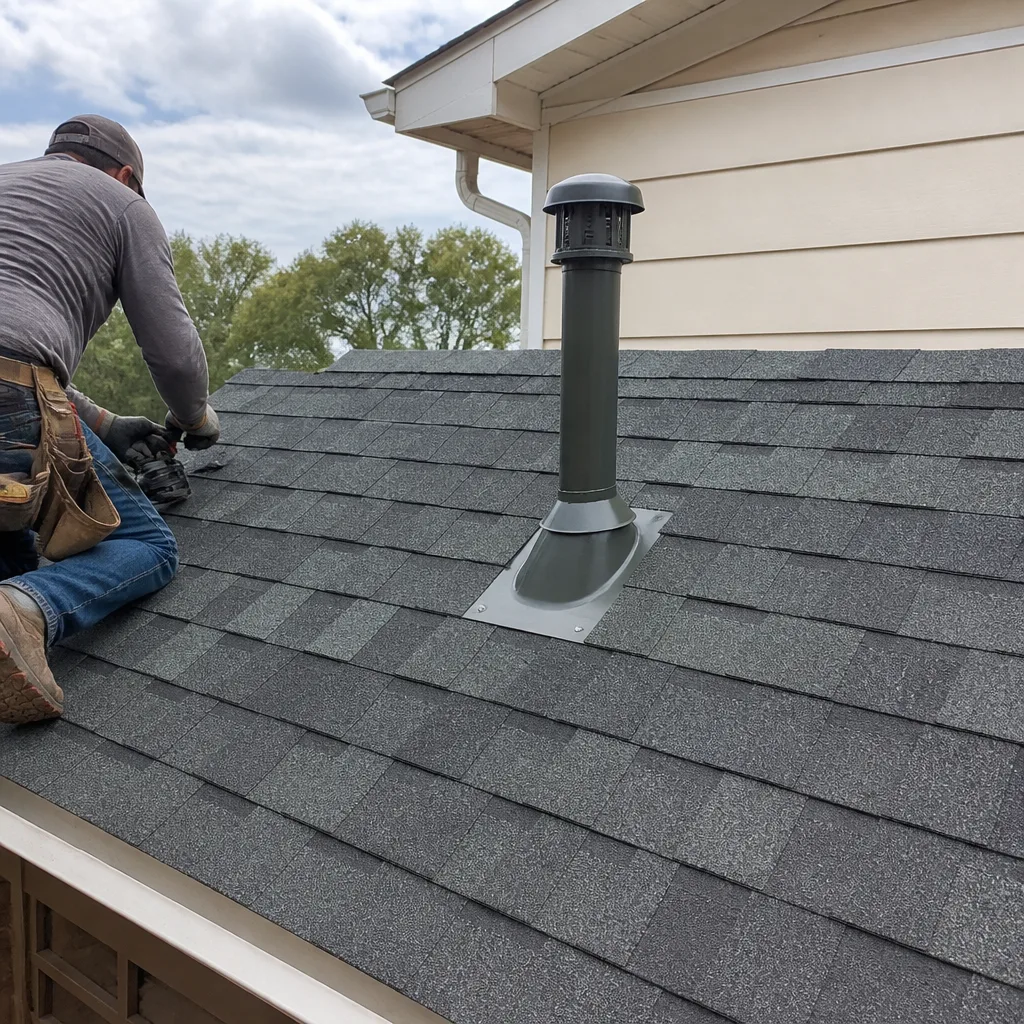 After
After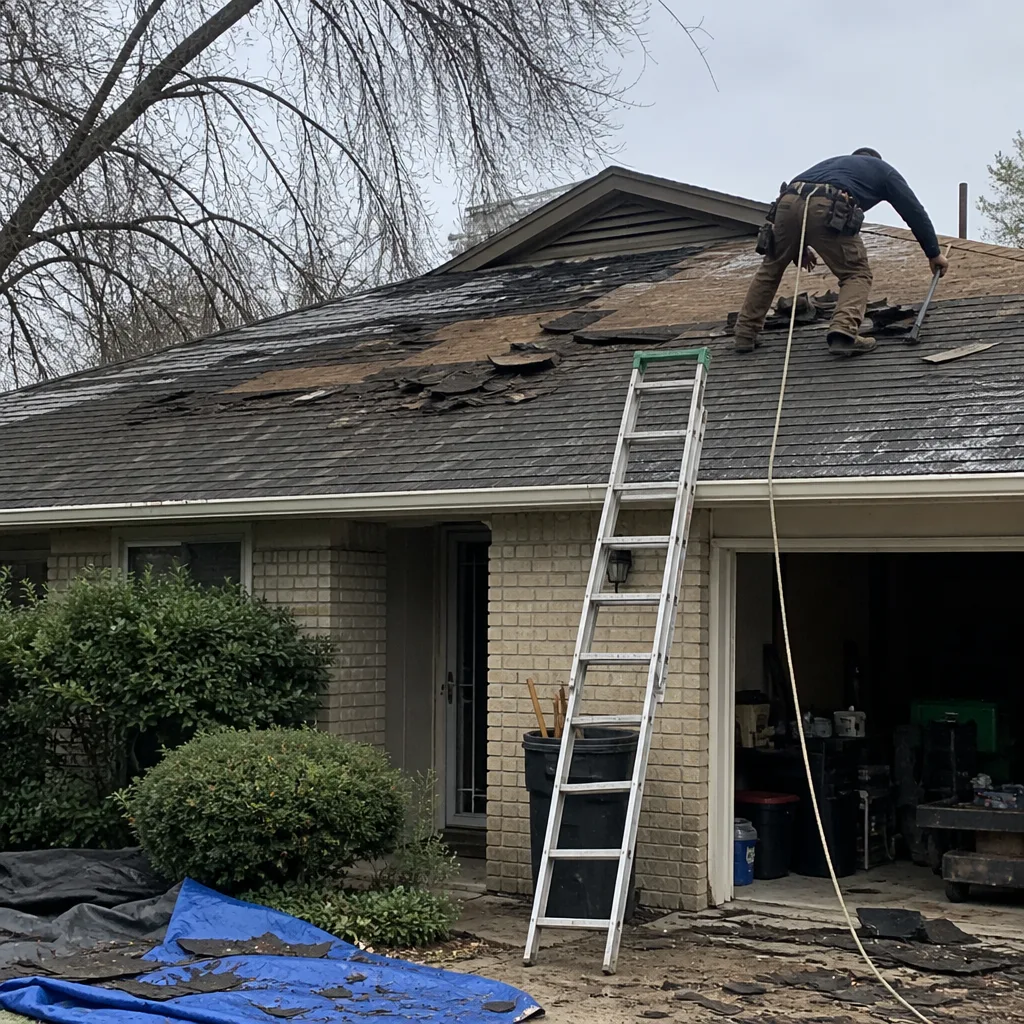 Before
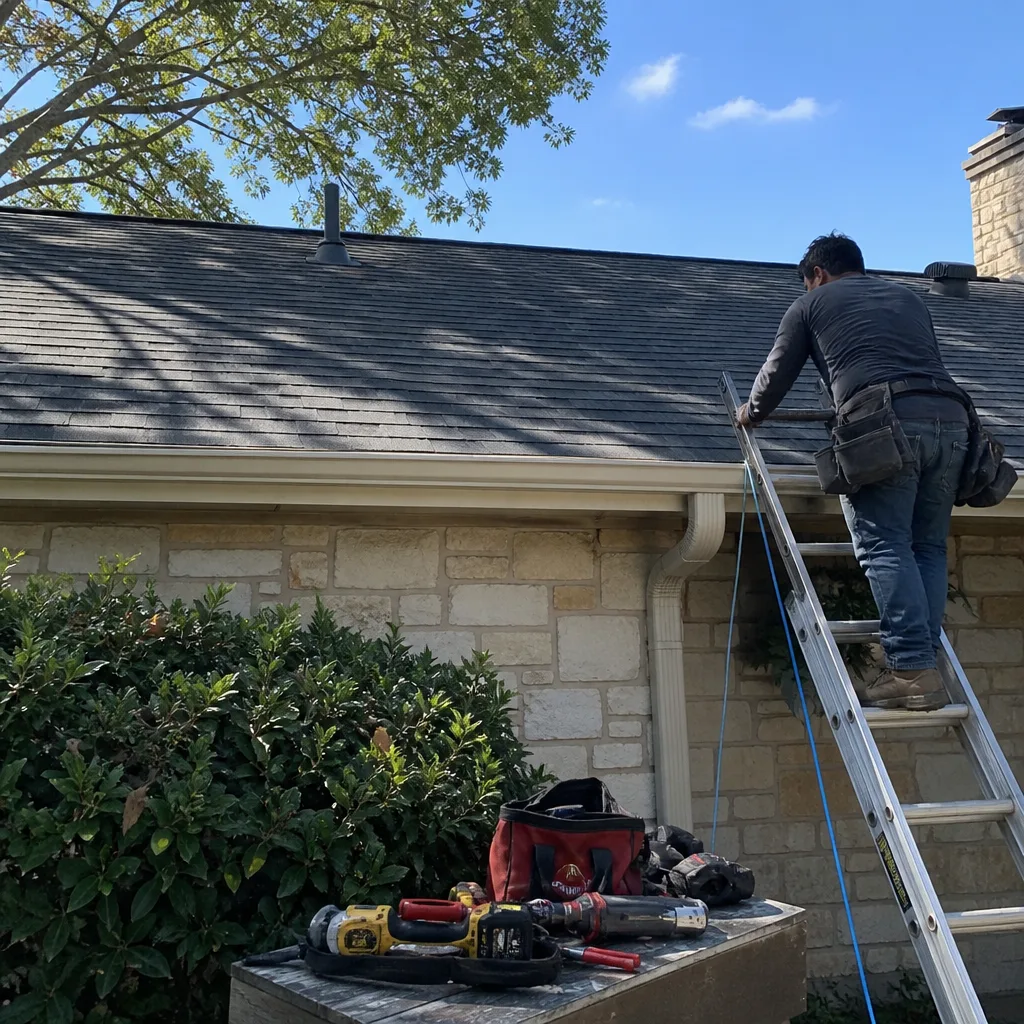 After
AfterReplacement Cost & What’s Included
Most Atlas flashing replacements on Austin homes fall between $350 and $850 installed. The low end covers a single vent-pipe collar or a short run of step flashing against a sidewall. The high end covers chimney base and counter-flashing replacement, which is the most labor-intensive flashing job on a roof. Larger chimneys with multiple sides or custom-metal work can push past that range, but we’ll tell you before we start, not after.
What drives the range: accessibility (steep pitch, two-story access), the number of flashing pieces being replaced, whether the existing metal is nailed through or mechanically fastened, and whether the surrounding shingles need to be lifted and re-sealed. On stone or masonry chimneys, we cut in new counter-flashing and seal with a high-grade urethane sealant. On sidewall flashing, we re-integrate with the existing siding or stucco.
Every Atlas flashing replacement from Crestview Roofing includes the parts and labor as one written price, delivered before work begins. And the 365-Day Done Right Promise covers the work for a full year, in writing, at no extra cost: if that flashing fails within 365 days, we correct it at no charge, including a free second visit if it comes to that. The number on the estimate is the number on the invoice. That’s the whole point of how we run work in Austin.
DIY or Call Us?
You can safely inspect from the ground or from a ladder placed on stable, level ground. Look for lifted flashing, visible sealant failure, rust streaks, and any gap where metal meets masonry. What you shouldn’t do is climb onto the roof and attempt to lift or re-seat flashing yourself. Steep Austin roofs, especially two-story homes built into the hills of Tarrytown or Allandale, put you at real risk. And improperly re-sealed flashing will leak exactly the same as flashing that was never touched, just slower, so you won’t know if your repair worked until the next storm.
Flashing replacement also tends to involve tools most homeowners don’t have lying around: tin snips for cutting counter-flashing, a hammer drill for masonry fasteners, and a roofing torch or heat gun for proper sealant curing. If the flashing spans a chimney that’s more than two feet wide, you’re also dealing with metal-work angles that make a wrong cut turn a $500 job into a $1,500 water-damage repair. If it’s not in writing, it’s just a conversation, and what we put in writing is a fixed price and a 365-day guarantee. Call (254) 587-6371 for a free estimate.
FAQs
Standard galvanized flashing on an Austin roof lasts 15 to 25 years, but the sealant bonds typically fail every 8 to 12 years. Aluminum flashing lasts longer than galvanized, often 25 to 30 years, but it’s softer and more easily damaged by hail or foot traffic. The biggest factor in flashing lifespan in Austin isn’t the metal, it’s the sealant. We recommend calling (254) 587-6371 if your flashing is visibly cracked at the seal joints, even if the metal still looks fine.
In most cases, no. Caulk or roof sealant over failed flashing is a temporary patch that typically lasts one Austin storm season before the thermal movement breaks the seal again. The only time a sealant patch makes sense is for a pinhole or hairline gap on otherwise solid flashing with intact metal. We’ll tell you honestly if that’s your situation.
Most flashing replacements take between 2 and 4 hours from setup to cleanup. Chimney flashing with masonry cut-in work takes up to a full day, especially on stone chimneys. We’ll give you the timeline in writing before you commit, so you know exactly what to expect.
We stock standard 26-gauge galvanized step flashing, vent collars, and chimney base flashing in our Austin trucks, plus common sizes of 24-gauge valley metal. For unusual penetrations like skylight surrounds or boxed vents, we source matching profiles from our supply partners in the Austin area, usually same-day. We also work with flashing components sized properly for GAF, Owens Corning, and CertainTeed systems if you’ve got a mixed roof or previous shingle repairs.
Need a straight answer on an Atlas flashing replacement in Austin? Call (254) 587-6371 for a free estimate, and we’ll have someone out to look at it. A live person answers, and you’ll get a written price before any work starts.
Written by Dylan Pace, Owner, Crestview Roofing Co Austin at Crestview Roofing Co Austin, serving Austin and nearby areas.