
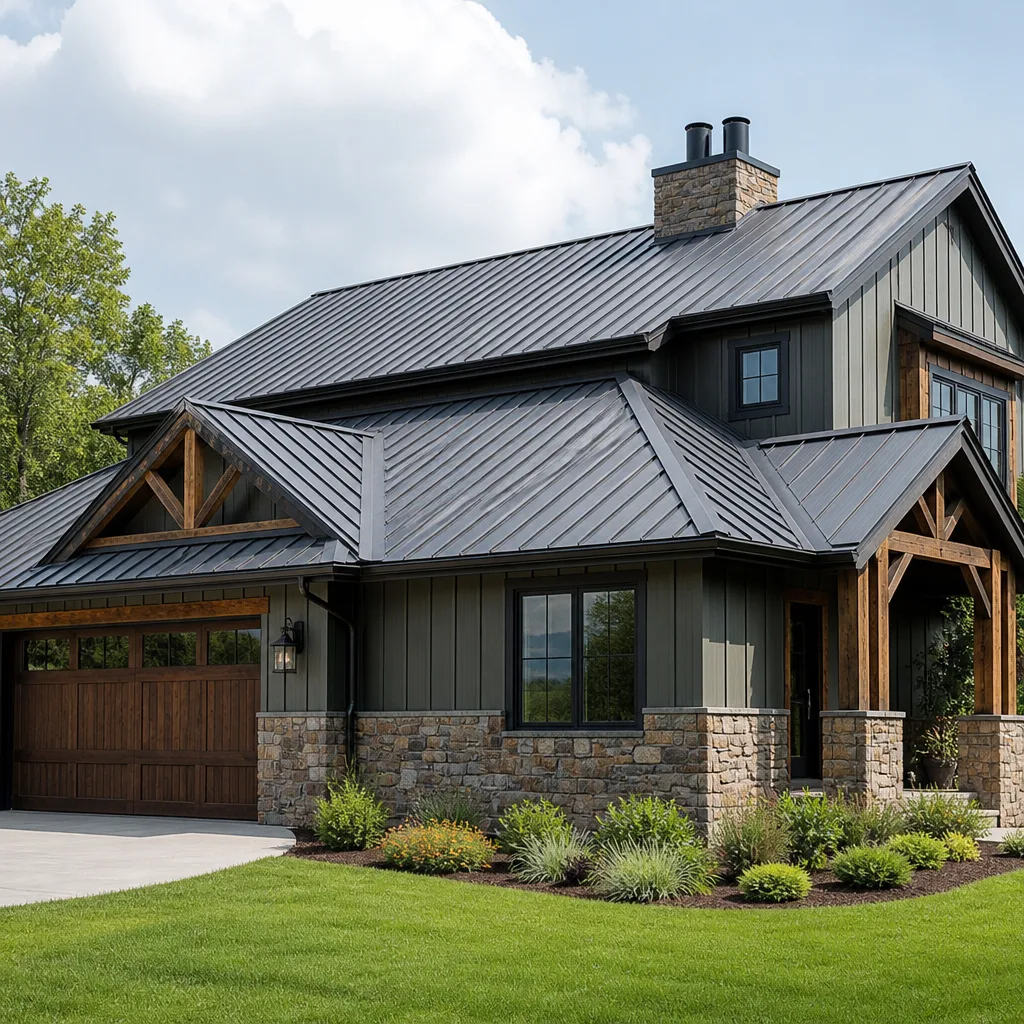
 Metal roofing
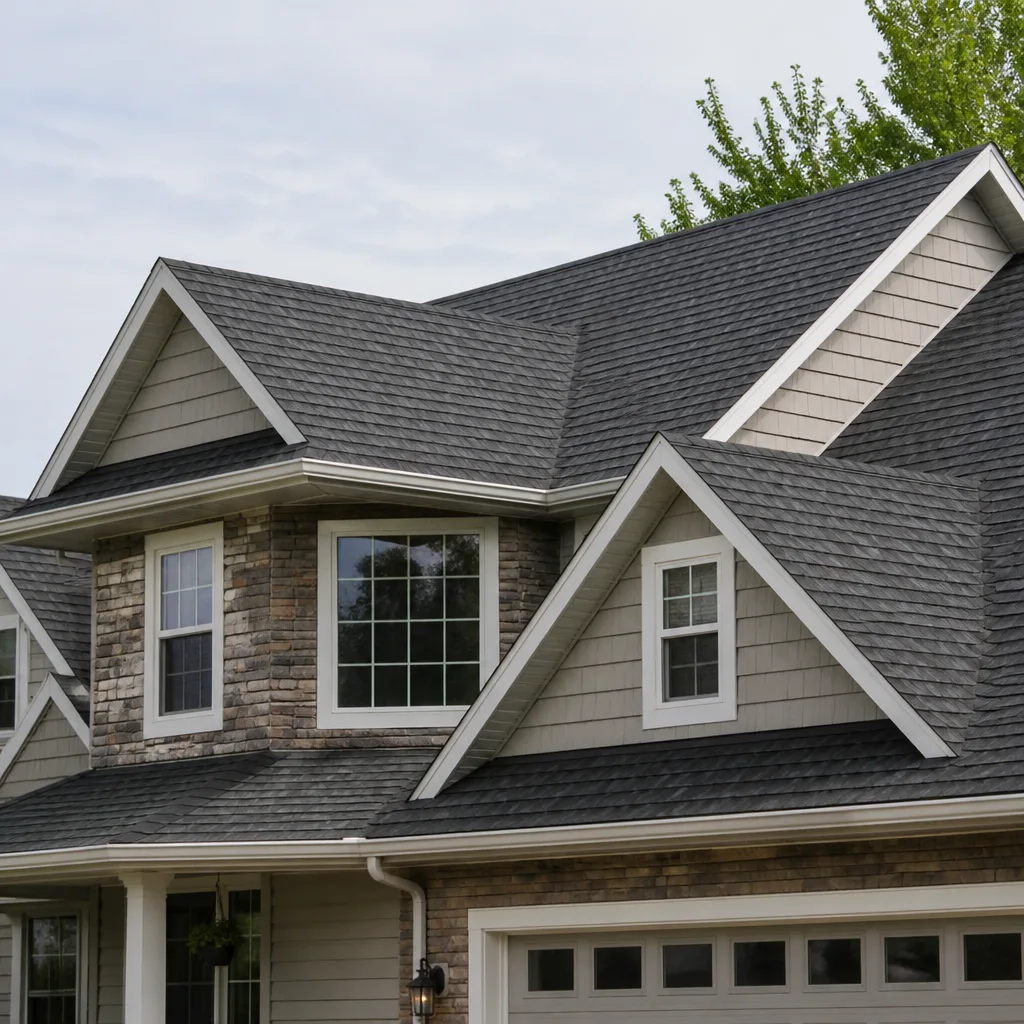 Architectural shingles
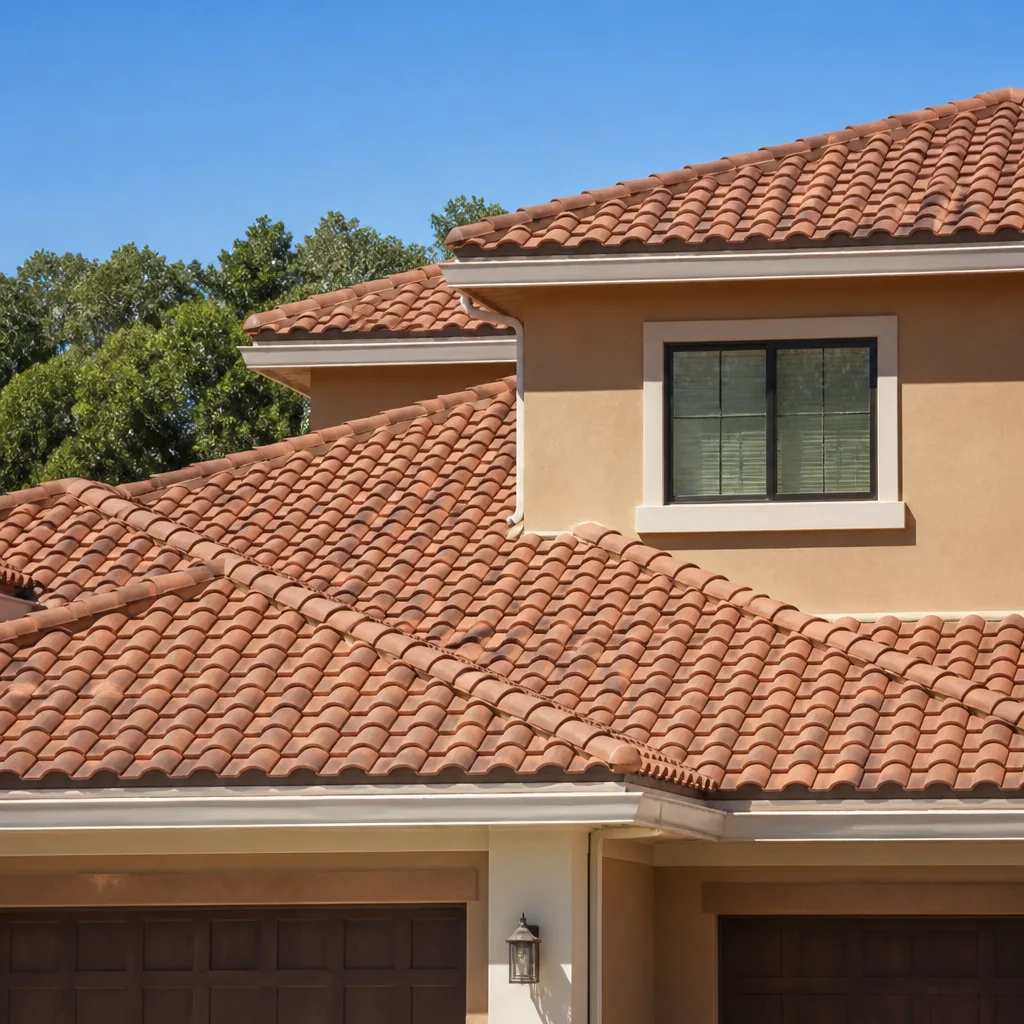 Tile roofing
 GAF
GAF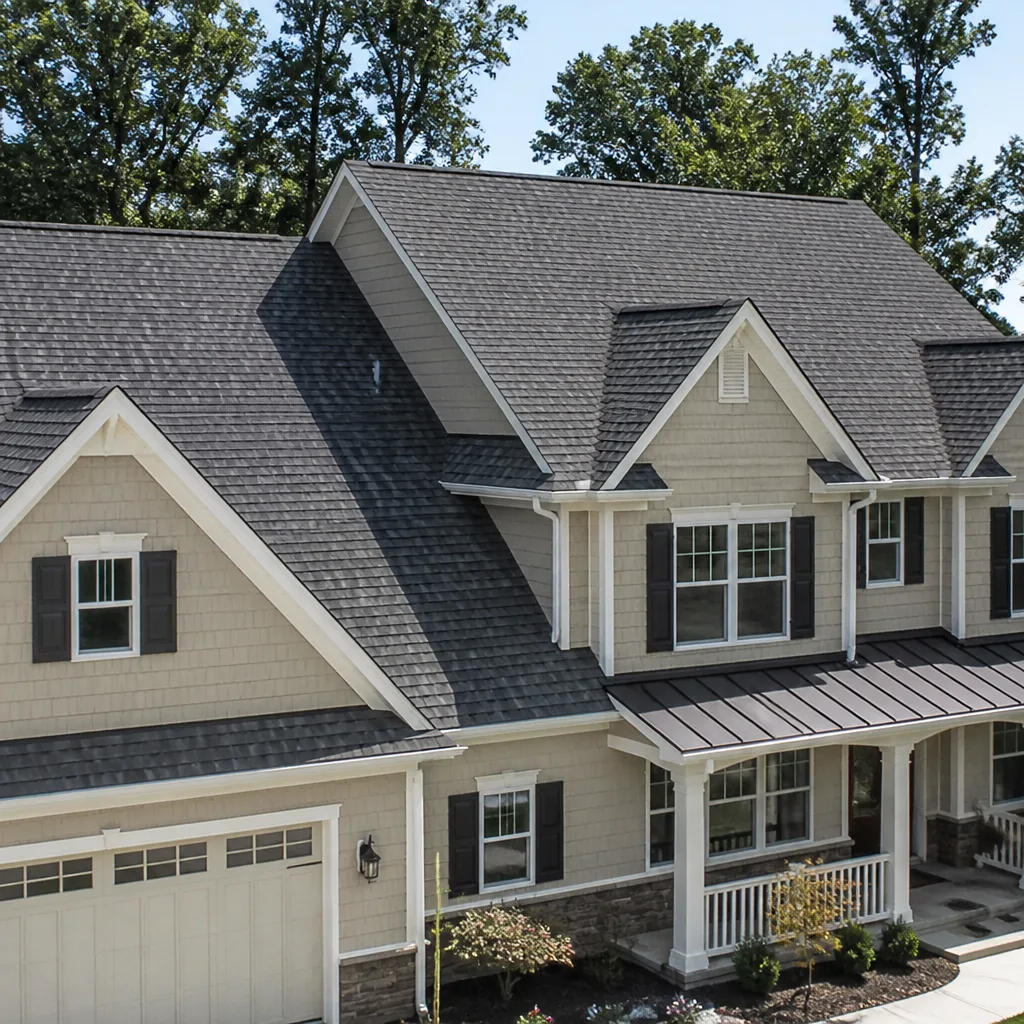 Owens Corning
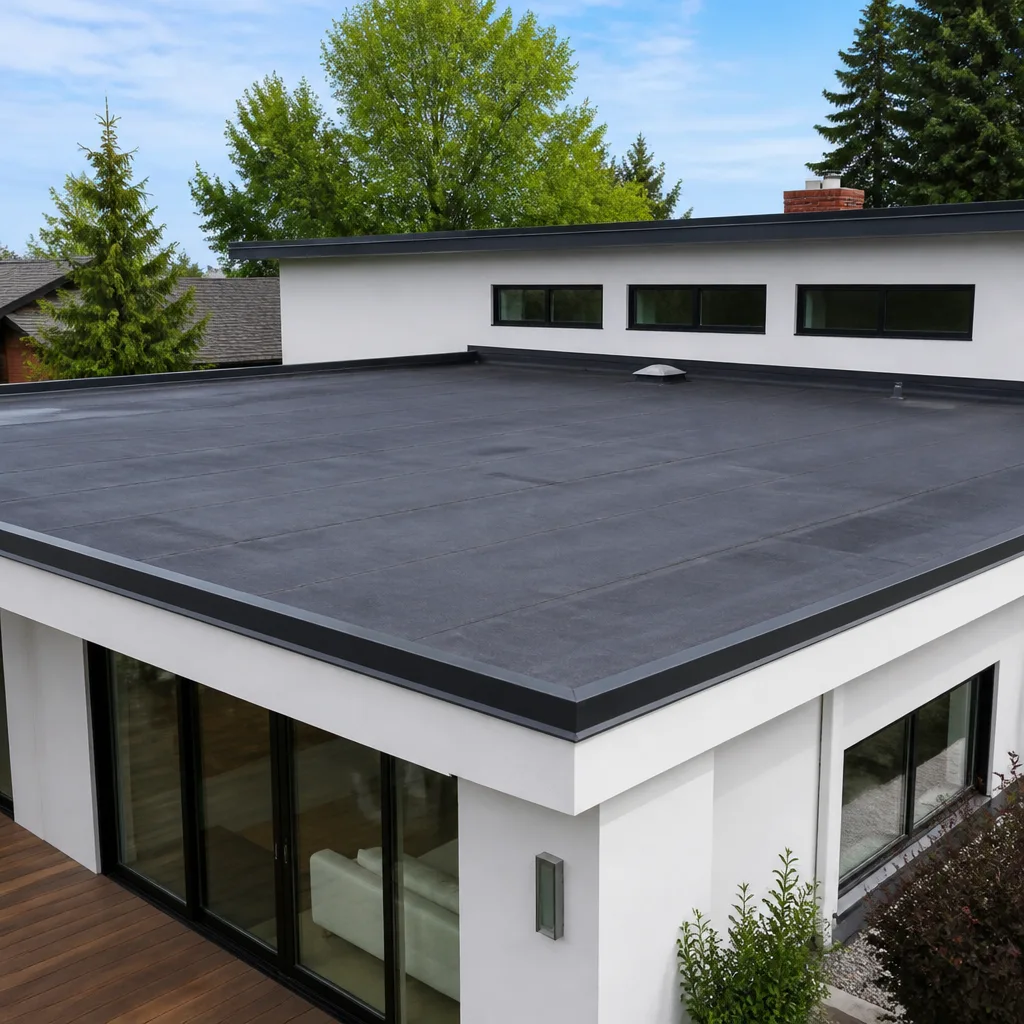 Flat & low-slope
Free roof inspection with deck photos before we talk money - GAF and Owens Corning certified installation
CertainTeed Ridge Vent Installation: The Austin Owner’s Guide
We stock and install CertainTeed ridge vent systems across Austin, with most full installations running $450 to $950 depending on roof length, accessibility, and whether your existing vent needs removal first. This is not an exotic repair: our trucks carry CertainTeed-compatible ridge vent material, and we can usually have the old vent off and the new one running the same day we arrive. Most Austin homeowners discover the problem the hard way: a vent that’s come loose after a spring storm, granular loss around the ridge line, or a September afternoon when the attic feels like a kiln because the vent’s no longer pulling air.
CertainTeed’s ridge vent is a low-profile, shingle-over vent that runs along the peak of your roof. It’s designed to work with CertainTeed’s shingles and underlayment as a matched system, and when it fails, it fails quietly. You won’t hear a bang. You’ll notice the attic temperature climbing ten degrees in July, or you’ll spot a shingle lifting at the ridge and wonder if it’s the shingle or what’s under it. Usually what’s under it.
Which CertainTeed Models This Applies To
CertainTeed makes a few vent lines that get confused with each other, so let’s sort them out. The most common are the ShingleVent II and the ShingleVent II UHD. Both are shingle-over vents, meaning they install along the ridge and get covered with shingles so they blend with the roofline. The UHD version is a thicker profile with a larger net free vent area (NFVA), built for steeper or longer runs where airflow gets restricted. There’s also the older FilterVent line, which still shows up on Austin houses from the 1990s and early 2000s. If your home has FilterVent, the part is discontinued in some widths, and we typically match it with a ShingleVent II that meets or exceeds the original’s NFVA.
The compatibility gotcha with CertainTeed ridge vent: trying to pair a vent with the wrong underlayment or shingle line can void your CertainTeed wind warranty. CertainTeed’s warranty language requires the vent be installed per their installation specs with their approved materials. That doesn’t mean their vent is the only one that works on an CertainTeed roof, but it does mean we install it the way CertainTeed wants it installed: proper slot width, correct nail pattern, and the right end-cap sealing. We’re not affiliated with CertainTeed, but we know their specs and we install to them because warranty claims live or die on paperwork, and we put everything in writing.
Styles & brands we work with
Signs Your CertainTeed Ridge Vent Installation Is Failing
- Attic temperature creeping up in summer. A working ridge vent pulls hot air out as it rises, which is why attic temp should stay within 10 to 15 degrees of outdoor air. If your attic hits 130°F in August, the vent’s not pulling.
- Shingles lifting or flapping at the ridge. The shingles that cover the vent act as its armor. When they lift, it’s usually because nails have worked loose or the vent’s internal baffle has warped from years of Texas heat.
- Granular loss concentrated along the ridge. If you see bare spots or excessive granules in the gutter below the ridge, the shingle-over vent may have been installed too tight, causing the shingles to flex and shed granules.
- Moisture stains or mildew in the attic. A clogged or collapsed ridge vent lets humidity sit instead of exhausting it. In Austin’s humid shoulder months, that’s when you’ll see it on the underside of the decking.
- Water trickling down the attic wall during hard rain. Ridge vents are engineered to resist wind-driven rain, but a torn filter or a gap where the end cap meets the ridge lets water in. We see this on older ShingleVent installs where the end caps have dried and cracked.
See the difference
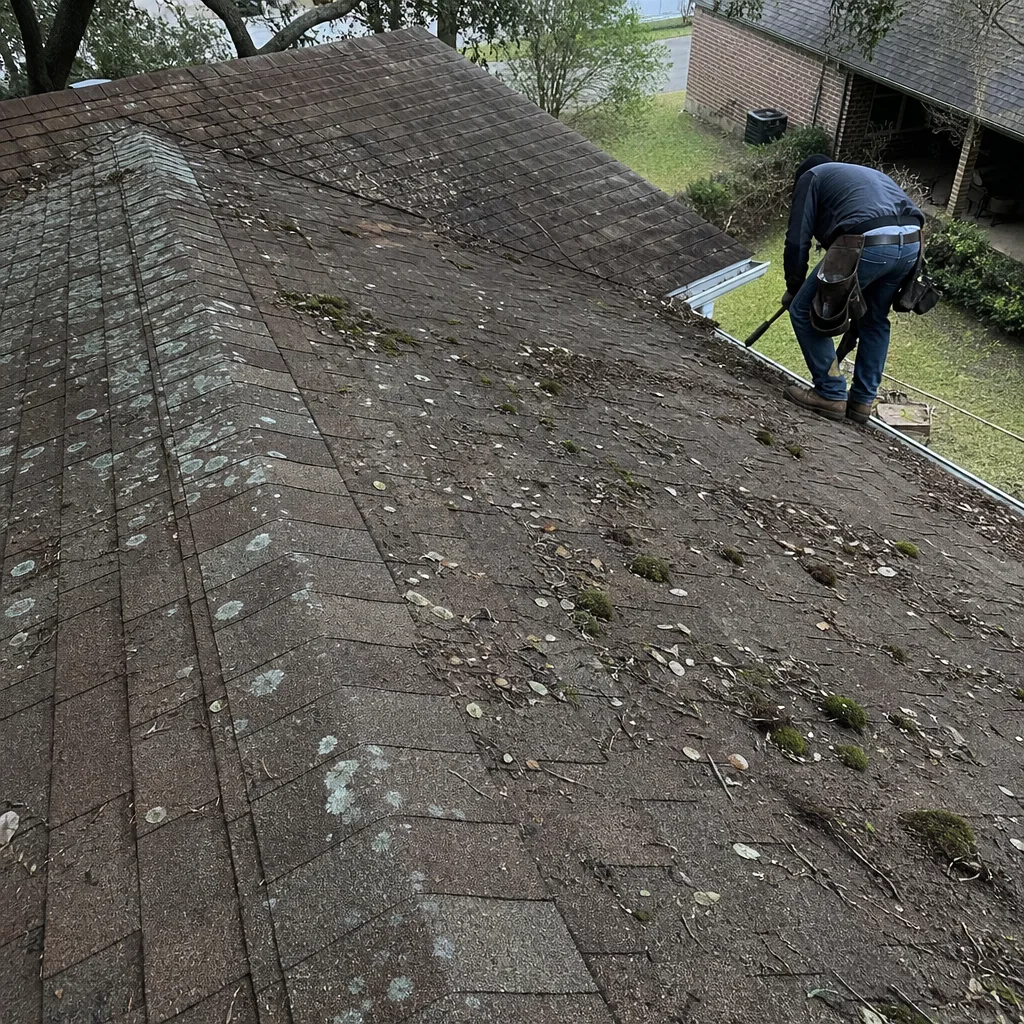 Before
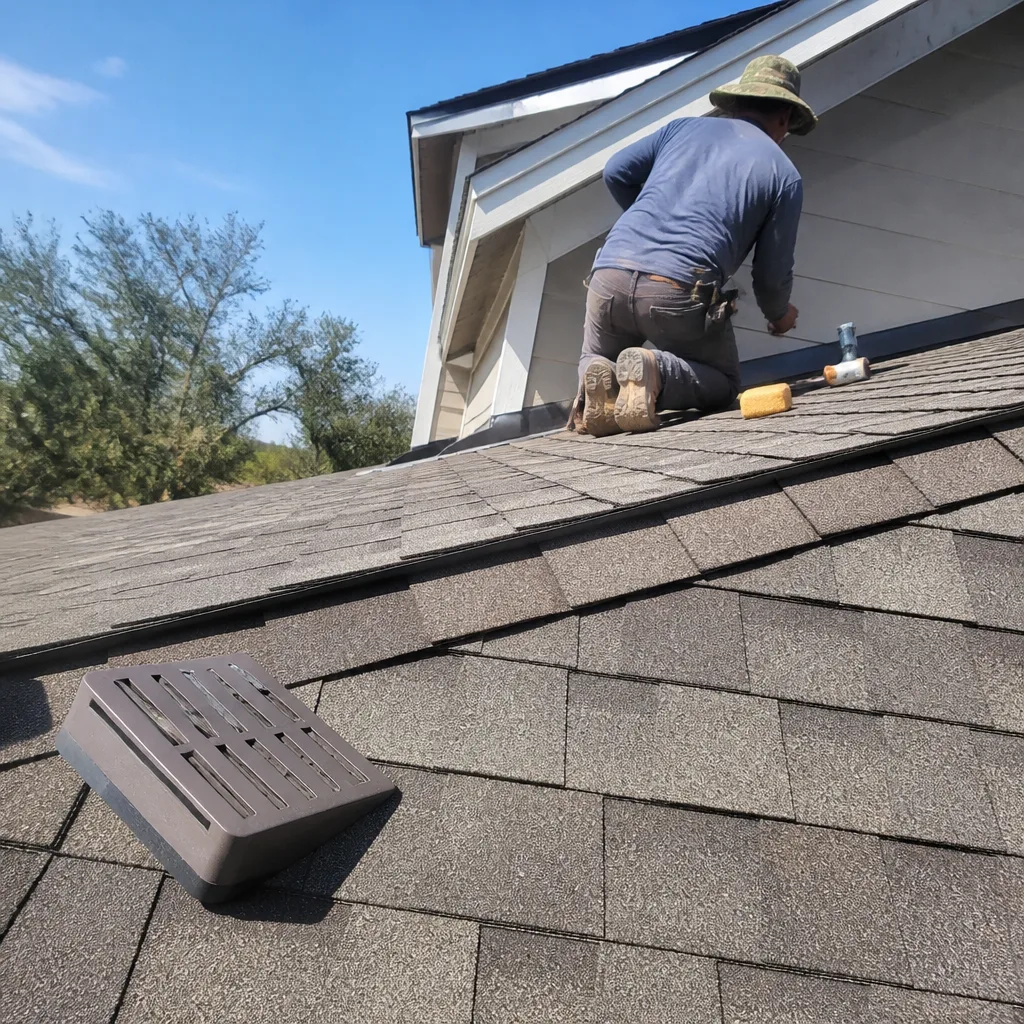 After
After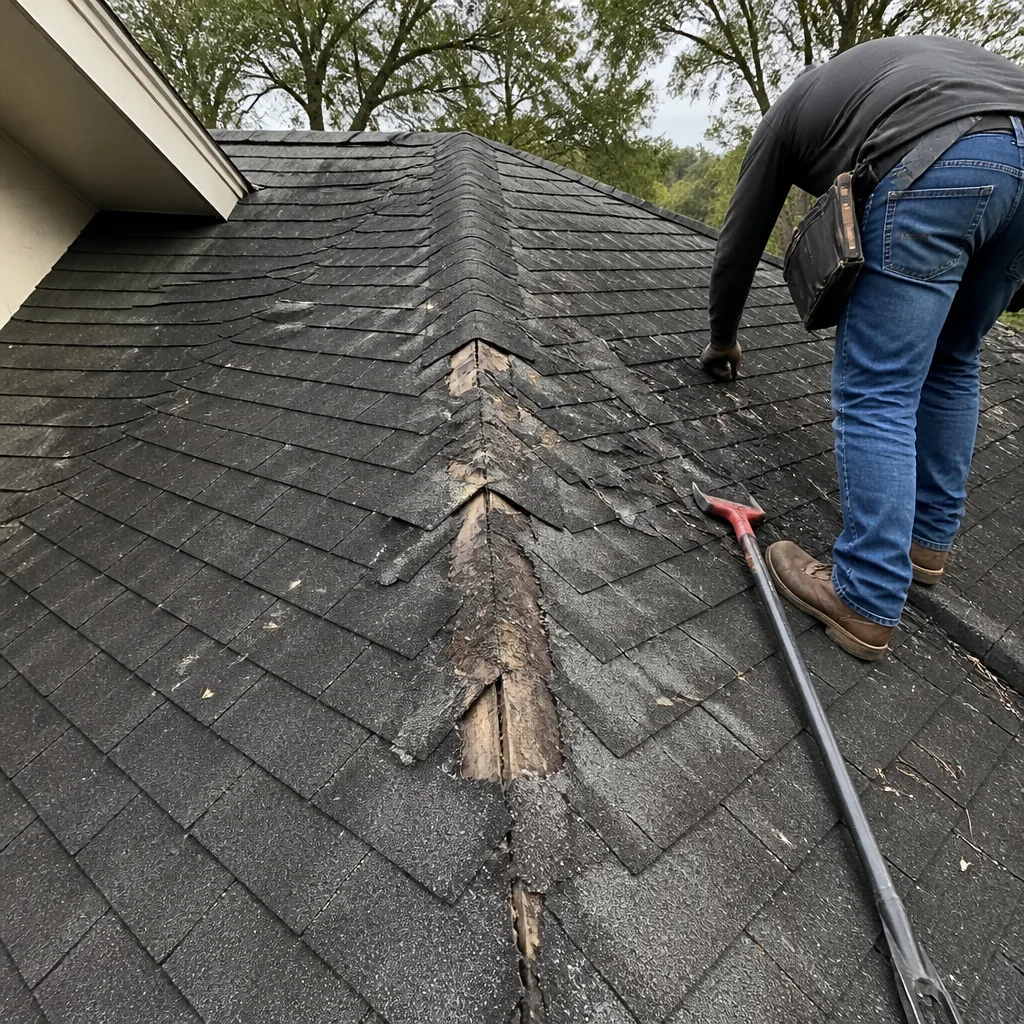 Before
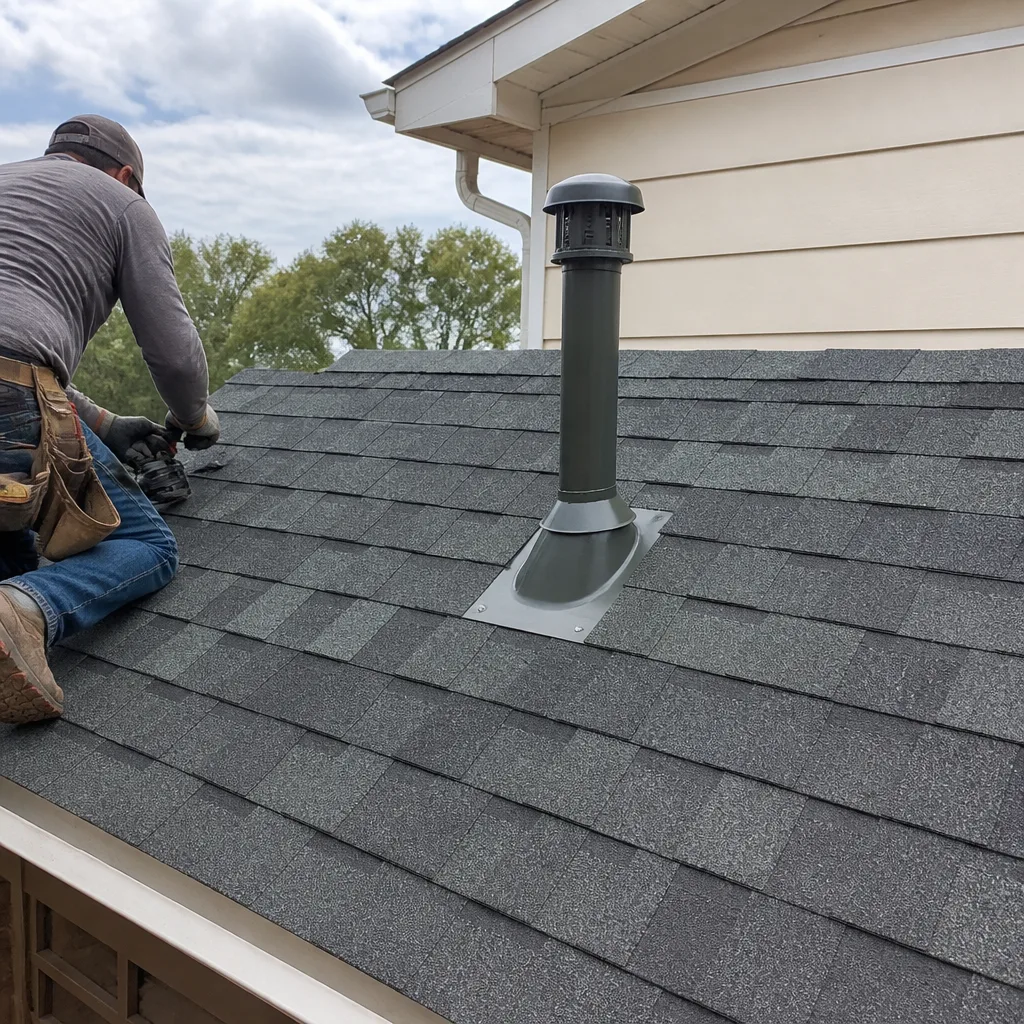 After
After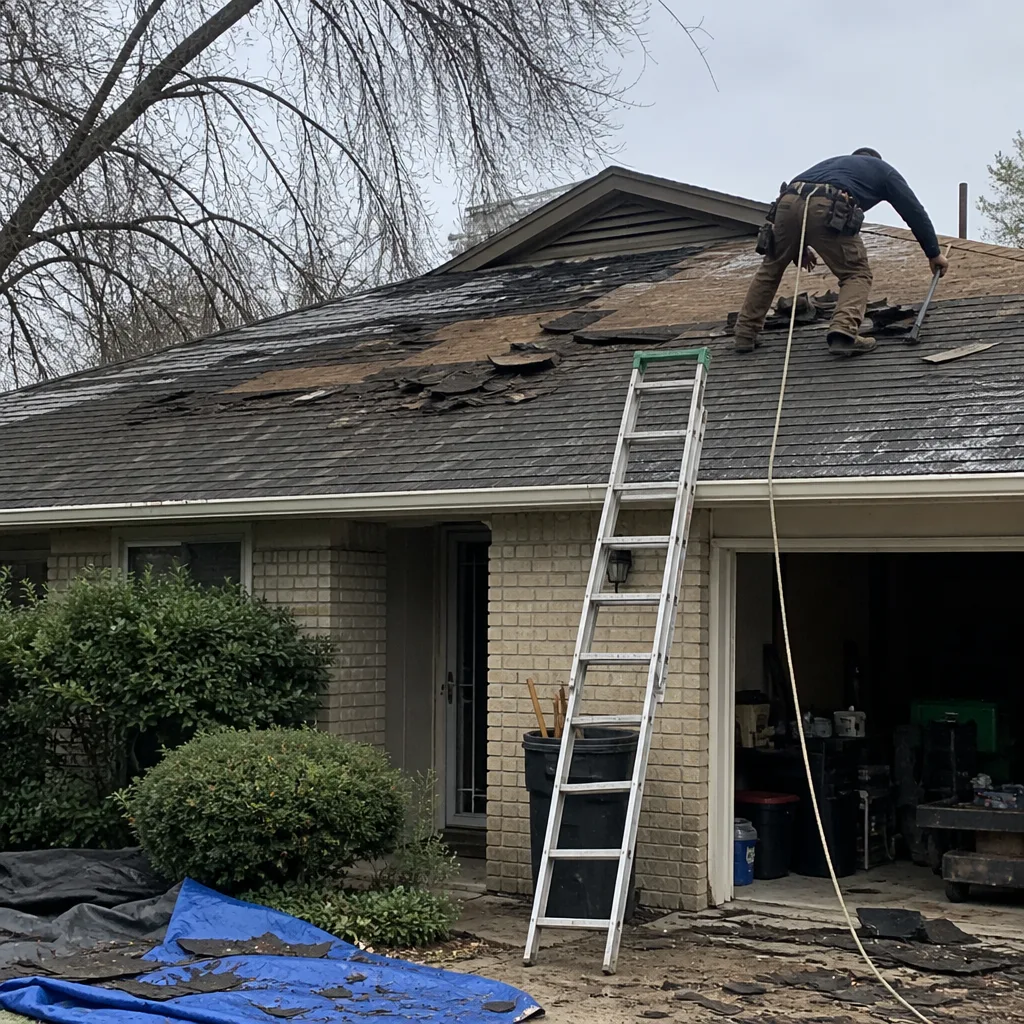 Before
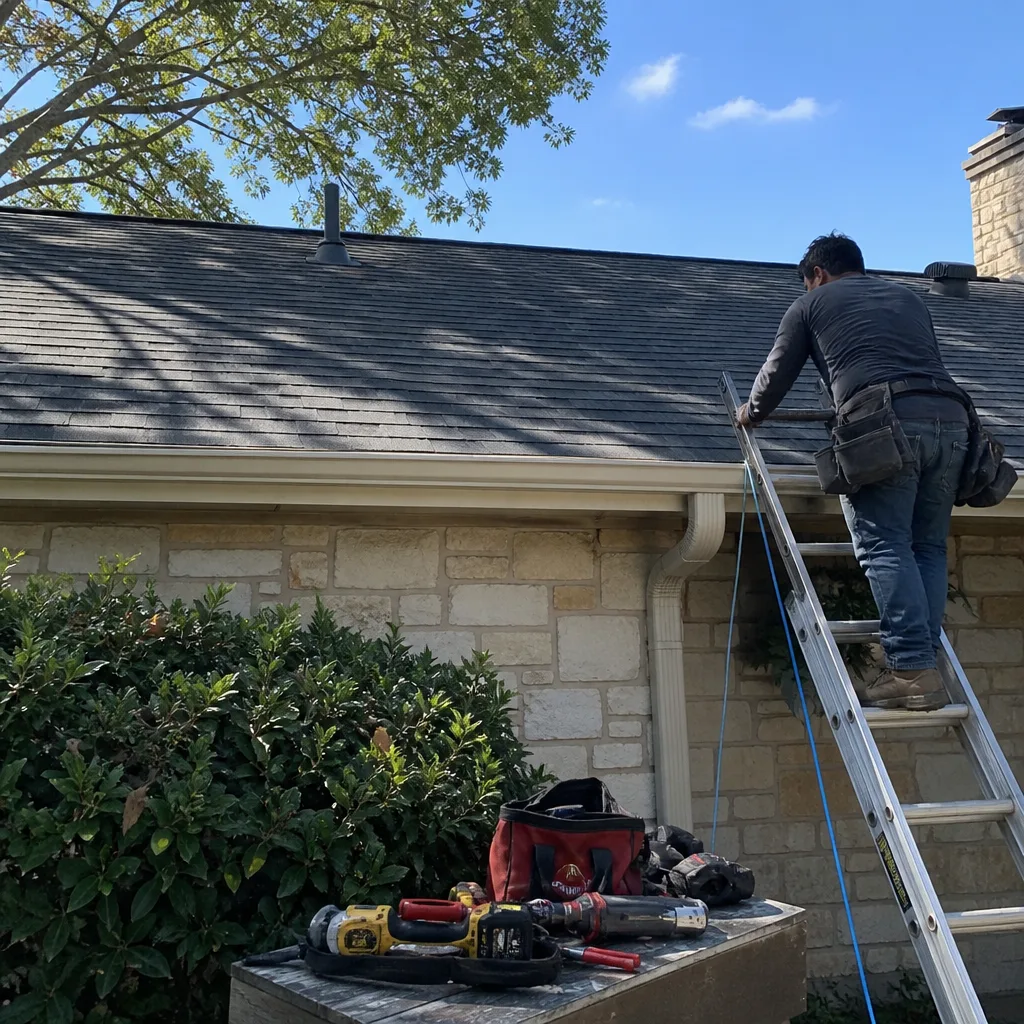 After
AfterReplacement Cost & What’s Included
Here’s what our CertainTeed ridge vent installation in Austin runs, with the parts separated out so you can see what you’re paying for:
- Vent material (ShingleVent II or equivalent): $3 to $5 per linear foot
- Removal of old vent and prep of ridge slot: $2 to $3 per linear foot
- Installation labor, including shingle-over and end caps: $4 to $6 per linear foot
- Disposal and site cleanup: $75 to $150 flat, depending on volume
An average Austin ranch with 45 to 55 feet of ridge line should land between $450 and $850, all in. Steep-pitch roofs, second-story ridge runs, and teardown of failed decking around the slot push toward the top of that range and sometimes beyond. What does not change: the price we quote is the price you pay. We send a written line-item quote before any work starts, and the 365-Day Done Right Promise covers the install for a full year. If the vent fails in that year, we come back and fix it at no charge. That’s in writing, and it’s included with every job.
DIY or Call Us?
You can check a few things yourself without ever getting on a ladder: look at the ridge line with binoculars to spot lifted shingles or daylight peeking through the vent slot, check your attic temp on a 95-degree day, and peek at the attic decking around the ridge for moisture stains. That’s the smart way to confirm something’s wrong.
What you should not do is walk a ridge line to replace a vent yourself. Ridge vent installs involve cutting a continuous slot through the roof deck along the peak, nailing along a narrow strip where balance matters, and sealing end caps correctly. One misstep at the ridge means a fall that’s not worth the money saved, and an incorrectly cut slot is how a good roof becomes a leak. Dylan Pace started this company on the habit of writing down exactly what a job will cost before it starts. When you call (254) 587-6371, we’ll schedule a time, name the technician coming to your door, and send you a written price. If it’s not in writing, it’s just a conversation.
FAQs
CertainTeed’s vent material itself carries a manufactured lifespan that can run 15 to 20 years, but in Austin’s heat, the ShingleVent II often lasts 12 to 16 years before sunlight and UV degradation start breaking down the baffle material and end caps. Most Austin homeowners replace the vent when the roof gets replaced, but a vent can fail before the shingles do and need replacement on its own.
Yes, if the damage is limited to a section of vent, a torn filter, or the end caps. We can patch in a matching section of ShingleVent II or replace failed end caps without stripping the whole ridge. If the vent has warped in multiple places or pulled nails across a long run, full replacement is usually cheaper than chasing repairs. We’ll tell you which one makes sense after looking at it, and the price is in writing either way.
A standard single-story ridge vent replacement in Austin runs half a day, including tearing off the old vent, prepping the ridge slot, installing the new vent, shingling over it, and cleaning up. Multi-story or steep pitches add time, but we’ll give you a clear completion window before work starts. Call (254) 587-6371 for a free estimate and we’ll give you the exact timeline for your roof.
Our trucks carry ShingleVent II in the common lengths and we also stock compatible vent material from GAF and Owens Corning for roofs where those shingles are installed. Uncommon widths or the older FilterVent line may need an order placed, but that usually adds no more than a day or two in Austin. What we don’t do is show up without the part and expect you to wait. Call (254) 587-6371 for a free estimate, and we’ll confirm the part is on the truck before we arrive.
Written by Dylan Pace, Owner, Crestview Roofing Co Austin at Crestview Roofing Co Austin, serving Austin and nearby areas.