
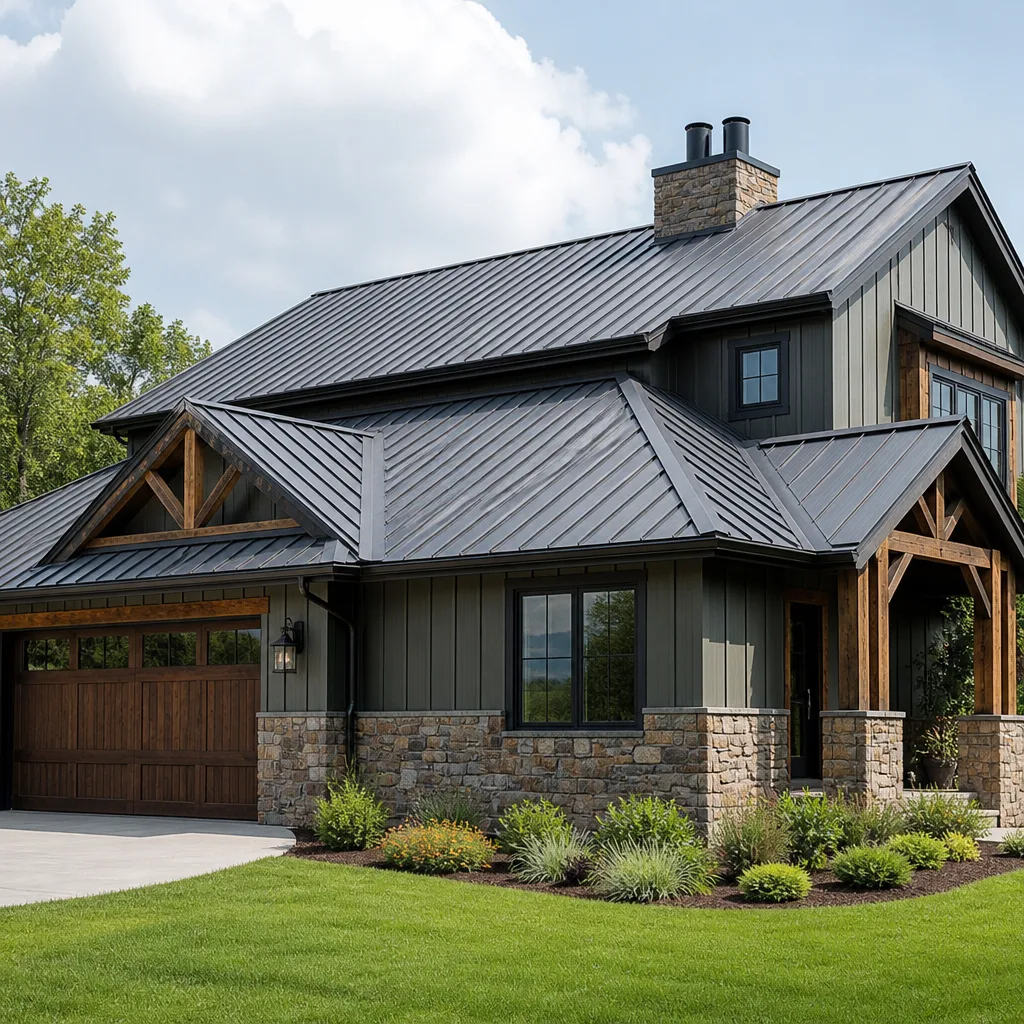
 Metal roofing
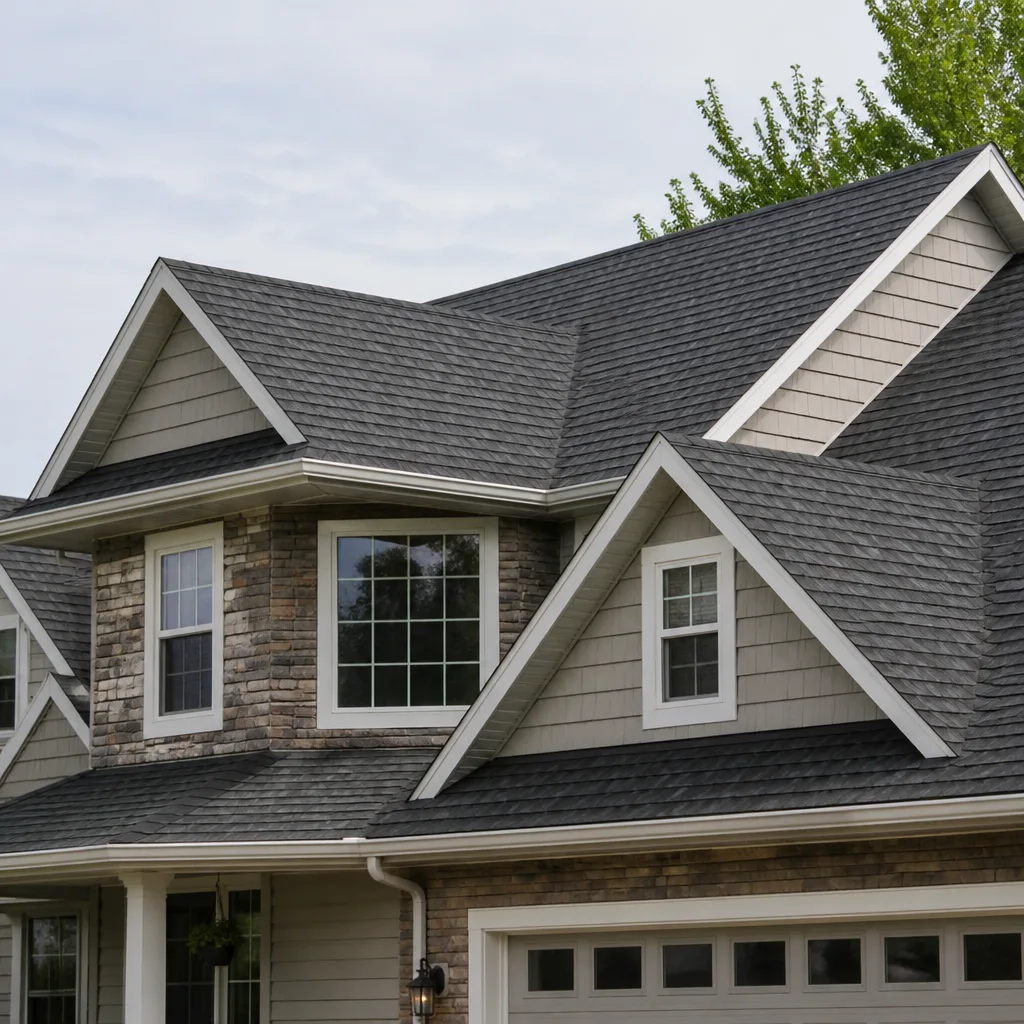 Architectural shingles
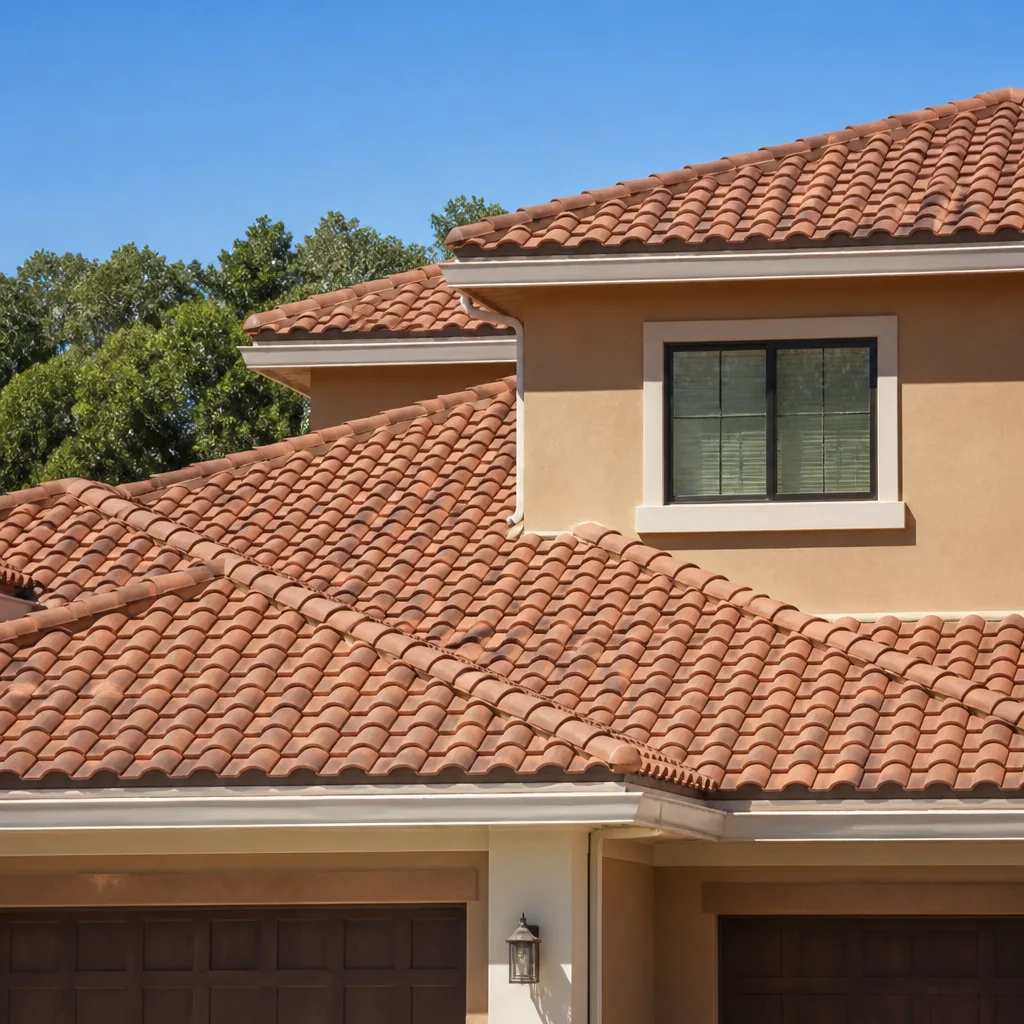 Tile roofing
 GAF
GAF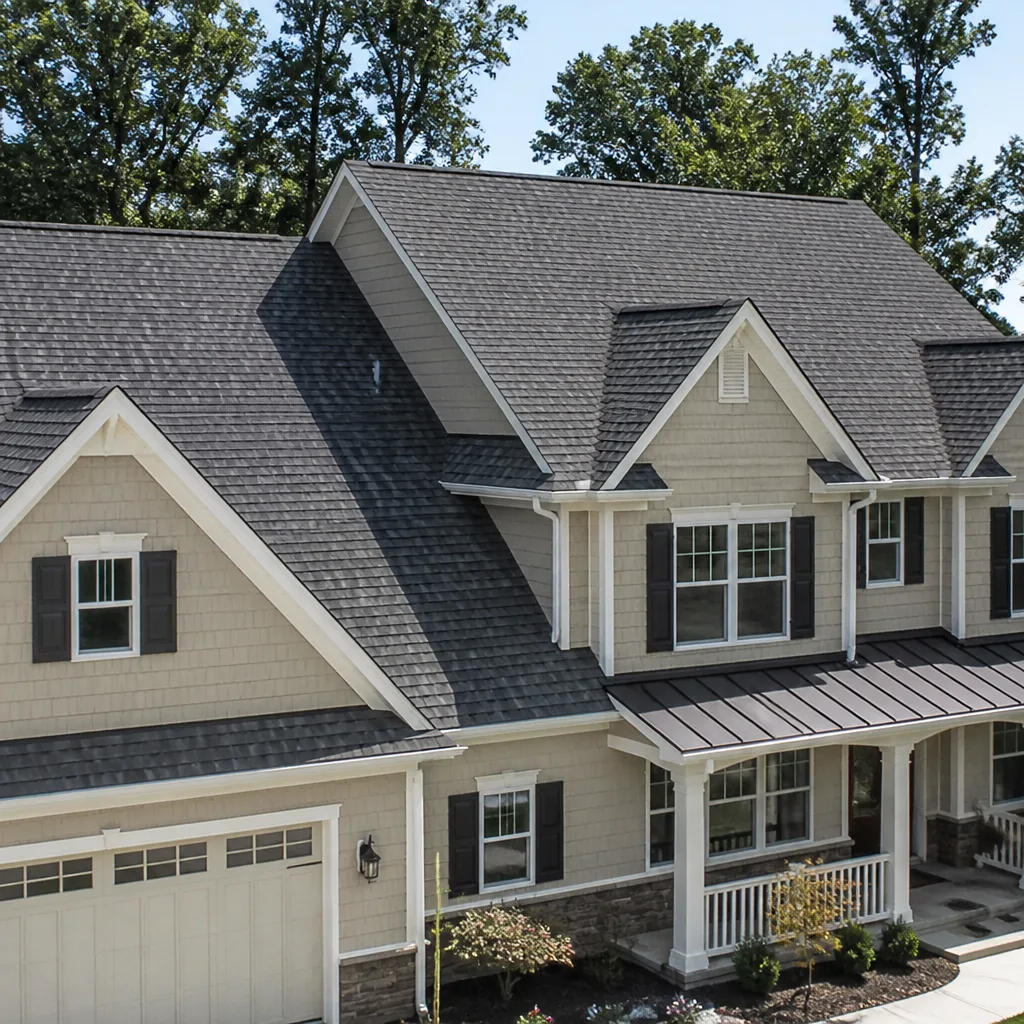 Owens Corning
 Flat & low-slope
Free roof inspection with deck photos before we talk money - GAF and Owens Corning certified installation
GAF Flashing Replacement: The Austin Owner’s Guide
GAF flashing replacement in Austin typically runs $275 to $650 installed for most single-penetration repairs, and we keep GAF-compatible flashing stock on our trucks for same-visit swaps. You usually discover the problem the same way: a brown stain on the ceiling after a gully-washer, or granules collecting in the gutter below a pipe boot. Most homeowners call us after they’ve already patched the drywall once and watched the stain come back.
Here’s the thing about flashing: it’s the quietest part of your roof. It never gets the attention shingles do, but it fails first in Austin’s climate. And when it goes, water follows the path of least resistance straight into your decking. We’ve pulled apart flashing jobs in Tarrytown where the metal looked fine from the ground and was completely perforated underneath. Dylan Pace has seen this failure pattern hundreds of times, and it’s why we treat flashing as its own repair category, not an afterthought on a shingle job.
Key Takeaways:
- GAF flashing replacement costs $275 – $650 installed for typical single-penetration repairs in Austin
- We stock GAF-compatible flashing on the truck for same-visit replacement
- Flashing fails faster than shingles in Texas heat and hail
- Every repair carries our 365-Day Done Right Promise in writing
Which GAF Models This Applies To
GAF doesn’t sell “one flashing” – they sell a system, and the flashing you need depends on which GAF shingle line you’re running and what penetration you’re sealing. The most common GAF lines we service across Austin are Timberline HDZ, Timberline UHDZ, Timberline NS, and Royal Sovereign. For pipe boots and vents, the compatible flashing collar is typically a GAF Master Flow pipe boot or a top-tier aftermarket equivalent sized to your pipe diameter (2″, 3″, or 4″ are the most common in Austin homes built after 1985).
Here’s a compatibility gotcha most homeowners don’t know: GAF’s high-definition shingle profiles have a thicker dimensional profile, which means step flashing and counterflashing need a longer vertical leg to seat properly against the shingle course. A generic big-box flashing piece with a 4-inch vertical leg often won’t sit flush against a Timberline UHDZ shingle without bulging or popping the shingle. We spec minimum 5-inch vertical legs on our GAF-compatible flashing, and we adjust based on the measured shingle thickness on site, not on what the package says.
For homeowners who want OEM: if you have the original GAF shingle bundle wrapper or the roof contract specs, we can match the exact Master Flow part number. We also stock quality aftermarket equivalents that meet or exceed the metal gauge and coating spec of OEM. The honest answer: for flashing specifically, a quality aftermarket piece is usually indistinguishable from OEM in performance, and it saves you 20 to 30 percent. For warranty-sensitive work, we’ll use OEM parts and document it.
CertainTeed and Owens Corning flashing is also on our trucks, but this page is GAF-specific. We’re an independent Austin roofing company, not affiliated with GAF, which means we install GAF-compatible materials without pushing any single brand’s system.
Styles & brands we work with
Signs Your GAF Flashing Replacement Is Failing
- Ceiling stains that reappear after rain. This is the classic first sign. Flashing doesn’t fail evenly; it develops pinholes or seam separation, and water gets through only when wind drives rain at the right angle. That’s why the stain comes and goes.
- Rust or corrosion visible on exposed flashing metal. In Austin, we get long dry stretches that bake flashing, then sudden humidity and rain. That cycle accelerates oxidation. If you can see rust streaking on the flashing around your chimney or vent from the ground, the metal is losing its fight.
- Granule buildup in gutters near pipe boots and vents. This signals the shingles around the flashing are degrading, usually because water is getting under them and freezing the bond in winter or loosening it in the summer heat. The flashing shares the blame.
- Daylight visible from the attic around pipes and vents. Take a flashlight into the attic on a sunny afternoon. If you can see light coming through gaps around a vent stack, the flashing seal is shot. No sealant, no barrier – that’s an open channel for water.
- Curled or lifted shingles at roof-to-wall transitions. When step flashing is properly installed, shingles lie flat against the wall junction. Lifted shingles there usually mean the flashing underneath has deformed or the fasteners have backed out, leaving the seam exposed.
If you’re seeing any of these, don’t wait for the next hailstorm. Flashing failures compound quickly in Austin because our rain comes in bursts; a small gap becomes a decking replacement in one heavy season.
See the difference
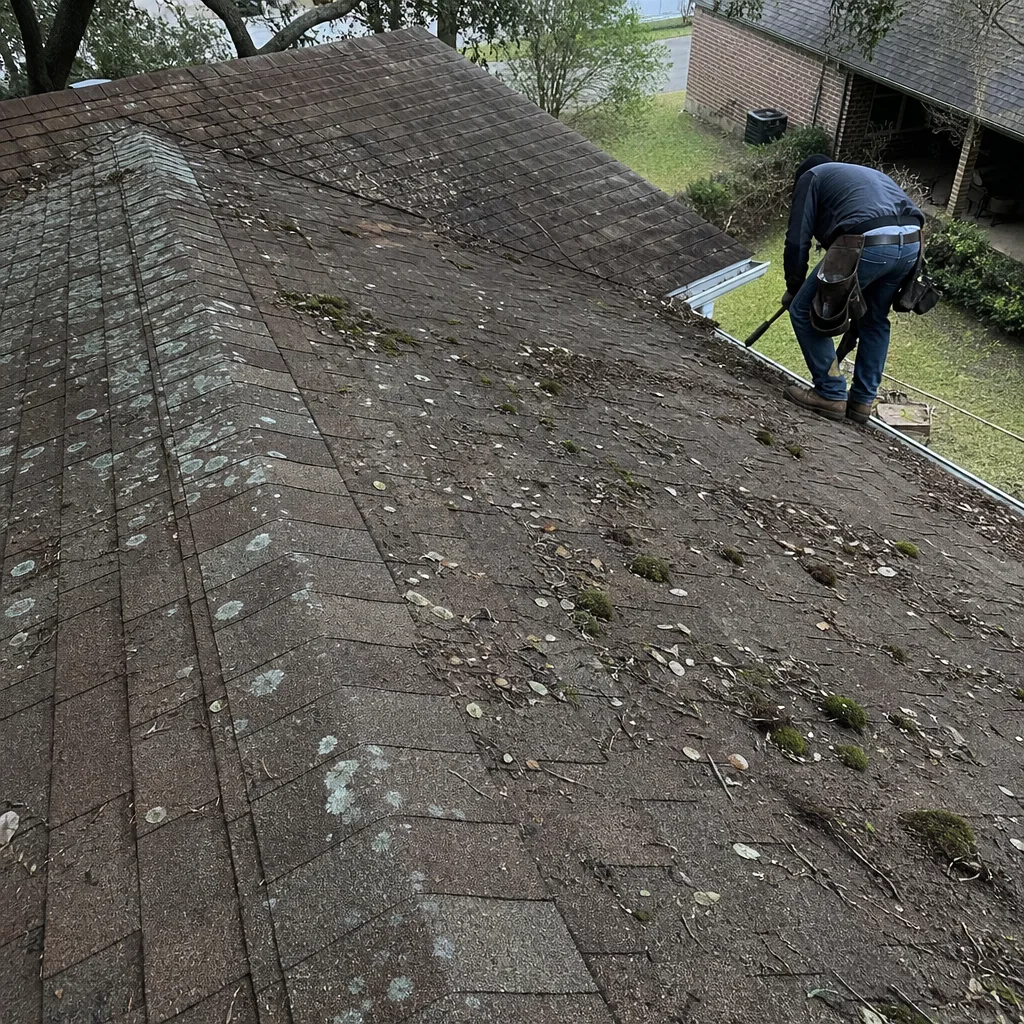 Before
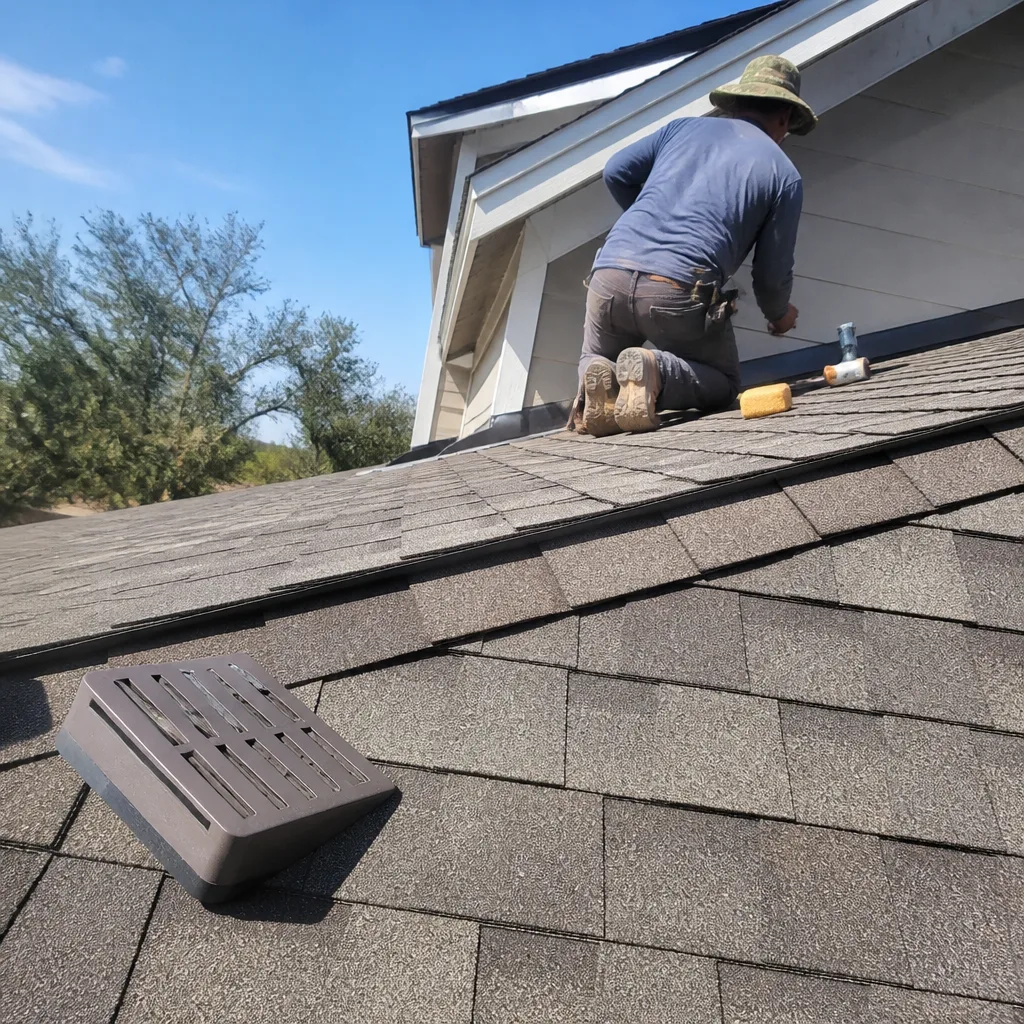 After
After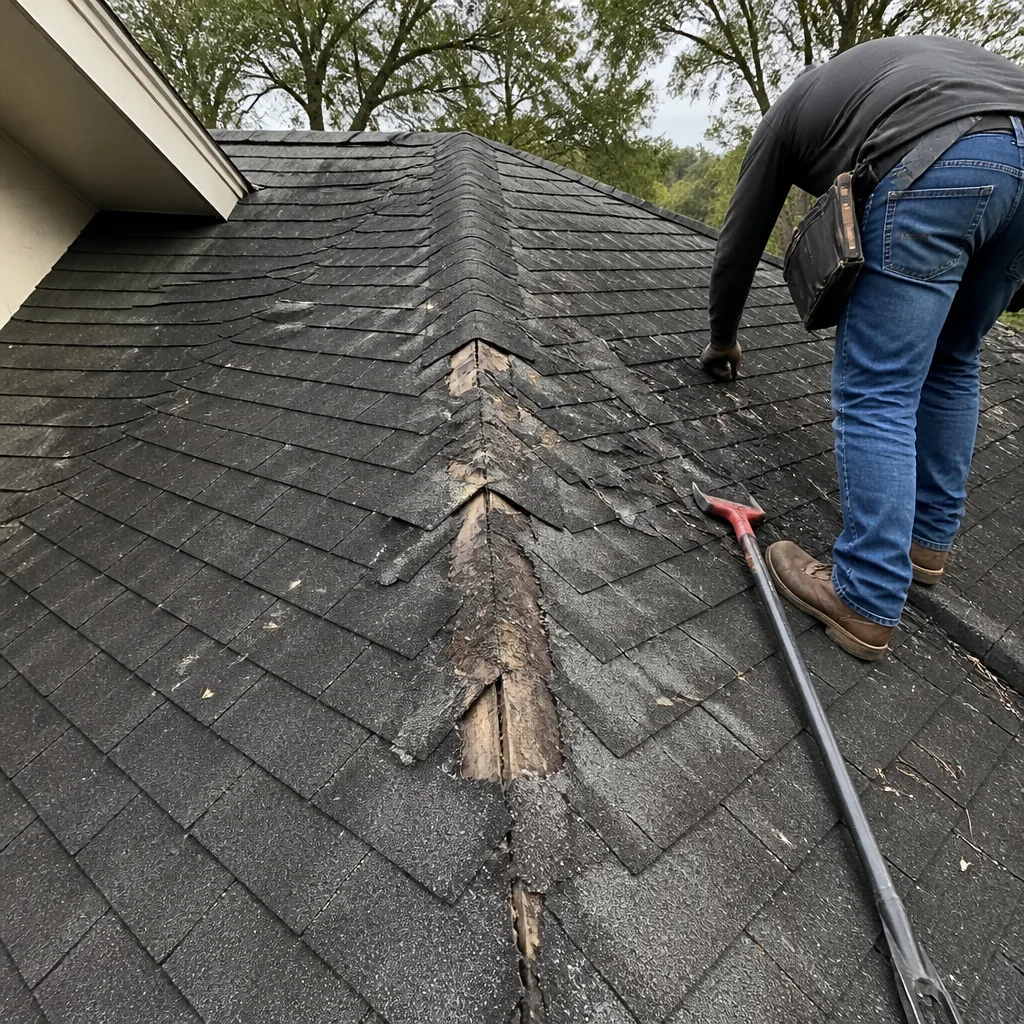 Before
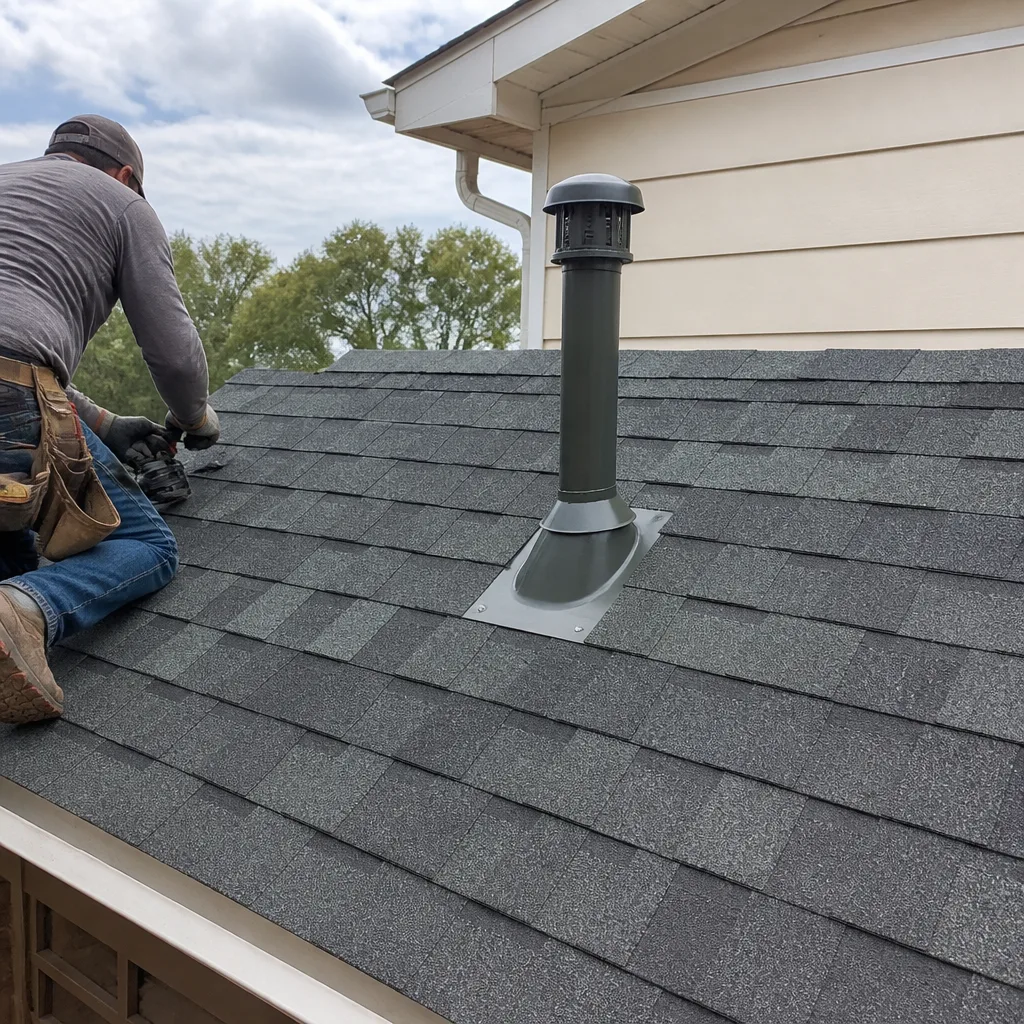 After
After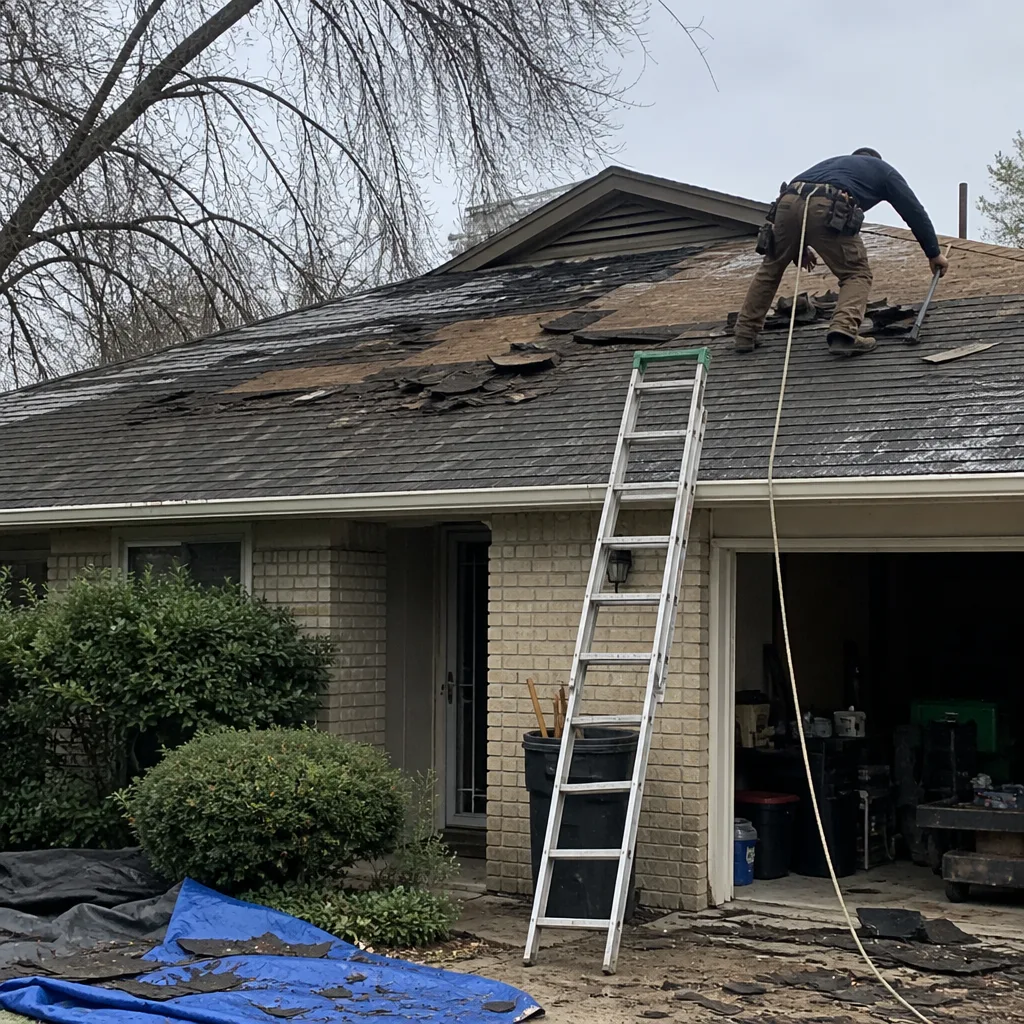 Before
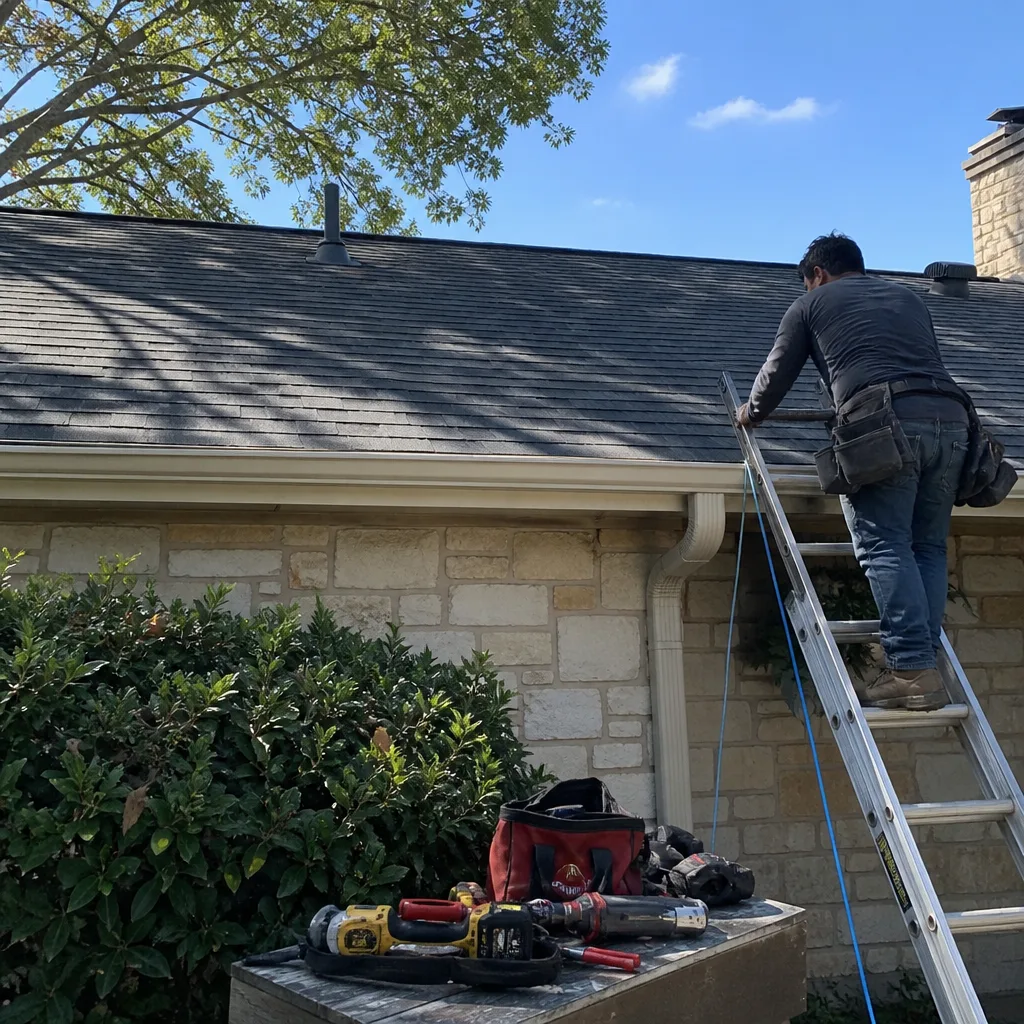 After
AfterReplacement Cost & What’s Included
For most Austin homes, replacing a single GAF-compatible flashing point – a pipe boot, a vent collar, or a section of step flashing – lands between $275 and $650 installed. Here’s how that breaks down:
| Job Scope | Typical Installed Price in Austin |
|---|---|
| Single pipe boot replacement (2″ – 4″ pipe) | $275 – $425 |
| Vent flashing replacement | $300 – $450 |
| Step flashing repair at a wall junction (linear foot) | $35 – $65 per linear foot |
| Chimney counterflashing replacement (full perimeter) | $550 – $1,100 |
| Skylight flashing replacement | $450 – $750 |
What drives the range: how much decking needs to be exposed, whether the surrounding shingles are reusable, the height and pitch of your roof, and whether we’re dealing with one penetration or a cluster. Chimney work is the most variable because flashing a chimney properly means cutting into mortar joints for counterflashing – that’s labor-intensive and material-sensitive. We always write your price before we start, and the number on the page is the number on the invoice. No add-ons, no “discovered damage” upsells. If we find decking rot while we’re in the repair, we’ll show you a photo and give you a written price for that work before we touch it.
Every flashing repair we do includes our 365-Day Done Right Promise in writing. If that flashing fails within a year, we come back and fix it at no charge. That’s not a verbal promise; it’s on your invoice.
DIY or Call Us?
You can absolutely inspect your own flashing. Get a ladder, check for rust, lifted seals, and missing fasteners. That’s good homeowner maintenance, and you should do it twice a year in Austin, once after hail season and once before the spring rains.
But I’m going to be straight with you: replacing flashing is not a caulk-and-go job. If you’re just going to lay a bead of sealant over the old boot, save your money and call us. Sealant is a band-aid on a wound that needs stitches. Proper flashing replacement means cutting back shingles, removing the old metal, setting the new piece with correct lap and fastening, then re-seating the shingles so they drain water over, not under, the flashing. Get the lap sequence wrong and you’ve created a funnel pointing directly at your decking.
And it is a fall risk. We’re talking about working on a pitched roof, often near the edge. Half the flashing repairs we fix were made worse by someone on a ladder with a caulk gun. If your flashing is failing, call us at (254) 587-6371 and we’ll put a real price on it before we lift a shingle.
FAQs
GAF flashing typically lasts 15 to 20 years in Austin, but the sealant joints and seams often fail at 10 to 12 years because of our heat-rain cycling. If your roof is 15 years old, the shingles may still look fine while the flashing is already past its useful life.
For pinholes and seam separation, a proper repair is possible, but it’s temporary by nature, lasting maybe two to five years. If the metal has significant rust or the flashing is deformed, replacement is the only honest fix. We’ll tell you which one you need, and we’ll show you photos either way. Call (254) 587-6371 to schedule an inspection.
A single-penetration flashing replacement typically takes one to two hours from setup to cleanup. A full chimney flashing replacement usually takes half a day. You’ll know our arrival time before we show up, and you’ll get before-and-after photos of the work.
Yes. We stock GAF-compatible flashing, pipe boots, and vent collars in the most common Austin sizes, along with the step flashing profiles we use for wall and chimney transitions. If you have a specialty GAF product that needs a matched part, we can source it and schedule the install for a later visit at the same written price.
If you’ve got a flashing issue, don’t let it ride through the next thunderstorm. Call us at (254) 587-6371 for a free estimate. We’ll come out, identify the exact failure, give you a written price before any work starts, and stand behind the repair for 365 days. If it’s not in writing, it’s just a conversation.
Written by Dylan Pace, Owner, Crestview Roofing Co Austin at Crestview Roofing Co Austin, serving Austin and nearby areas.